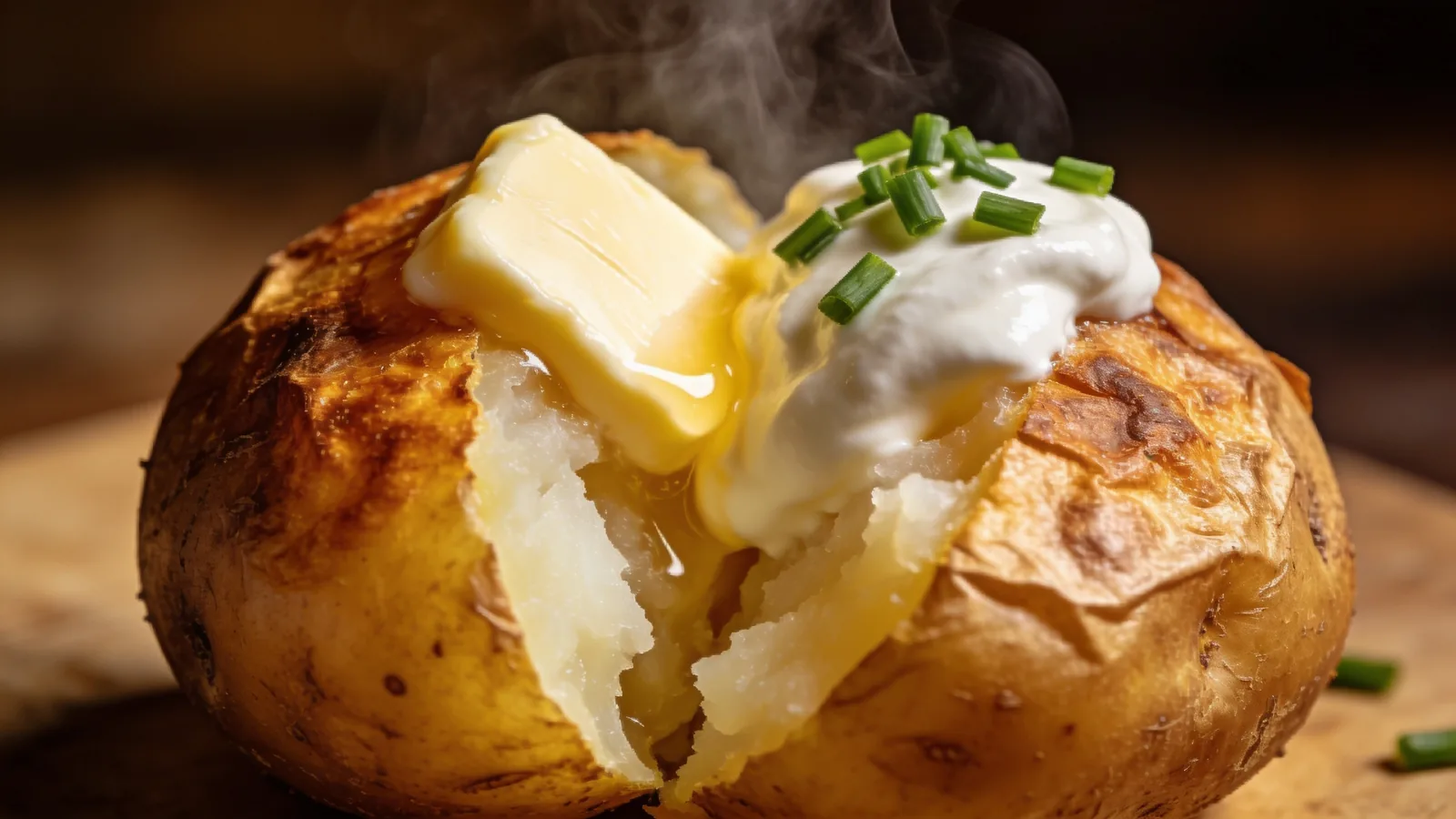
Baked potato protein is real but modest: the overwhelming majority of a cooked potato’s weight is water and starch, which leaves protein sitting in the low single-digit grams per potato. What separates it from other starchy foods is quality, not quantity — the protein a potato does contain ranks among the highest in digestibility of any plant source. If you came here expecting a baked potato to rival an egg, the honest answer is that it does not.
How Much Protein Is in a Baked Potato?
A baked potato supplies protein in low single-digit grams, and a larger potato with the skin on lands at the upper end of that range. The reason is structural: a potato is mostly water, followed by starch, with protein making up a small fraction of its dry matter. Eating the skin adds a little more protein along with fiber and potassium, but it does not change the basic picture.
This matters because potatoes are often eaten in large portions, which can give the impression of a substantial protein contribution. In reality, the protein is spread thin across a lot of carbohydrate and water. A baked potato is a carbohydrate food that happens to carry a little protein, not a protein food. For a closer look at the whole-vegetable numbers, see how much protein a potato has and our breakdown of how a potato compares to an egg.
Why a Baked Potato’s Protein Is Easy to Overlook
The protein in a potato is genuine, but it is diluted by everything else in the tuber. A potato’s job, botanically, is to store starch as an energy reserve. Protein is present mainly as patatin, the major storage protein, along with protease inhibitors and other minor fractions. These proteins are concentrated in the potato fruit juice that the food industry later harvests, but in the whole baked potato they are a minority component by weight.
Cooking does not meaningfully reduce that protein. Baking changes moisture and texture and gelatinizes the starch, but the amino acids in the potato’s protein survive the oven. So the low protein number is a function of the potato’s composition, not of how you prepare it. Mashing, boiling, or roasting the same potato gives you broadly the same modest grams of protein.
Are Baked Potatoes a Good Source of Protein?
Not by quantity. A whole baked potato provides only a few grams of protein, which is far below what an egg or a serving of chicken delivers, so it should not be counted on as a primary protein source. Its strength is protein quality: potato protein is complete, containing all nine essential amino acids, with a digestibility score among the highest of any vegetable.
That distinction — high quality, low quantity — is the whole story of the baked potato as a protein food. It is the opposite of a food like wheat gluten, which provides a fair amount of protein but of lower quality. The potato gives you a small amount of very usable protein. To meaningfully add to a daily target, you would need to eat several large potatoes, at which point the calorie and carbohydrate load becomes the limiting factor. For the fuller argument, see our honest take on whether potatoes are a good source of protein.
Baked Potato vs Egg vs Chicken Breast
Set side by side, the gap is obvious. An egg and a chicken breast are protein-dense foods, while a baked potato is an energy-dense food with a protein bonus. A single egg or a palm-sized chicken breast supplies several times more protein than a whole baked potato, and they do it in fewer calories per gram of protein.
Where the potato narrows the gap is digestibility and amino acid completeness. Egg protein is the classic reference standard, with a PDCAAS of 1.00 (Schaafsma. J Nutr. 2000). Potato protein, in isolated form, scores 0.92–1.00 on the same scale — close enough that the practical difference is portion size, not protein quality. So the right comparison is not “potato versus egg on quality” but “how much of each you have to eat to hit your number.” On that question, the egg and the chicken win decisively.
The Quality Question: How Potato Protein Scores
Protein quality is measured with two scores: PDCAAS, the older standard, and DIAAS, the newer one that many researchers consider more accurate. On both, potato protein performs well above the plant-source average. Its PDCAAS sits among the highest of any vegetable protein, and its DIAAS has been reported as high as 100% (Herreman et al. Food Science & Nutrition. 2020). For why these two metrics can disagree, see DIAAS vs PDCAAS.
| Source | PDCAAS | EAA content | Note |
|---|---|---|---|
| Egg white | 1.00 | — | animal reference standard |
| Potato protein isolate | 0.92–1.00 | 37% | DIAAS reported as high as 100% |
| Whey protein isolate | — | 43% | DIAAS reported at 94–100% |
| Wheat gluten | 0.25 | — | lysine-limited, low quality |
Sources: Schaafsma. J Nutr. 2000 (PMID: 10867064) for egg and wheat gluten PDCAAS; Herreman et al. Food Science & Nutrition. 2020 (PMID: 33133540) for the potato DIAAS figure; Amino Acids. 2018 (PMID: 30167963) for the essential-amino-acid percentages. Reliable PDCAAS figures for whey isolate were not part of the verified data, so that cell is left as an em-dash.
A reasonable summary: a baked potato is a low-quantity, high-quality protein food. Researchers reviewing white vegetables have highlighted the broader nutritional value of potatoes, noting their contribution of shortfall nutrients such as fiber and potassium (White vegetables: a forgotten source of nutrients. 2013).
From Whole Potato to Potato Protein Isolate
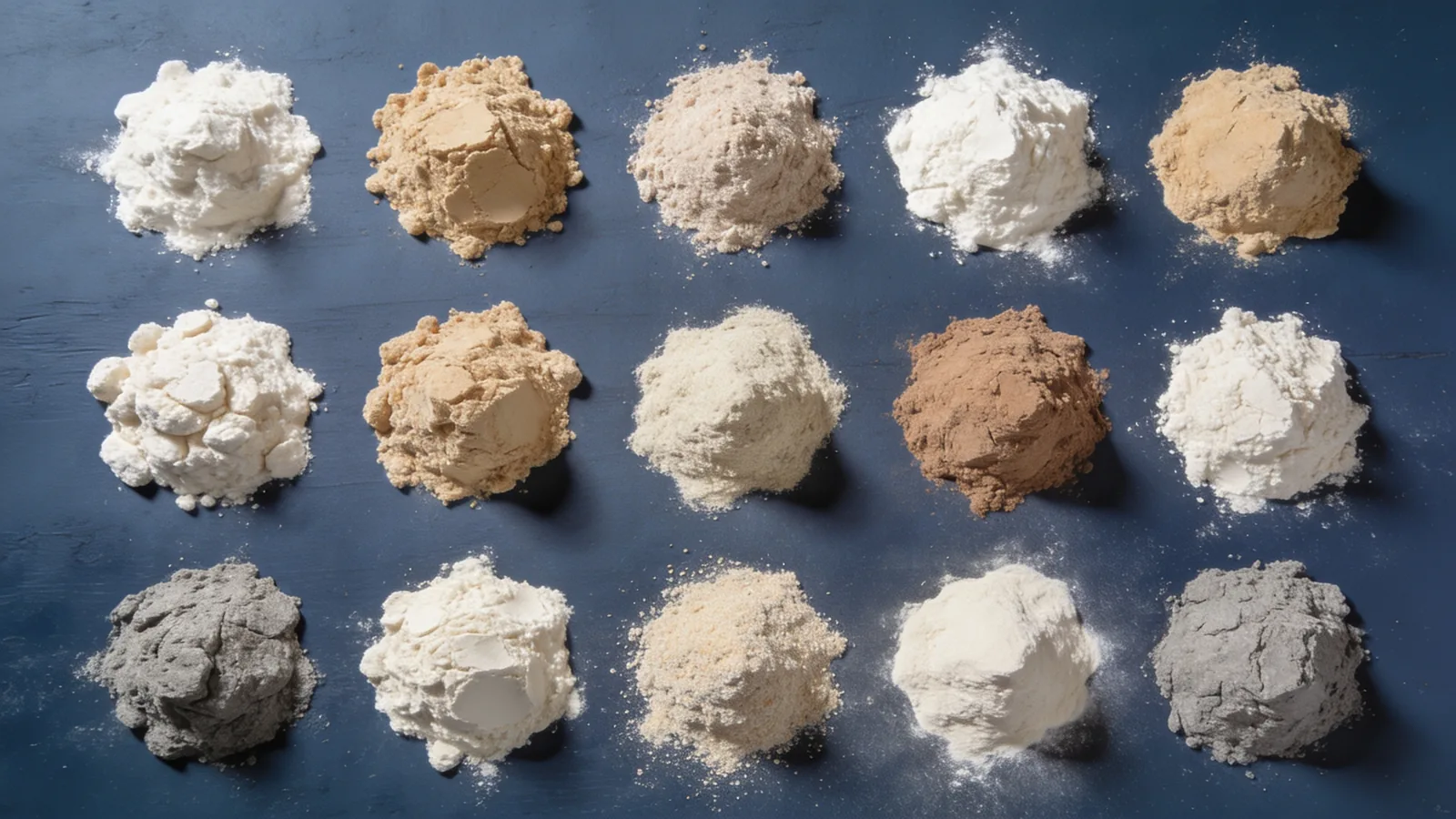
The interesting move is taking that high-quality protein and removing the dilution. That is exactly what potato protein isolate is. Manufacturers extract protein from potato fruit juice — a byproduct of potato starch production — and concentrate it into a powder that is 80–95% protein by dry weight. The starch and water that make the whole potato a poor protein source are stripped away, leaving the patatin and protease-inhibitor fractions behind.
The result is a different food entirely. Where a baked potato gives you a few grams of protein inside a large, starchy package, a scoop of isolate gives you 20-plus grams with almost no carbohydrate. It contains all nine essential amino acids and behaves more like an animal protein than like the vegetable it came from. Eat potatoes for the carbohydrate, fiber, and potassium; use the isolate when protein is the goal. For the full background, read what potato protein is.
What the Isolate Does That the Potato Cannot
The clinical evidence is on the isolate, not the baked potato. In a 2020 trial, 25g of potato protein isolate consumed twice daily stimulated muscle protein synthesis in young women, both at rest and after resistance exercise (Oikawa et al. Nutrients. 2020). A later analysis from the same research area reported that potato protein ingestion increases muscle protein synthesis rates at rest and during recovery from exercise in humans (Medicine & Science in Sports & Exercise. 2022). No one is running these trials with whole baked potatoes, because the protein dose required would be impractical to eat.
By the numbers that drive muscle protein synthesis, potato protein isolate contains 37% essential amino acids versus 43% for whey isolate (Amino Acids. 2018) — a real but narrow gap. For most people the more important variable is total daily protein, and the isolate makes hitting a target far easier than potatoes do. If you are weighing plant options, our comparisons of potato protein vs whey and potato vs rice protein go deeper.
Practical Application
If you like baked potatoes, keep eating them — leave the skin on for a marginal protein and fiber gain — but count them as a carbohydrate, not a protein. To make a potato-centric meal protein-adequate, pair it with an actual protein food: eggs, fish, poultry, or a single-ingredient protein on the side. The potato carries the energy and potassium; the protein source carries the amino acids.
For people tracking protein because they are over 40, training, or managing appetite, the isolate is the efficient route. It dissolves into food without dominating it, which is why it suits cooking rather than just shakes. Browse the recipe index for ways to add it without changing the dish.
Limitations
Two honest caveats. First, exact per-potato protein grams vary with size, variety, and whether the skin is eaten, so treat any single figure as an approximation rather than a fixed value. Second, the muscle-synthesis evidence applies to concentrated potato protein isolate at studied doses, not to eating baked potatoes — you cannot extrapolate the trial results to your dinner plate.
Anyone with a diagnosed potato allergy should also note that the allergen is still present in potato protein isolate, since processing concentrates rather than eliminates the relevant proteins. For most people, though, the takeaway is simple: a baked potato is a quality-rich, quantity-poor protein food, and the isolate is what turns that quality into a usable dose.