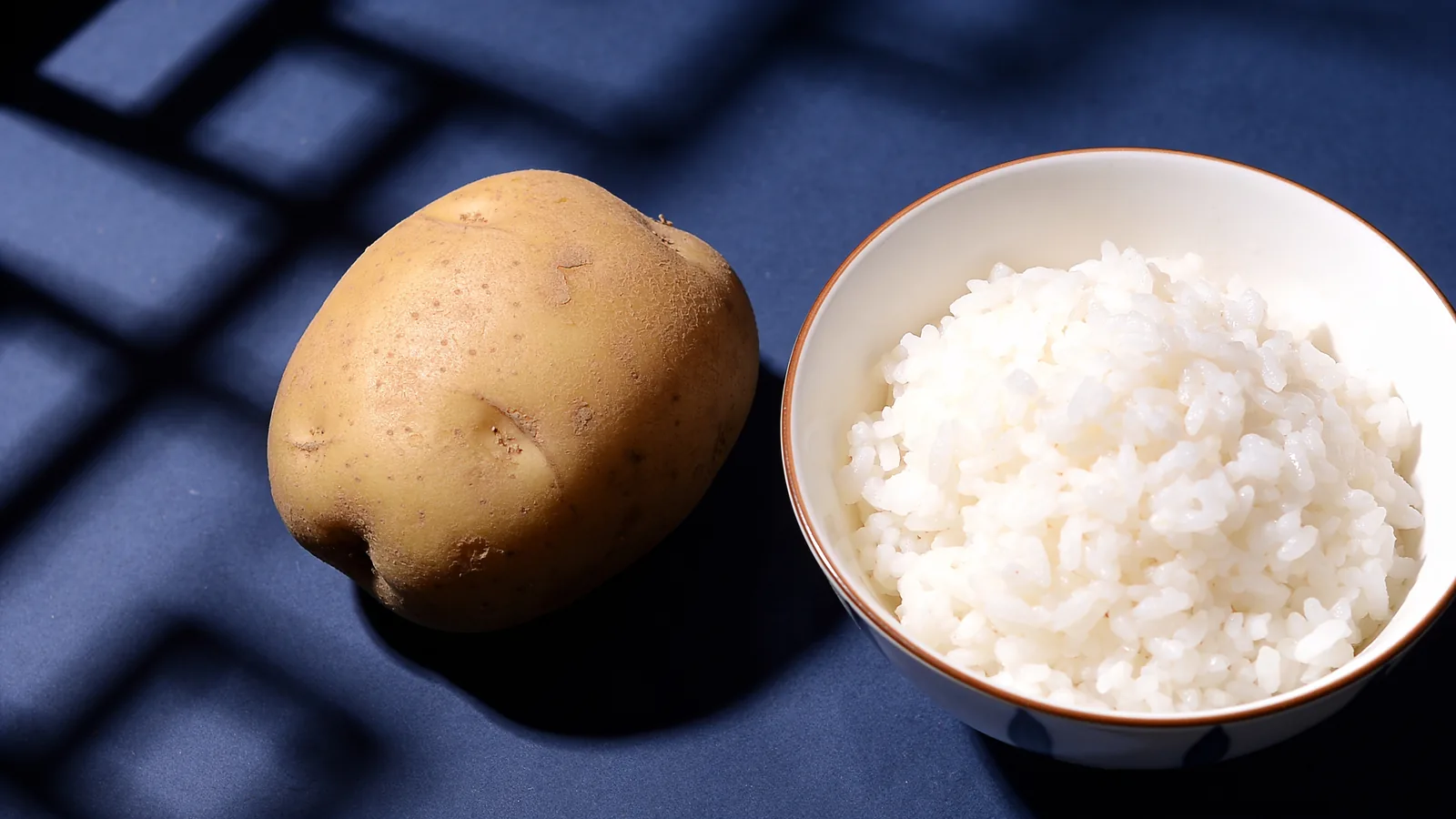
In the potato vs rice protein comparison, the deciding factor is amino acid completeness: potato protein isolate contains all nine essential amino acids and carries a PDCAAS of 0.92–1.00, while rice protein is limited in lysine and is usually blended with another source to fill the gap. We evaluated both on protein quality, amino acid profile, allergen status, digestibility, and the strength of the clinical evidence behind each.
Potato protein is the more complete single source. Potato protein isolate scores 0.92–1.00 on PDCAAS and has a DIAAS reported as high as 100%, with all nine essential amino acids present. Rice protein is limited in lysine, so on its own it is an incomplete protein and is typically combined with pea protein. Both are allergen-friendly and not among the FDA’s Big 8 allergens, but potato has direct clinical evidence — 25g twice daily stimulated muscle protein synthesis in young women (Nutrients, 2020).
We compared single-ingredient potato protein isolate against the most common rice protein formats, plus a rice-based blend and an animal-protein benchmark, so the trade-offs are visible rather than implied.
Top Options by Category
Single-Ingredient Potato Protein Isolate
Complete single-ingredient plant protein
Potato protein isolate is the more complete of the two single sources. It contains all nine essential amino acids, scores 0.92–1.00 on PDCAAS, and is classified as an excellent-quality protein with an average DIAAS above 100 — alongside casein, egg, and pork (Food Science & Nutrition, Herreman et al., 2020). It also has something rice protein lacks: direct human evidence. A 2020 trial found that 25g of potato protein isolate twice daily stimulated muscle protein synthesis in young women, while the control group showed no increase at rest (Nutrients, 2020).
Pros:
- Complete: all nine essential amino acids
- PDCAAS 0.92–1.00; DIAAS reported as high as 100%
- Not a Big 8 allergen; low-FODMAP (Monash University)
- Human clinical evidence for muscle protein synthesis
- Typically a single ingredient on the label
Cons:
- Lower EAA share than whey (37% vs 43%)
- Earthy taste some people notice in water
- Anyone with a potato allergy must avoid it — the patatin allergen is still present
Single-Ingredient Brown Rice Protein Isolate
Single-source, vegan, allergen-friendly
If you want a rice protein, a single-ingredient brown rice isolate is the cleanest expression of it — typically one ingredient, vegan, and not among the Big 8 allergens. Rice protein is well established as a distinct, widely available category alongside potato, pea, hemp, and soy. The honest caveat: rice protein is limited in lysine, which makes it an incomplete protein on its own. Reliable PDCAAS values for rice protein isolate are not well established in the literature, so we cannot put a confident quality score on it the way we can for potato.
Pros:
- Often available as a single ingredient
- Vegan and not a Big 8 allergen
- Generally well tolerated
Cons:
- Limited in lysine — incomplete on its own
- Reliable PDCAAS values not established
- Can taste chalky or gritty
Pea + Rice Blend
Multi-ingredient, completes the amino acid profile
The standard fix for rice protein’s lysine shortfall is to pair it with pea protein, which is comparatively higher in lysine. Researchers have shown that blends of plant proteins — pea, rapeseed, rice — can be formulated to match reference amino acid profiles (Frontiers in Nutrition, 2021). A pea-rice blend is a sound way to get a complete plant profile from rice. The trade-off is the label: you are now reading two or more protein ingredients, and pea protein causes bloating for some people.
Pros:
- Complete amino acid profile when paired
- Vegan and allergen-friendly
- Widely available
Cons:
- Multiple ingredients on the label
- Pea protein can cause bloating for some
- Often includes added flavors and sweeteners
Whey Protein Isolate
Dairy-based animal benchmark
It would be dishonest to compare two plant proteins without naming the benchmark both are measured against. Whey isolate scores 1.00 on PDCAAS, is roughly 90–95% protein with under 1% lactose, and has a 43% essential amino acid share — higher than potato’s 37% (Amino Acids, 2018). Its rapid digestion and high leucine content made it more effective than casein at stimulating muscle protein accretion in older men (American Journal of Clinical Nutrition, 2011). If you tolerate dairy and don’t need a plant source, whey remains the reference. If you can’t have dairy, this option is off the table — and that’s where potato earns its place.
Pros:
- PDCAAS 1.00; 43% EAA; high leucine
- Strong, repeated human evidence
- Fast-digesting
Cons:
- Dairy allergen — not for the allergy-aware
- Not vegan
- Concentrate forms carry more lactose (FODMAP) than isolate (Monash University)
How Potato and Rice Protein Compare
The table below puts the two plant sources next to their benchmarks. Where a reliable, published value does not exist, the cell carries an em-dash rather than a guess.
| Source | PDCAAS | EAA share | Complete protein | Big 8 allergen | FODMAP |
|---|---|---|---|---|---|
| Potato protein isolate | 0.92–1.00 | 37% | Yes (all 9 EAA) | No | Low |
| Rice protein | — | — | No — limited in lysine | No | — |
| Whey isolate | 1.00 | 43% | Yes | Yes (milk) | Low (isolate) |
| Soy isolate | 1.00 | — | Yes | Yes (soy) | — |
On the DIAAS scale, potato protein is classified as excellent quality, with an average DIAAS above 100 for children and adults — putting it alongside casein, egg, and pork — while soy and whey are rated high-quality (DIAAS ≥75) but below that 100 mark (Herreman et al., 2020). That is the core finding worth holding onto: among plant proteins, potato sits in the top tier on quality, while rice needs help to get there.
What to Look For on Your Own
The protein-source decision rarely comes down to a single number. Here is how the criteria actually play out when you are standing in front of two tubs.
Completeness first. A protein is “complete” when it supplies all nine essential amino acids in adequate amounts. Potato protein isolate does this on its own. Rice protein does not — it runs short on lysine, which is why you almost always see it blended with pea. If you are buying a rice protein and the label lists only rice, understand that you are getting an incomplete amino acid profile and will want lysine from elsewhere in your diet. For the full framework on how to weigh quality scores, see our complete buyer’s guide to choosing a protein powder, and for the scoring system itself, PDCAAS explained.
Read the ingredient list, not the front of the tub. A single-ingredient potato protein isolate is exactly that: potato protein isolate, 80–95% protein on a dry basis. Many rice and blended products carry flavors, gums, and sweeteners. None of that is dangerous, but it is worth knowing what you are paying for. If minimal additives matter to you, count the inputs.
Match the source to the allergy situation. Neither potato nor rice is among the FDA’s Big 8 major allergens, and both are reasonable choices for households avoiding dairy, eggs, soy, and nuts. Potato protein is Generally Recognized As Safe (GRAS) and is widely positioned as an allergen-friendly source. The one group that must avoid potato protein: anyone with a diagnosed potato allergy, because the patatin allergen carries through into the isolate. Our deeper treatment of this lives in the allergen-free protein guide.
Check whether the studies are about the powder or the plant. A lot of “rice is healthy” copy borrows credibility from whole-grain research that says nothing about isolated rice protein. Potato protein isolate has been studied as the isolate, in humans, for the outcome people actually care about — muscle protein synthesis. That distinction matters more than any marketing line. For background on the source itself, read what potato protein is.
References
- Potato Protein Isolate Stimulates Muscle Protein Synthesis at Rest and with Resistance Exercise in Young Women. Nutrients (2020). PMID: 32349353.
- Comparative Assessment of the Acute Effects of Whey, Rice and Potato Protein Isolate Intake on Markers of Glycaemic Regulation and Appetite in Healthy Males. Nutrients (2021). PMID: 34201703.
- Herreman et al. Food Science & Nutrition (2020). PMID: 33133540.
- Protein content and amino acid composition of commercially available plant-based protein isolates. Amino Acids (2018). PMID: 30167963.
- Schaafsma G. The Protein Digestibility-Corrected Amino Acid Score. Journal of Nutrition (2000). PMID: 10867064.
- Potato protein: An emerging source of high quality and allergy-free protein. Food Research International (2021). PMID: 34507729.
- Whey protein stimulates postprandial muscle protein accretion more effectively than do casein and casein hydrolysate in older men. American Journal of Clinical Nutrition (2011). PMID: 21367943.
- Combining Plant Proteins to Achieve Amino Acid Profiles Adapted to Various Objectives. Frontiers in Nutrition (2021). PMID: 35187024.