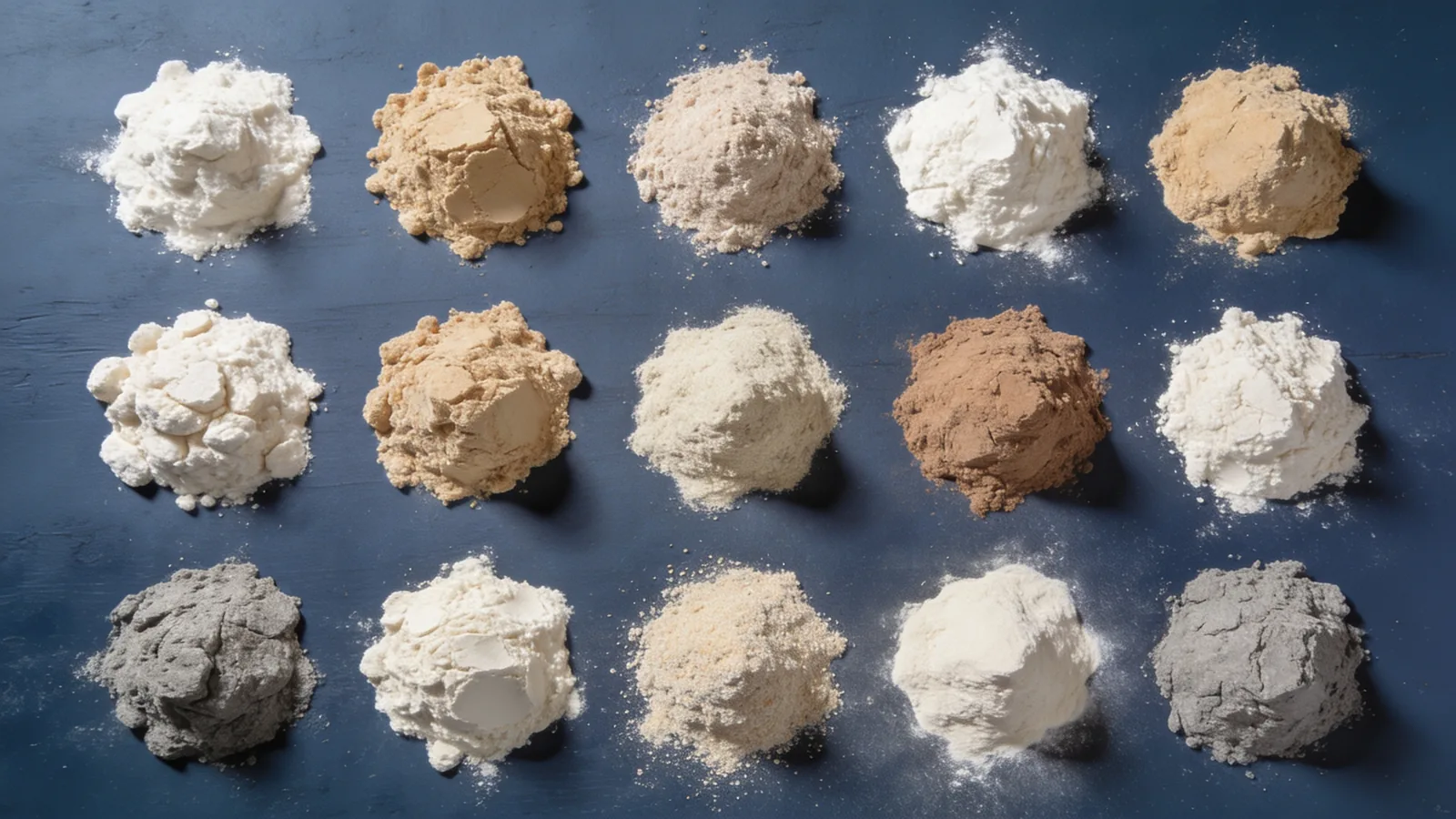
A vegan protein powder for muscle building works when it delivers enough leucine per serving and you pair it with resistance training. In an 84-day randomized trial, pea protein at roughly 20–22.5 g/day produced muscle-mass gains of 2.3% versus 2.4% for whey — statistically indistinguishable between groups (Nutrients, 2024). The gap that does exist for plant protein is about leucine and total dose, not about whether plants can build muscle. They can.
The best vegan protein powder for muscle building is one that supplies about 3 grams of leucine per serving from a complete amino acid profile, with the fewest possible additives. Potato protein isolate scores highest on quality (DIAAS reported as high as 100%) and has direct clinical evidence: 25 g twice daily stimulated muscle protein synthesis in young women (Nutrients, 2020, PMID:32349353). Pea protein matched whey for muscle and strength gains over 84 days (Nutrients, 2024). Any plant protein only builds muscle when combined with resistance exercise.
We evaluated single-ingredient isolates and well-formulated blends against the metric that actually drives growth — leucine per serving from a complete profile.
Top Options by Category
Potato Protein Isolate (single-ingredient)
Single-ingredient isolate
Potato protein isolate has the rare combination of high quality and direct human evidence. Its DIAAS has been reported as high as 100% (Food Science & Nutrition, Herreman et al., 2020, PMID:33133540), and a 2020 trial found that 25 g of potato protein isolate taken twice daily stimulated muscle protein synthesis at rest and after resistance exercise in young women (Nutrients, 2020, PMID:32349353). The investigators concluded it is a high-quality plant protein that can effectively stimulate muscle protein synthesis. It is also low-FODMAP and is typically a single ingredient — read more about what potato protein actually is and how it is made.
Pros:
- Single ingredient — nothing to react to
- Direct clinical muscle-protein-synthesis data in humans
- DIAAS reported as high as 100%
- Low-FODMAP; gentle for sensitive stomachs
- Naturally free of dairy, egg, soy, nuts, and gluten
Cons:
- Usually flavorless by design — you flavor it yourself
- Less widely stocked than pea or soy
Single-Ingredient Pea Protein
Single-ingredient, widely available
Pea protein has the strongest long-term muscle data of any plant source. In an 84-day randomized comparator trial of sedentary adults doing weekly resistance training, pea protein and whey produced comparable gains in muscle mass (2.3% vs 2.4%, P = 0.92) and whole-body strength (Nutrients, 2024). A single-ingredient pea protein is just yellow pea protein — nothing else added. Its one weakness is amino acid balance: across new pea genotypes, leucine averaged 7.1 g per 100 g protein, but the limiting amino acids — methionine plus cysteine — averaged only 2.6 g per 100 g (Molecules, 2024, PMID 39519674). Read our deeper look at whether pea protein is highly bioavailable.
Pros:
- Single ingredient
- Matched whey for muscle and strength over 84 days
- Widely available
Cons:
- Limiting in methionine and cysteine
- Pea can contain FODMAPs (GOS, fructan) that trigger bloating
- Earthy taste that some find difficult to mask
Organic Plant-Based Blend (Stevia-Free)
Multi-ingredient, sweetener-free
If you want a complete amino acid profile from a single product and you avoid stevia, an organic plant-based blend in a stevia-free formulation typically supplies somewhere around 15–21 g of protein per serving. One caveat worth naming honestly: the Clean Label Project’s 2025 Protein Study 2.0 found certified organic protein powders averaged three times the lead of non-organic products, so “organic” is not a guarantee of low metals — third-party testing still matters.
Pros:
- Complete amino acid profile from a single product
- Stevia-free formulations available
- Widely stocked
Cons:
- Multi-ingredient blend, not single-source
- Organic label does not lower heavy-metal risk on its own
Organic Plant-Based Blend (Zero-Sugar)
Multi-ingredient, no added sugar
A stevia-free, zero-sugar organic plant-based blend often lands lower on protein — frequently in the 15 g-per-serving range with 0 g of sugar. It is the right call if you want a sweetener-free, sugar-free blend and you are willing to take a second scoop or pair it with food to reach your per-meal target. Where a single scoop sits below the dose most muscle-protein-synthesis studies used, plan your serving size around your daily target rather than the label’s default.
Pros:
- No added sugar, no stevia
- Organic, complete blend
Cons:
- Lower protein per scoop — often needs two scoops
- Multi-ingredient blend
How the Picks Compare
Reliable, published DIAAS or PDCAAS figures are not established for every commercial blend, so the table uses an em-dash where a verified value does not exist rather than a number from a marketing sheet.
| Category | Source | Ingredients | Protein / serving | Quality marker | Major allergens |
|---|---|---|---|---|---|
| Potato protein isolate | Potato | 1 | — | DIAAS up to 100 | None of the top 8 |
| Single-ingredient pea protein | Pea | 1 | — | Limiting in Met+Cys (2.6 g/100g) | None of the top 8 |
| Organic plant-based blend (stevia-free) | Blend | Multiple | ~15–21 g | Complete blend | Check label |
| Organic plant-based blend (zero-sugar) | Blend | Multiple | ~15 g | Complete blend | Check label |
What to Look For on Your Own
The decision comes down to four things, in order of importance.
Leucine, then total dose. Leucine is the primary trigger for muscle protein synthesis. The clearest demonstration: a 20 g plant-based blend supplied 1.5 g of leucine and produced a smaller muscle-protein-synthesis response than whey — but when free leucine was added to bring the blend to 3.0 g, its response (0.049%/h) became statistically indistinguishable from whey (0.046%/h; J Nutr, 2024). The practical takeaway is that plant protein closes the gap at the right dose. With a lower-leucine source, you either take a larger serving or choose a higher-quality protein to begin with.
Completeness. Pea is limiting in the sulfur amino acids methionine and cysteine; rice is limiting in lysine. Blends and complete single sources sidestep this. If you eat a varied diet, a limiting amino acid in one powder is less of a problem because your other meals cover it — but for a powder you rely on daily, completeness is worth paying for. Our guide to the best plant-based complete proteins covers how to combine sources if you prefer DIY.
Ingredient count and testing. Plant proteins concentrate whatever is in the soil. Consumer Reports’ 2025 testing found more than two-thirds of products exceeded its safe daily lead limit, with plant-based powders averaging nine times the lead of dairy-based ones. The Clean Label Project’s Protein Study 2.0 (2025) tested 160 products and found 47% exceeded at least one federal or state safety standard. A single-ingredient powder gives you fewer inputs to worry about, but it does not exempt any product from testing — ask for a Certificate of Analysis before you buy. For the wider context on additives and fillers, see our downsides of plant protein guide.
Digestibility. If you get bloated, the source matters. Monash University notes that soy and pea “can be particularly challenging to purify, and often contain some FODMAPs,” whereas potato protein is classified low-FODMAP. If your stomach is the bottleneck, that distinction outranks a marginal difference in amino acid score. More on this in common protein problems.
One thing no powder does on its own: build muscle. Consuming protein without resistance training does not increase muscle mass — muscle growth requires muscle protein synthesis to exceed breakdown over time, and that signal comes from training (Sports Medicine, 2014, PMID:24791918). The powder supports the work; it does not replace it. See whether shakes or training build muscle for the full picture.