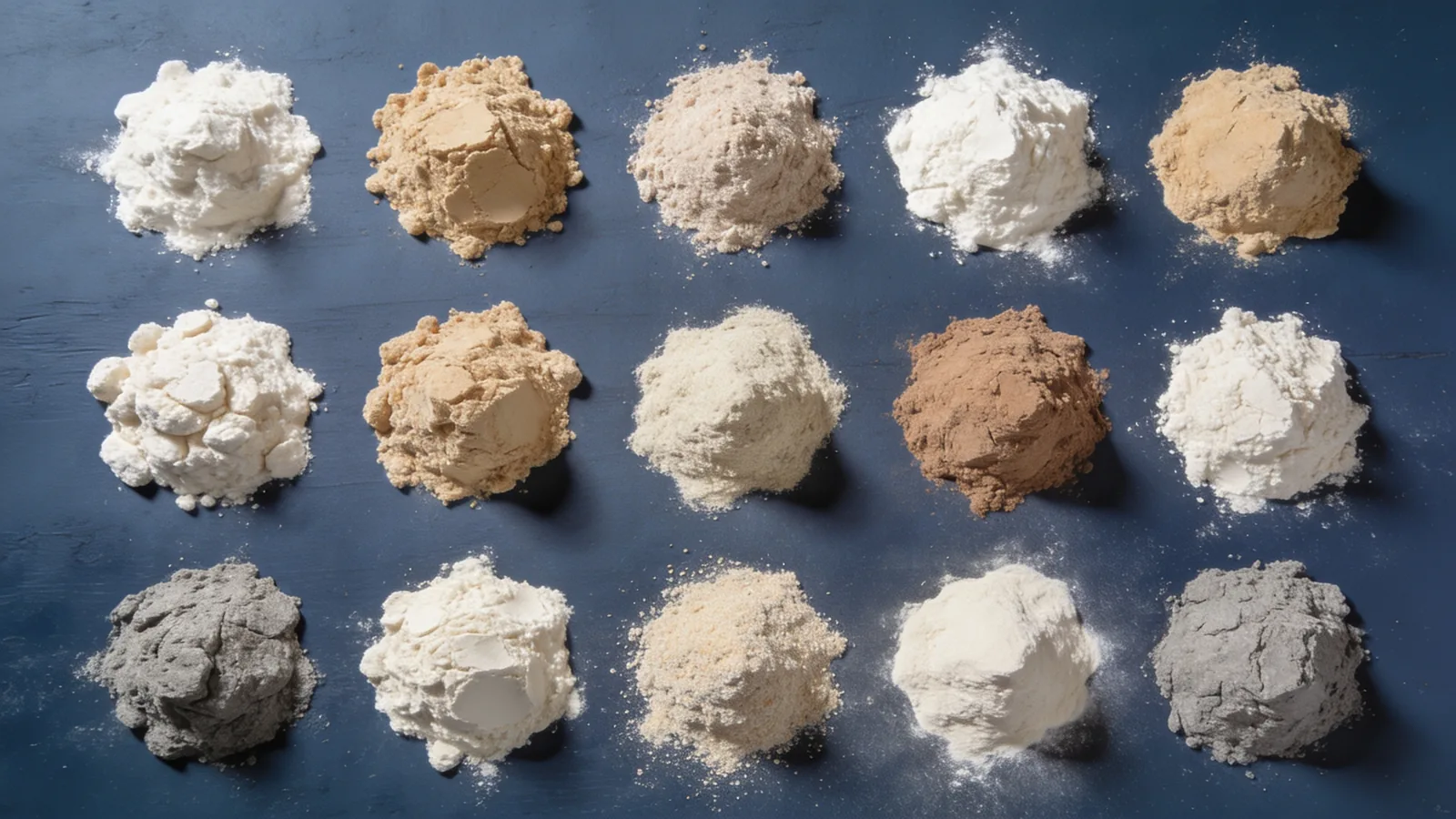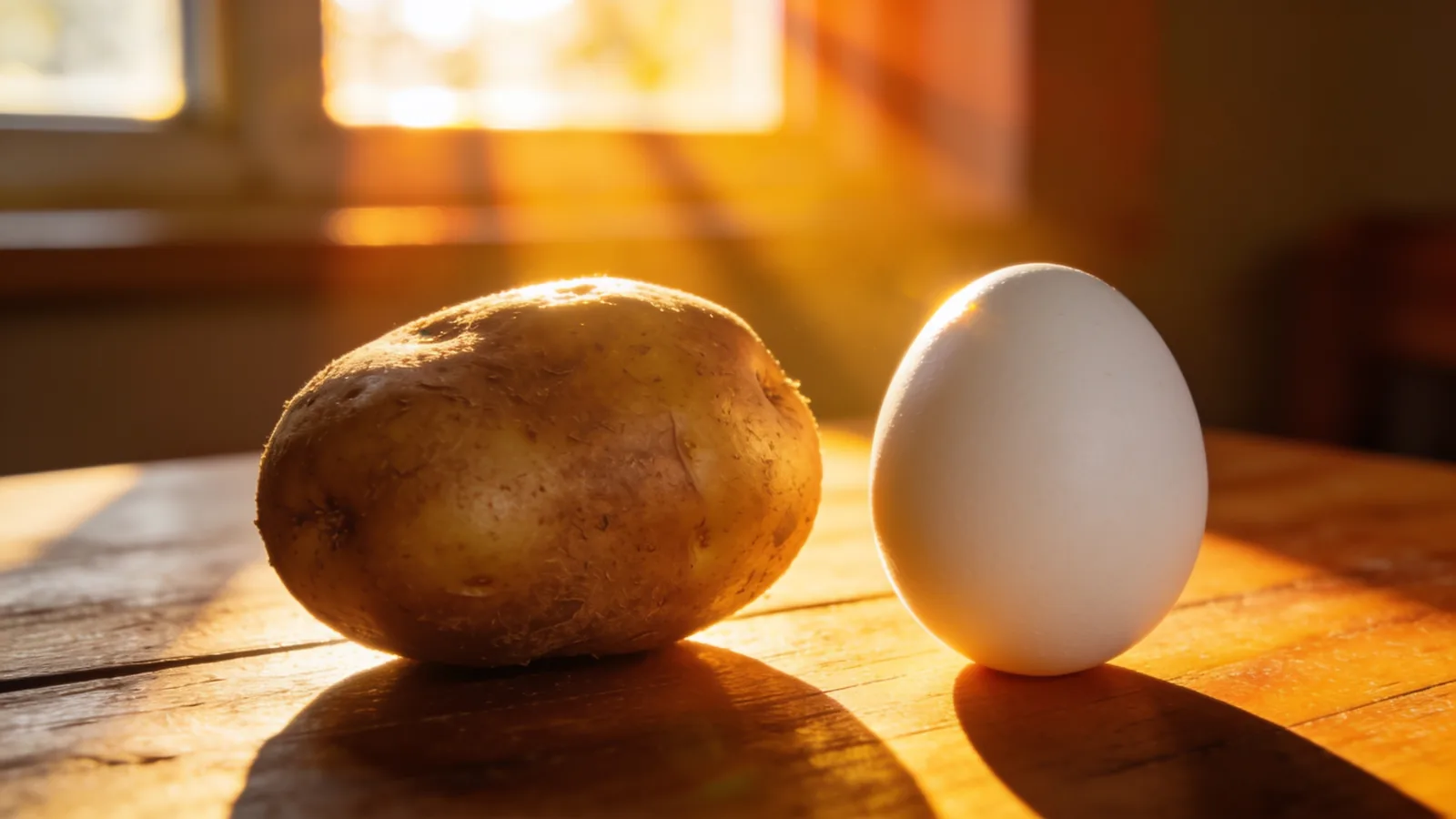
The protein in 1 potato is modest — a whole potato is roughly three-quarters water, and most of the remainder is starch. What protein it does contain, though, is unusually high quality, and when that protein is separated out into potato protein isolate it concentrates to 80–95% protein by dry weight. That concentrated fraction is the part worth holding up against an egg.
A whole potato is mostly water and starch, so the protein in 1 potato is small in absolute grams — but it is high quality. Concentrated into potato protein isolate, it reaches 80–95% protein by dry weight with a PDCAAS of 0.92–1.00. Egg scores 1.00, the maximum on that scale, so the two sit close together on quality even though a single potato carries far less protein than a single egg.
By the end of this guide you can read any potato or egg protein figure — on a label, in a study, or in a marketing claim — and know exactly what it tells you about quantity, quality, and whether it matters for you. What you need: A nutrition label or two · A calculator (optional) · Time: 5 min
How to Compare Potato Protein to Egg Protein
Separate the whole potato from potato protein isolate
These are two different things, and almost every confused comparison online comes from mixing them up. A whole potato is a starch food with a little protein riding along. Potato protein isolate is that protein pulled out and dried — extracted from potato fruit juice, a byproduct of starch production, rather than from the flesh you bake. When someone asks “how much protein is in a potato,” they usually want the first; when they ask “is potato protein good,” they mean the second.
If you want the longer version of how the extraction works and why it produces a near-flavourless powder, see our explainer on what potato protein actually is. For this comparison, just keep the two columns separate in your head.
Tip: A useful rule: a label that reads “potato” describes the starchy vegetable. A label that reads “potato protein isolate” describes a concentrated ingredient that is mostly protein.
Read the quantity — how concentrated the protein is
Potato protein isolate runs 80–95% protein on a dry basis, with “90% protein” being a commonly listed commercial specification. For scale, whey protein isolate is about 90–95% protein and under 1% lactose. So on raw concentration, a good potato protein isolate and a whey isolate are in the same neighbourhood — the gap between them is about quality and amino acids, not headline grams.
A single egg, by contrast, delivers its protein inside a package of water, fat, and other nutrients, the same way a single potato delivers its protein inside starch and water. That is why “protein in 1 potato” and “protein in 1 egg” are both small absolute numbers, while the isolated powders are not.
Example: Two scoops of a 90% potato protein isolate are, by weight, roughly nine-tenths protein. You would need to eat many whole potatoes to match that, because most of each potato’s mass is starch and water rather than protein.
Check protein quality with PDCAAS
Quantity tells you how much protein arrives. Quality tells you how much your body can use. The standard score is PDCAAS — the Protein Digestibility-Corrected Amino Acid Score — which tops out at 1.00. Egg sits at 1.00, the maximum, while wheat gluten lands near 0.25 under the established FAO/WHO PDCAAS values. Potato protein isolate reports a PDCAAS of 0.92–1.00, which places it alongside several animal proteins rather than at the bottom of the plant range.
That is the headline of the whole comparison: on the most widely used quality scale, potato protein and egg are close. PDCAAS truncates every value above 1.00 back to that ceiling, so the highest-quality animal and soy proteins all read as 1.00 (Schaafsma, Journal of Nutrition, 2000, PMID:10867064); potato isolate is a hair below at its lower bound and tied at its upper bound.
Cross-check with DIAAS, the newer score
PDCAAS has a known limitation: any value above 1.00 is truncated back to 1.00, which hides differences between very good proteins. The newer DIAAS score does not truncate, so it separates the top performers more honestly. Potato protein isolate has been reported with a DIAAS above 100% (Herreman et al., Food Science & Nutrition, 2020, PMID:33133540). Potato protein is classified among the excellent-quality proteins alongside egg and casein, while soy and whey land in the high-quality tier just below.
If you want the full breakdown of why the two scoring systems disagree, our guide on DIAAS vs PDCAAS walks through it. The short version: by either measure, potato protein isolate reads as a high-quality protein, not a filler.
Pitfall: Do not read a DIAAS of 100 as “better than egg.” It means potato protein clears the same high bar; it does not mean it out-performs animal protein gram for gram in every context.
Compare the amino acid profile
Both scores rest on the same underlying fact: potato protein isolate contains all nine essential amino acids, which is what makes it a complete protein. The difference between it and whey shows up in the proportions. Potato protein isolate is about 37% essential amino acids by composition, while whey protein isolate is about 43% (Amino Acids, 2018, PMID:30167963). Potato protein’s amino acid score has been reported at 65% (Food Research International, 2021, PMID:34507729).
So potato protein carries a slightly lower share of essential amino acids than whey, but still covers the full set. If your interest is hitting the essential-amino-acid total — including leucine, the trigger for muscle protein synthesis — see which foods supply all nine essential amino acids for where potato protein fits among other sources.
Decide based on what you actually need
Quality on paper only matters if the protein works in a body. In a 2020 trial, women who consumed 25 g of potato protein isolate twice daily increased their muscle protein synthesis rates, while the placebo group did not (Nutrients, 2020, PMID:32349353). That is direct evidence that potato protein behaves like a high-quality protein in practice, not just on a scoring table.
The reasons to choose potato over egg or whey are usually about inputs, not grams. Potato is not one of the FDA’s major allergens, and potato protein is considered a low-FODMAP source (Monash University, 2019) — useful if dairy, eggs, soy, or lactose are off the table. If that is your situation, our allergen-free protein guide covers what single-ingredient really buys you.
Checklist
- Confirm whether you are reading a whole potato or potato protein isolate — they are not interchangeable.
- For quantity, expect 80–95% protein from a dry isolate; far less from a whole potato.
- For quality, compare PDCAAS: potato 0.92–1.00, egg 1.00.
- Cross-check DIAAS (potato up to 100) when the PDCAAS values are tied at 1.00.
- Verify the protein is complete — potato protein isolate contains all nine essential amino acids.
- Weigh allergen and FODMAP factors if dairy, egg, or soy are issues for you.