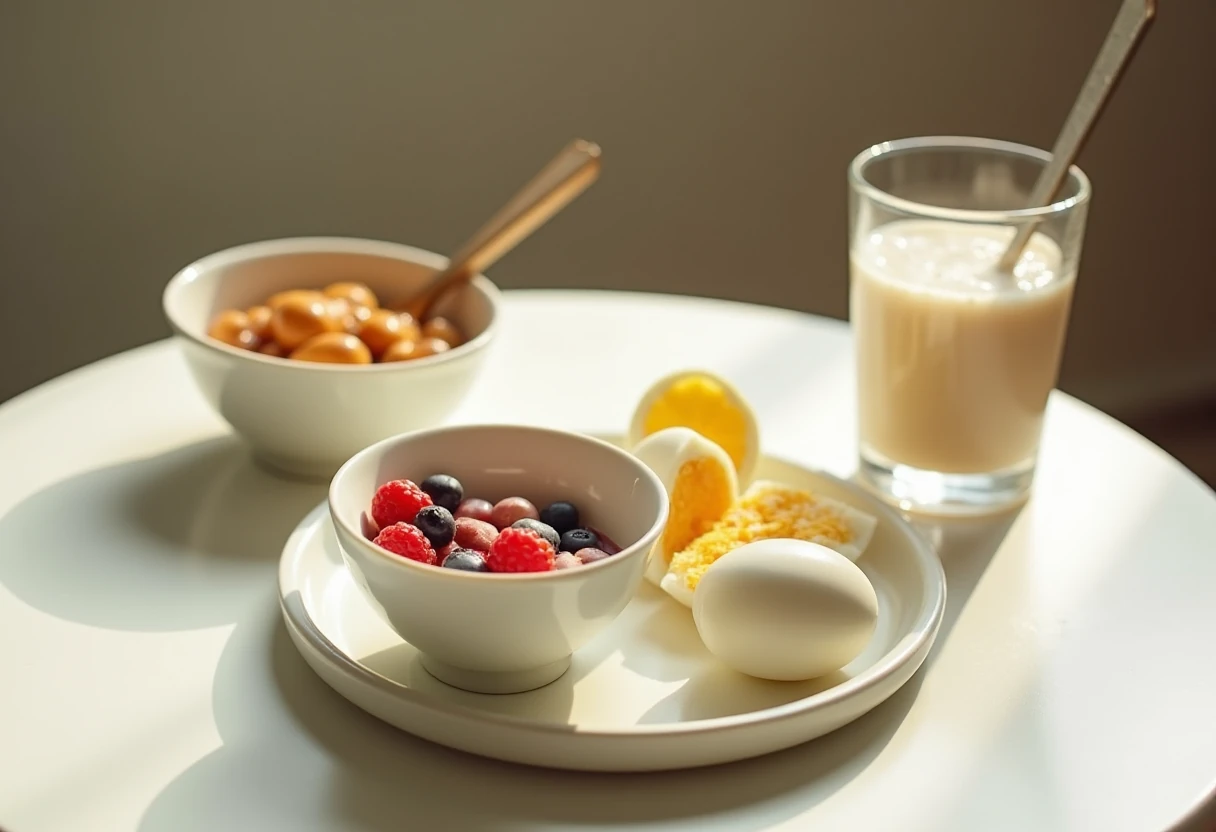
A low calorie high protein breakfast is the single easiest meal to get right, because the building blocks are cheap, fast, and almost all under 250 calories. A meta-analysis of adult trials found that higher-protein intake increases feelings of fullness compared with lower-protein intake (Journal of the Academy of Nutrition and Dietetics, 2016, PMID:26947338). The practical target most people aim for is 25–30g of protein in the morning without pushing the calorie count past roughly 300.
A good low calorie high protein breakfast delivers about 25–30g of protein for under 300 calories. The most efficient single foods are egg whites (four whites give 13g of protein with no saturated fat) and low-fat cottage cheese (14g of protein for 81 calories per 113g). Pairing one of those with a protein shake or Greek yogurt reaches 30g in minutes.
Below are twelve options sorted by approach — egg-based, yogurt-based, shake-based, and savory. Numbers are typical reference values for a standard single serving; for full recipes and method, see the recipe index.
| Breakfast idea | Protein | Calories | Prep time |
|---|---|---|---|
| Four egg whites, scrambled with spinach | 13g | ~80 | 5 min |
| Three-egg veggie scramble | ~19g | ~230 | 8 min |
| Two baked egg muffins (make-ahead) | ~14g | ~140 | 2 min (reheat) |
| Two-egg shakshuka, single serving | ~16g | ~250 | 15 min |
| Low-fat cottage cheese (113g), 1% milkfat | 14g | 81 | 1 min |
| Greek yogurt with berries | ~17g | ~150 | 2 min |
| Skyr with chia and cinnamon | ~18g | ~180 | 2 min |
| Potato protein shake with water | ~25g | ~100 | 1 min |
| Protein shake blended with frozen berries | ~25g | ~150 | 3 min |
| Smoked salmon on a thin slice of rye | ~16g | ~190 | 3 min |
| Tofu scramble with peppers | ~18g | ~210 | 10 min |
| Turkey and egg-white wrap | ~22g | ~240 | 7 min |
The two anchor numbers in that table are verified: four egg whites provide 13g of protein and are almost entirely protein with no saturated fat (Cleveland Clinic Health Essentials, 2025), and 113g of 1% cottage cheese provides 14g of protein for 81 calories (USDA FoodData Central). The rest are standard single-serving reference values — use them as a planning guide, not a lab result.
Why does a high protein breakfast reduce afternoon cravings?
A high protein breakfast reduces afternoon cravings because protein triggers the release of the gut satiety hormones GLP-1 and peptide YY (PYY), which signal fullness to the brain and slow stomach emptying. A meta-analysis of adult trials confirmed that higher-protein intake raises fullness ratings (Journal of the Academy of Nutrition and Dietetics, 2016, PMID:26947338). High-protein meals also increase thermogenesis more than standard meals (Journal of the American College of Nutrition, 2004, PMID:15466943).
The mechanism matters more at breakfast than at any other meal, because it sets the satiety tone for the rest of the day. When the first meal is mostly refined carbohydrate, blood sugar rises and falls quickly and hunger returns within a couple of hours. A protein-forward plate flattens that curve. This is also why interest in protein has climbed alongside GLP-1 medications, with market surveys reporting that a large share of GLP-1 users actively seek out high-protein or protein-fortified products. If you want the deeper physiology, our guide to protein for weight loss covers satiety, thermogenesis, and muscle retention during a calorie deficit in detail.
Egg-based options: the lowest-calorie protein per gram
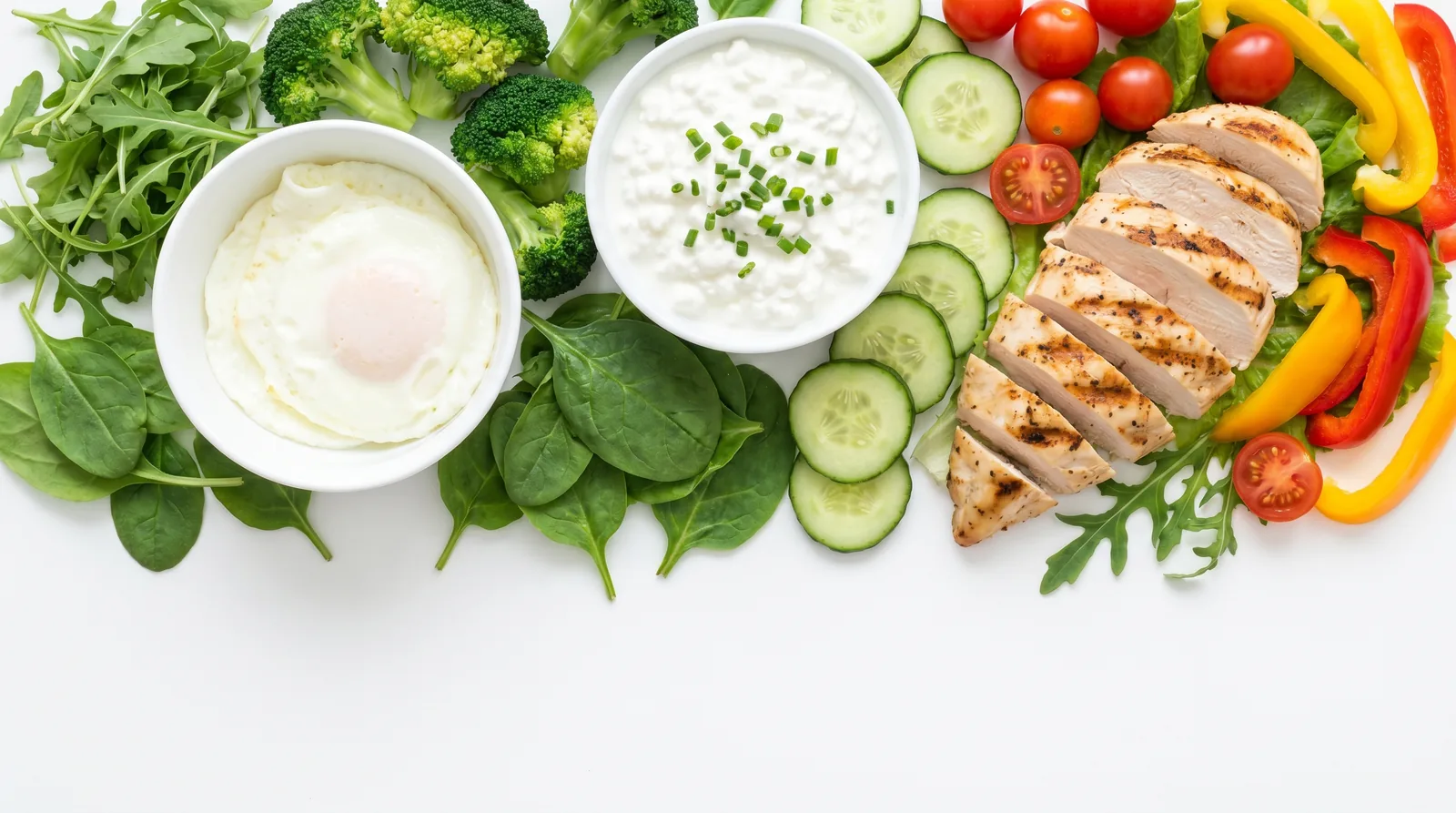
Eggs and egg whites give you the most protein for the fewest calories of any breakfast staple. Four egg whites supply 13g of protein with essentially no saturated fat (Cleveland Clinic, 2025), so an egg-white scramble with vegetables lands well under 150 calories. Whole eggs add fat and calories but also flavor and satiety, so a mix of one whole egg plus three or four whites is a common compromise.
For a high protein low calorie breakfast that holds up on a busy morning, bake a tray of egg muffins on Sunday: whisk whole eggs and egg whites with chopped vegetables, bake in a muffin tin, and reheat two on weekday mornings. Shakshuka — eggs poached in spiced tomato — is the higher-calorie egg option here but still under 300 for a single-serving portion, and it is filling enough to carry most people to lunch.
Yogurt and cottage cheese: zero cooking, high protein
Dairy gives you a low calorie breakfast high protein without turning on the stove. Low-fat cottage cheese is the standout on a protein-per-calorie basis: 113g of 1% cottage cheese delivers 14g of protein for just 81 calories (USDA FoodData Central). Stir in a little fruit or pepper and salt depending on whether you want it sweet or savory.
Greek yogurt and skyr (an Icelandic strained yogurt) sit close behind, typically around 17–18g of protein per serving. Buy the plain, unsweetened versions and add your own fruit — flavored tubs often carry as many added sugars as a dessert, which undoes the low-calorie goal. A bowl of plain Greek yogurt with a handful of berries and a spoon of chia is ready in two minutes and reads cleanly on the label, with nothing you need to squint to identify.
Shake-based options: the fastest 25 grams
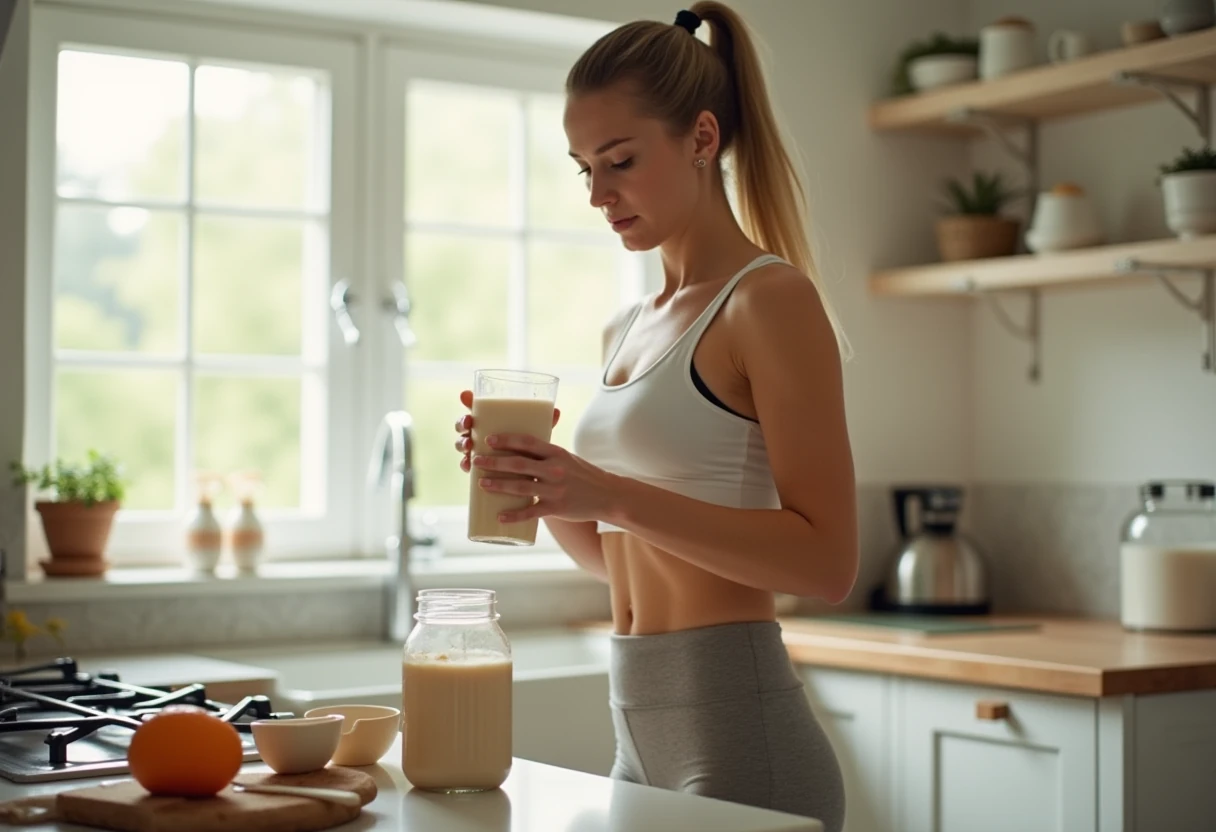
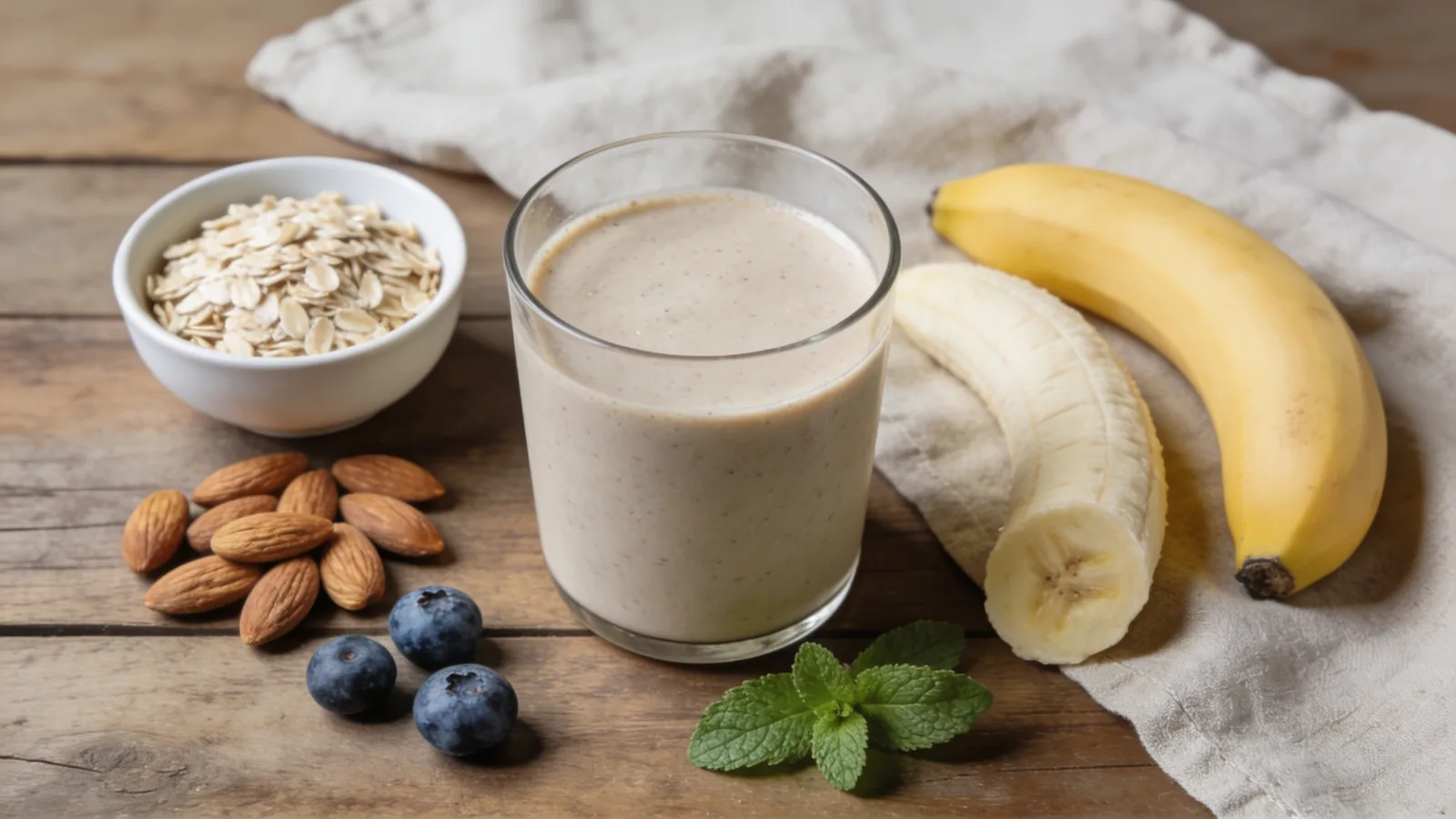
A shake is the fastest way to a high protein low calorie breakfast, especially on mornings when chewing feels like too much. Mixed with water rather than milk, a single-ingredient protein isolate keeps the calorie count near the protein content itself — no fat, no added sugar, nothing else to account for. Potato protein isolate is one such option; it is 80–95% protein on a dry basis and is recognized as a high-quality, allergy-free protein source.
It also sidesteps a problem many people meet at 7 a.m.: digestive comfort. A purified protein isolate contains little fermentable carbohydrate, which makes potato protein gentler on a sensitive stomach than some pea or whey-concentrate powders that carry more fermentable carbohydrate. Blend it with frozen berries and ice for something closer to a smoothie, or shake it with cold water and coffee for a savory-adjacent option. For more on building a low-calorie liquid breakfast, see our low calorie protein shake guide, and for what potato protein actually is, read what is potato protein.
Savory options for people who hate sweet breakfasts
Not everyone wants fruit and yogurt at dawn. Smoked salmon on a thin slice of rye gives you roughly 16g of protein and the omega-3 fats that come with oily fish, all for around 190 calories. A turkey and egg-white wrap pushes protein past 20g while staying near 240 calories. Tofu scramble with peppers is the plant-based savory pick at about 18g.
Leftover protein from dinner also works. Chicken breast is cited by registered dietitians as one of the best high-protein, low-calorie foods, and there is no rule that breakfast must be breakfast food. A few ounces of cold roast chicken with a tomato is faster than cooking eggs and just as low in calories. If you want this approach extended to midday, our high protein low calorie lunch ideas use the same logic.
How to hit 30 grams without adding calories
The reliable trick is to stack two efficient sources rather than scaling up one. Egg whites plus a scoop of protein isolate, or cottage cheese plus Greek yogurt, reach 30g while staying lean — because you are adding protein, not fat or sugar. Single foods rarely clear 30g at a sensible portion, so combining is normal and not a sign you are overeating.
Keep added fats deliberate. A tablespoon of oil or a slice of cheese can quietly add 100–120 calories that contribute almost no protein. The same calories spent on egg whites or isolate buy you another 13–25g of protein. That is the whole arithmetic of a low calorie high protein breakfast: spend your calorie budget on the macronutrient you actually came for.
References
- Dhillon J, et al. The Effects of Increased Protein Intake on Fullness: A Meta-Analysis and Its Limitations. Journal of the Academy of Nutrition and Dietetics (2016). PMID:26947338
- Halton TL, Hu FB. The effects of high protein diets on thermogenesis, satiety and weight loss: a critical review. Journal of the American College of Nutrition (2004). PMID:15466943
- FoodData Central. U.S. Department of Agriculture, Agricultural Research Service.
- Cleveland Clinic Health Essentials. Are Egg Whites Good for You? (2025).