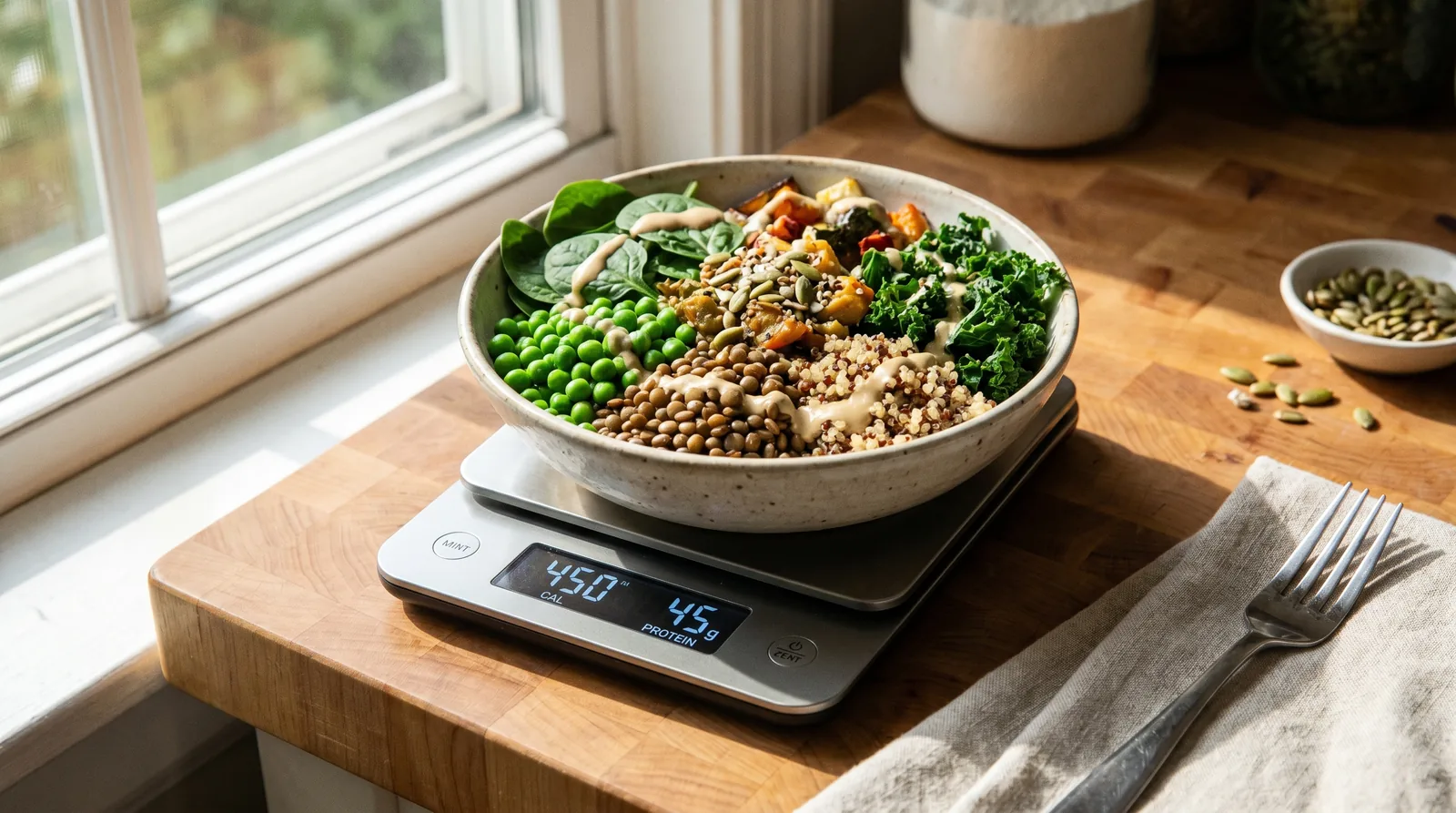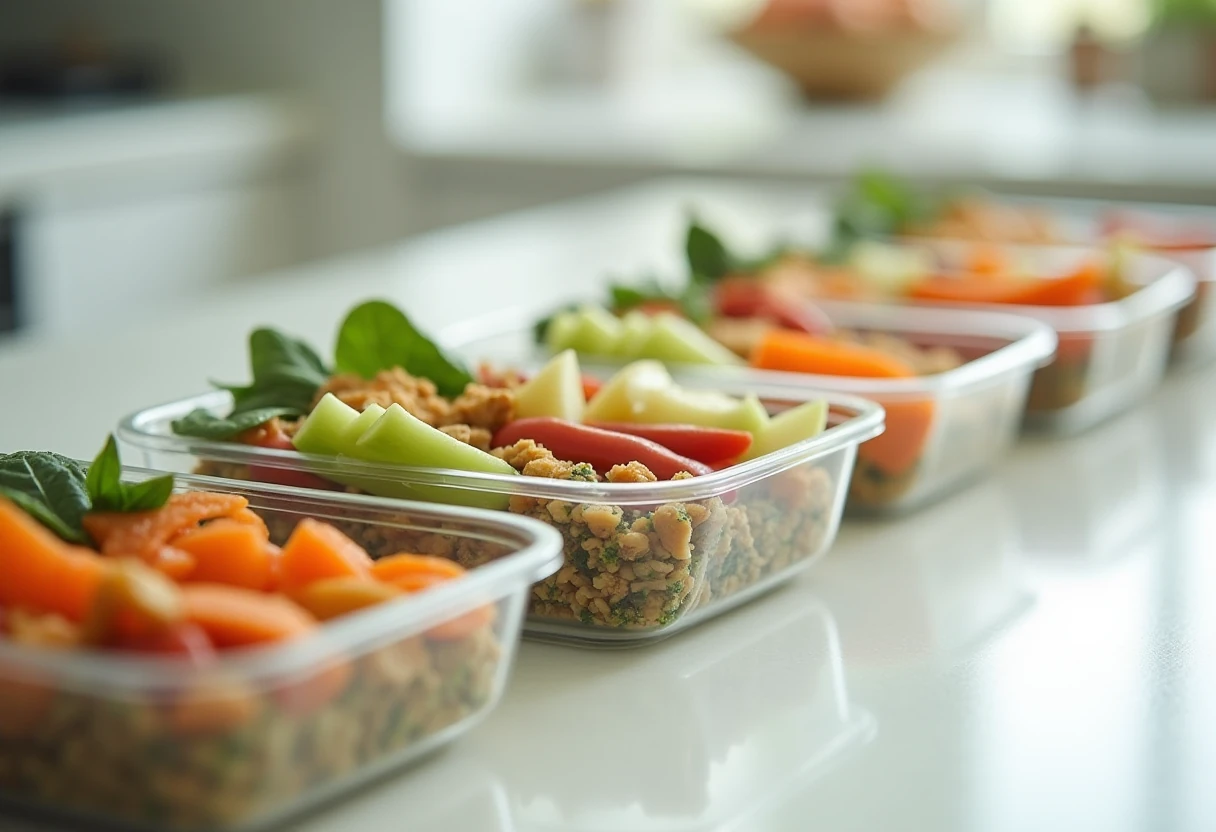
A high protein low calorie lunch is one that delivers 30 grams or more of protein for roughly 350–450 calories — enough to keep you full until dinner without crowding out the rest of the day’s calorie budget. The math is simpler than most plans make it: anchor the plate with a lean protein, add fiber, and keep the calorie-dense extras measured rather than poured. The fourteen options below are sorted by how you actually make them.
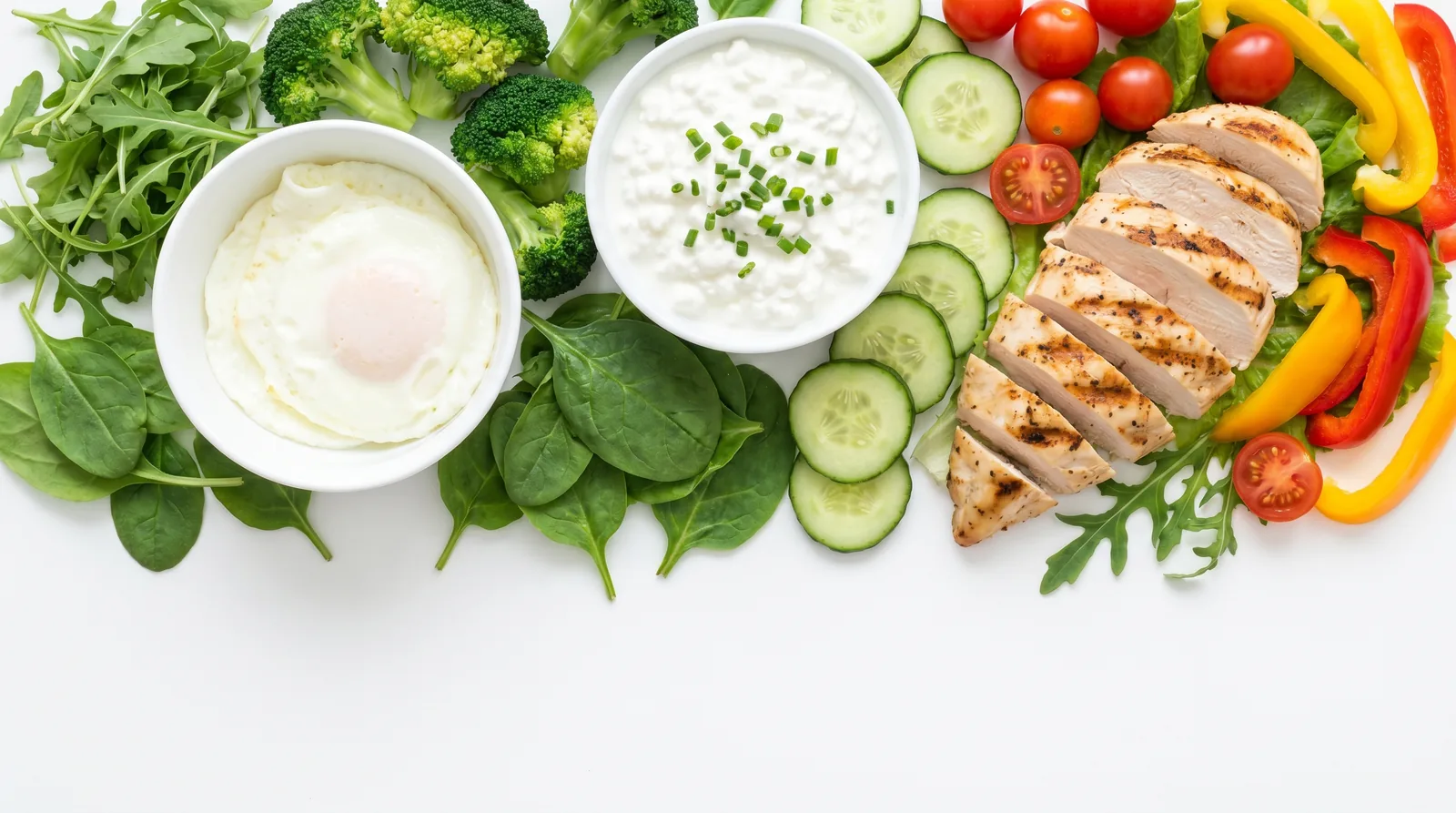
A high protein low calorie lunch typically provides 30–40g of protein for 350–450 calories by pairing a lean protein source — chicken breast, white fish, egg whites, cottage cheese, tuna, tofu, or a protein isolate — with high-fiber vegetables or legumes. Cottage cheese (1% fat) gives about 14g protein for 81 calories per 113g serving, and four egg whites give 13g for almost no fat. Protein and fiber together extend satiety more than either alone.
Most “diet lunch” advice fails on one point: it cuts calories without protecting protein, so you are hungry by 3 p.m. and eating the rest of your deficit back. The goal here is the opposite — protein density first, calorie restraint second. If you want the underlying mechanism, our guide to protein for weight loss covers why a higher-protein deficit preserves lean mass and curbs appetite.
14 High Protein Lunch Ideas, Low Calorie, by Style
The table below lists each lunch with its approximate protein, calories, hands-on prep time, and primary protein source. Values are estimates for a single serving and will shift with brands and portions — weigh your protein if the number matters to you. They are grouped into batch-prep (make once, eat several days), no-cook (assemble cold), hot (cooked to order), and cold (composed salads and bowls).
| Lunch | Protein (g) | Calories | Prep time | Primary protein |
|---|---|---|---|---|
| Batch-prep | ||||
| Chicken & broccoli meal-prep bowl with ½ cup quinoa | 40 | 430 | 30 min (4 servings) | Chicken breast |
| Turkey & black bean chili | 34 | 360 | 40 min (6 servings) | Lean ground turkey |
| Lentil & chicken soup | 32 | 340 | 45 min (6 servings) | Lentils + chicken |
| Egg-white & spinach frittata muffins (3) | 26 | 210 | 25 min (12 muffins) | Egg whites |
| No-cook | ||||
| Cottage cheese, cucumber & cherry tomato bowl | 28 | 250 | 5 min | Cottage cheese (1%) |
| Tuna & white bean salad | 36 | 380 | 8 min | Canned tuna in water |
| Savory Greek yogurt bowl with seeds & veg | 24 | 290 | 5 min | Nonfat Greek yogurt |
| Smoked salmon & cottage cheese plate | 32 | 300 | 5 min | Smoked salmon |
| Hot | ||||
| Shrimp & mixed-vegetable stir-fry | 35 | 320 | 15 min | Shrimp |
| Baked white fish with roasted vegetables | 34 | 330 | 25 min | Cod or haddock |
| Tofu & edamame stir-fry | 30 | 360 | 15 min | Firm tofu + edamame |
| Savory potato-protein-blended vegetable soup | 27 | 240 | 10 min | Potato protein isolate |
| Cold | ||||
| Chicken & chickpea salad with lemon | 38 | 410 | 10 min | Chicken breast + chickpeas |
| Edamame & tuna grain bowl | 33 | 400 | 10 min | Edamame + tuna |
What Makes a Lunch High Protein and Low Calorie?
A lunch counts as high protein and low calorie when protein supplies a large share of its energy — roughly 30g or more — while total calories stay near 350–450. The practical lever is choosing protein sources with little accompanying fat. Chicken breast is cited by registered dietitians as one of the best high-protein, low-calorie foods, and four egg whites contain 13g of protein with no saturated fat.
The pattern across every lunch in the table is the same: a lean protein doing most of the work, vegetables adding volume for almost no calories, and a measured portion of grain or legume for fiber and staying support. Cottage cheese earns its place because the 1% version provides about 14g of protein for only 81 calories per 113g serving — an unusually high protein-to-calorie ratio. For a broader list of ingredients that hit this ratio, the recipe library at our recipe index shows how the same staples recombine.
How Do You Build a Lunch That Holds Satiety Through the Afternoon?
Build it from two parts: protein and fiber. Protein is the most satiating macronutrient, and high-protein meals increase satiety and thermogenesis more than standard-protein meals (Journal of the American College of Nutrition, PMID:15466943). Fiber slows gastric emptying and blunts the post-lunch glucose rise. Together they keep you full for hours where a low-fat, low-protein salad would not.
In practice, this means pairing your protein with something fibrous in the same meal — beans, lentils, chickpeas, edamame, or a generous pile of vegetables. The tuna and white bean salad works because the beans add roughly 6–8g of fiber on top of 36g of protein. A plain tuna salad on its own digests faster and leaves you hungry sooner. The protein-and-fiber rule is also why the chili, the lentil soup, and the chickpea salad rank among the most filling options in the table despite modest calorie counts.
A simple formula for any plate
- One lean protein — aim for 30g+ (a palm-sized chicken breast, a can of tuna, a cup of cottage cheese, two scoops of isolate).
- One fiber source — ½ cup of legumes or two cups of non-starchy vegetables.
- A measured carb or fat — ½ cup of grain, or a tablespoon of olive oil or seeds, kept to a portion rather than a pour.
- Acid and salt — lemon, vinegar, herbs. Flavor is what makes a repeatable lunch actually repeatable.
Batch-Prep Lunches That Survive the Week
Batch-prep is the difference between a plan you describe and a plan you eat. The four batch options in the table are built to refrigerate for three to four days. The chicken and broccoli bowl reheats without turning rubbery if you slightly undercook the chicken on day one. Turkey chili and lentil soup actually improve overnight as flavors settle, and a single pot covers most of a work week.
Egg-white frittata muffins are the quiet workhorse here: bake a dozen on Sunday, and three muffins give 26g of protein for 210 calories — a grab-and-go lunch with no assembly. If you keep a tub of cottage cheese and a bag of pre-washed greens alongside your batch items, you can extend any of them into a second meal without cooking again.
No-Cook and Cold Lunches for Days You Have No Time
No-cook lunches are assembled cold in five to ten minutes, which makes them the most reliable category for anyone who keeps skipping lunch. The cottage cheese, cucumber, and tomato bowl is the fastest 28g of protein in the table. Smoked salmon with cottage cheese is essentially a deconstructed bagel plate without the bagel — 32g of protein for 300 calories.
Cold composed bowls scale up easily for sharing or for two days at once. The chicken and chickpea salad and the edamame and tuna grain bowl both pass 33g of protein and travel well, since nothing in them wilts the way leafy salads do. Dress them just before eating.
Where Potato Protein Fits Into Lunch
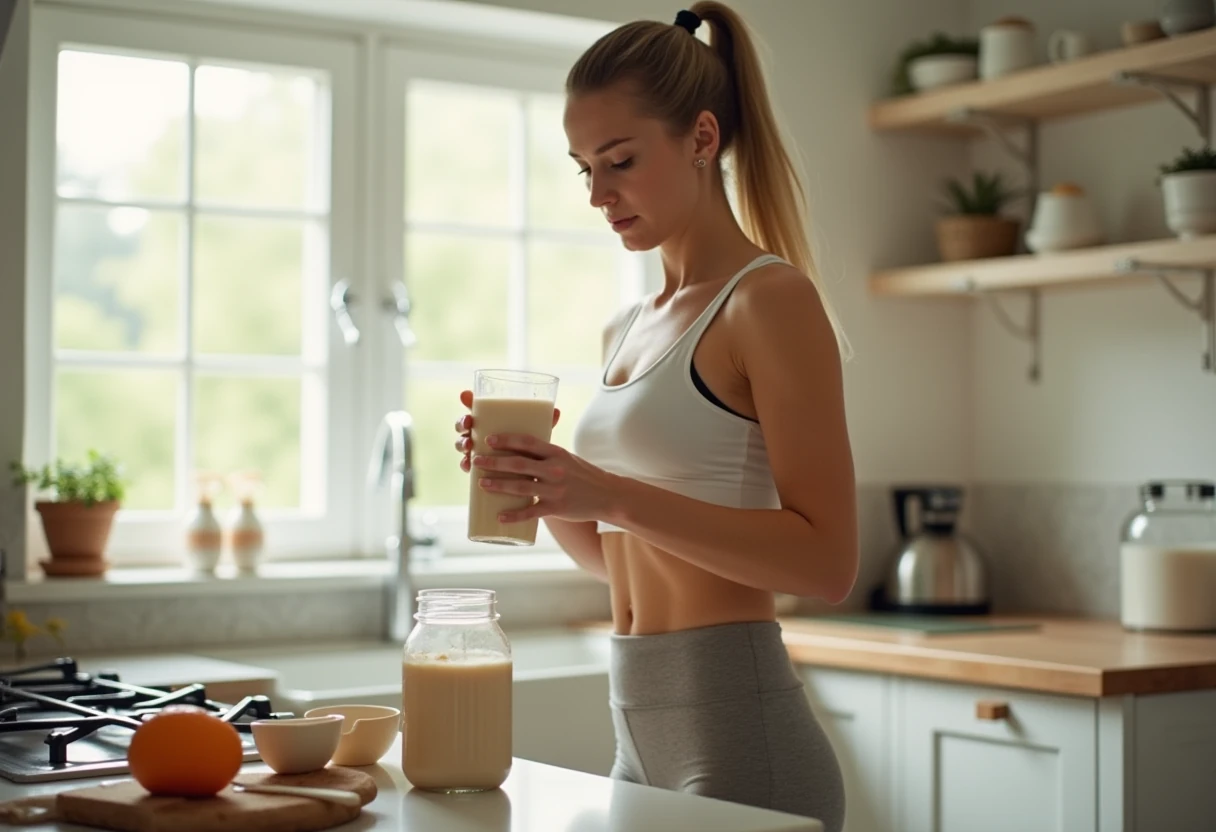
If hitting 30g of protein from whole foods alone is hard on a given day, an unflavored protein isolate stretched into a savory soup or a blended bowl closes the gap without adding much volume or calorie load. Potato protein isolate is a high-quality plant protein — a 2020 trial found that 25g of potato protein isolate stimulated muscle protein synthesis at rest and after exercise (Oikawa et al., Nutrients, 2020, PMID:32349353). It is also a low-FODMAP protein source (Monash University, 2019), which matters if dairy- or pea-based powders leave you bloated.
A single-ingredient isolate has one practical advantage for cooking: it disappears into your food. Stirred into the potato-protein vegetable soup in the table, it adds 27g of protein for 240 calories and no detectable flavor. If you want the background on how it is made and what it is, see what is potato protein.