A 1200 calorie high protein diet plan should deliver roughly 90 to 120 grams of protein per day — about 30 to 40 percent of total calories — so you hold onto muscle while losing fat. At 4 calories per gram, 90g of protein is 360 calories, leaving about 840 calories for fats, fibre-rich carbohydrates, and vegetables. The harder the calorie cut, the more protein matters: it is the one macronutrient your body cannot improvise its way around.
On a 1200-calorie diet, aim for 90 to 120 grams of protein daily — 30 to 40 percent of calories. A diet is formally classified as high-protein when 40 percent or more of calories come from protein (Wikipedia), which at 1200 calories equals 120g. Protein increases satiety and thermogenesis more than carbohydrate or fat (Journal of the American College of Nutrition, PMID 15466943), making it the most useful macronutrient to prioritize in a deep deficit.
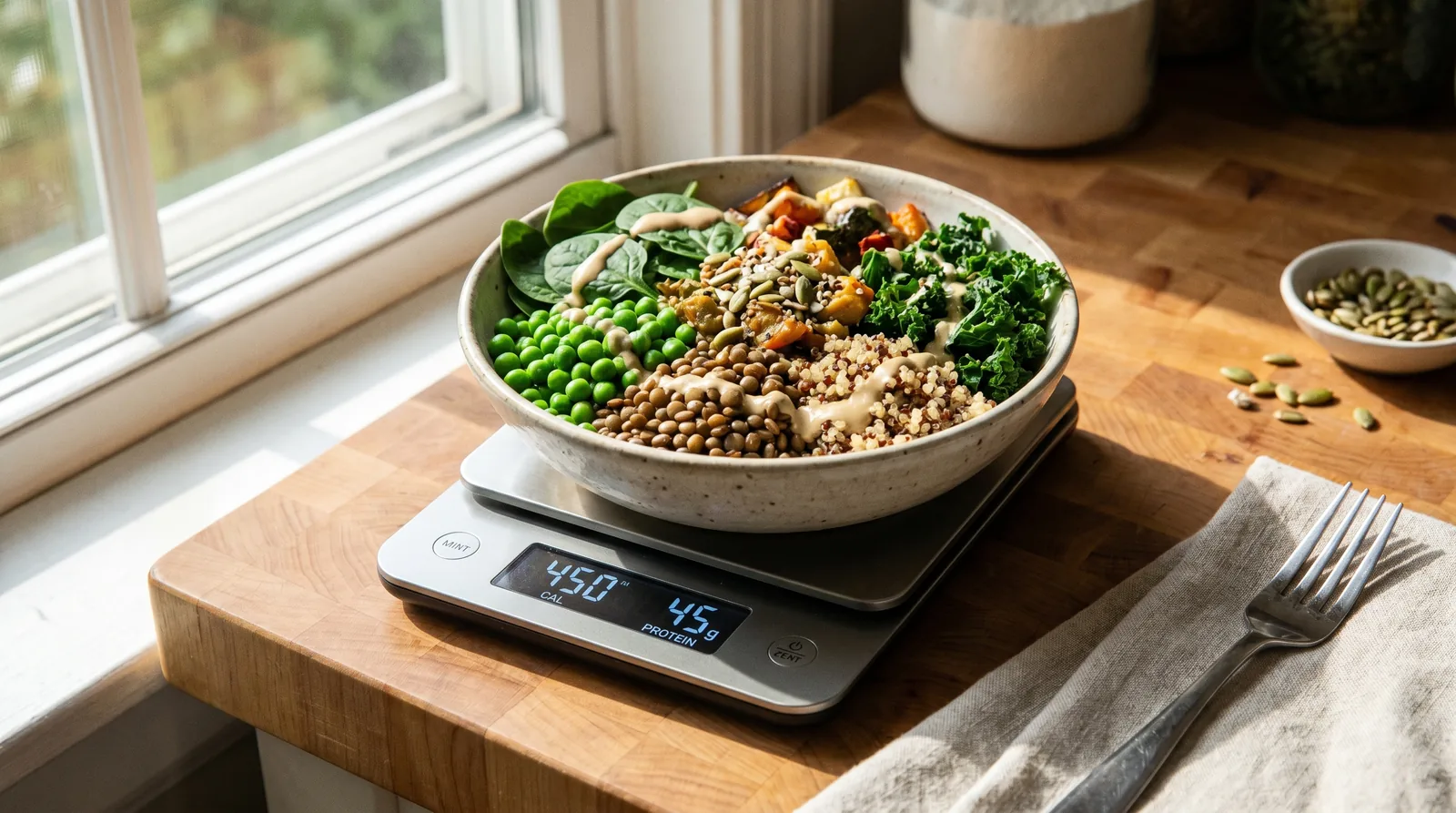
Hit a protein target that protects lean mass on 1200 calories, without weighing every bite or living on chicken breast. What you need: A food scale · A protein source per meal · A single-ingredient isolate · 15 minutes to plan · Time: 15 min
Steps
Set a protein floor of 90–120g
Start with the number, not the menu. Thirty percent of 1200 calories is 90g of protein; forty percent is 120g, the threshold at which a diet is formally defined as high-protein (Wikipedia). On a small calorie budget, err toward the upper end — under-eating protein is the single most common mistake people make when they cut calories, and it shows up as lost muscle rather than lost fat. If you want to work from body weight instead of a percentage, our guide to calculating your daily protein target for weight loss walks through the per-kilogram math.
Tip: Pick one number and write it on the fridge. “100g protein” is a target you can hit; “eat more protein” is not.
Anchor every meal with 25–30g
Divide your floor across the day rather than back-loading it at dinner. A proposed plan for preventing age-related muscle loss recommends 25 to 30g of high-quality protein per meal (Journal of Clinical Medicine Research, PMID 26566405). Three meals at that dose plus one protein-led snack lands you between 90 and 120g without any single plate feeling extreme. This per-meal distribution matters more after 40, because the muscle-building response to a protein dose is blunted with age — a condition called anabolic resistance (PMID 23558692). Older adults generally need a larger, more frequent protein stimulus to get the same result a 25-year-old gets effortlessly.
Build plates from high-protein, low-calorie foods
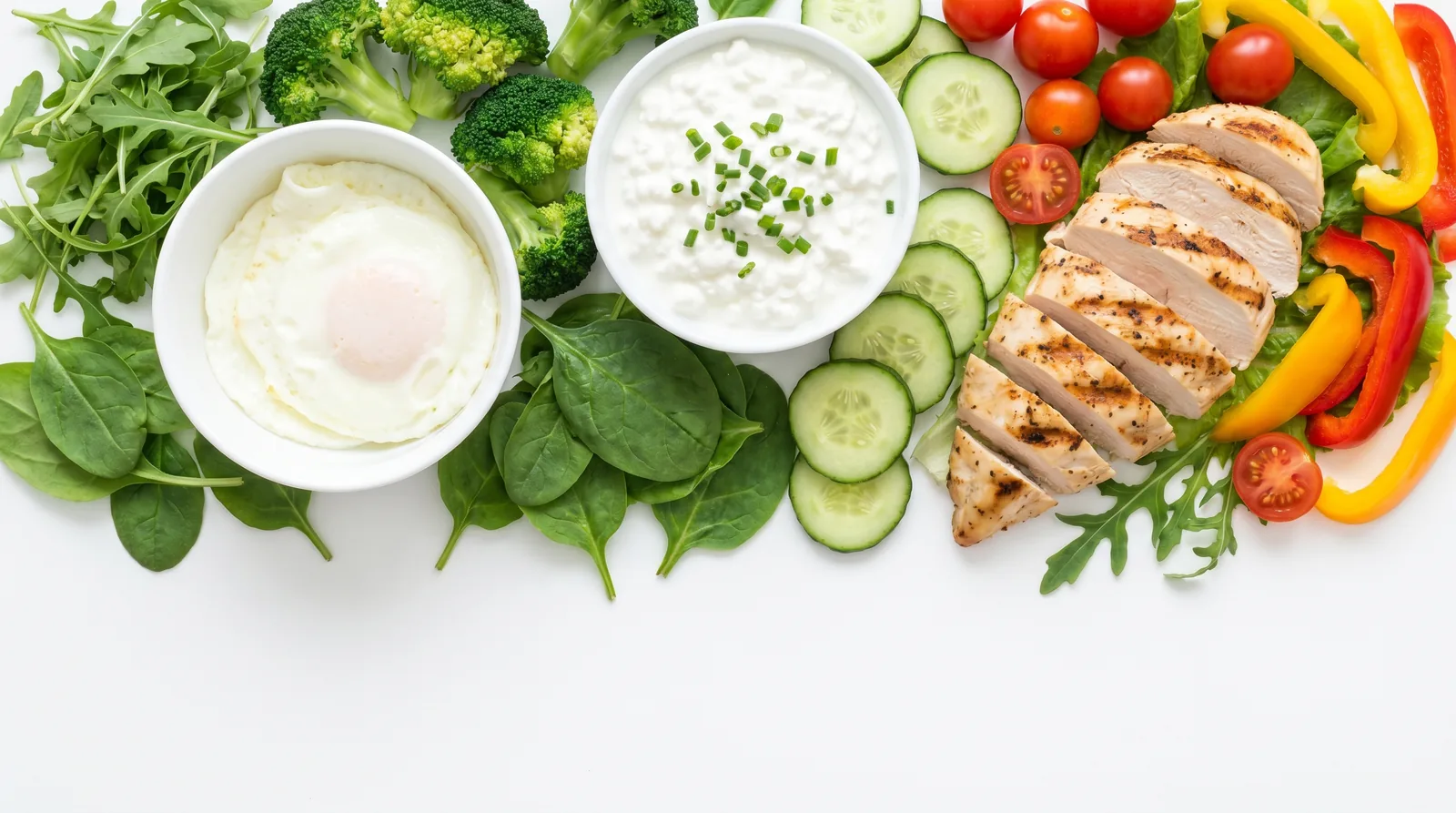
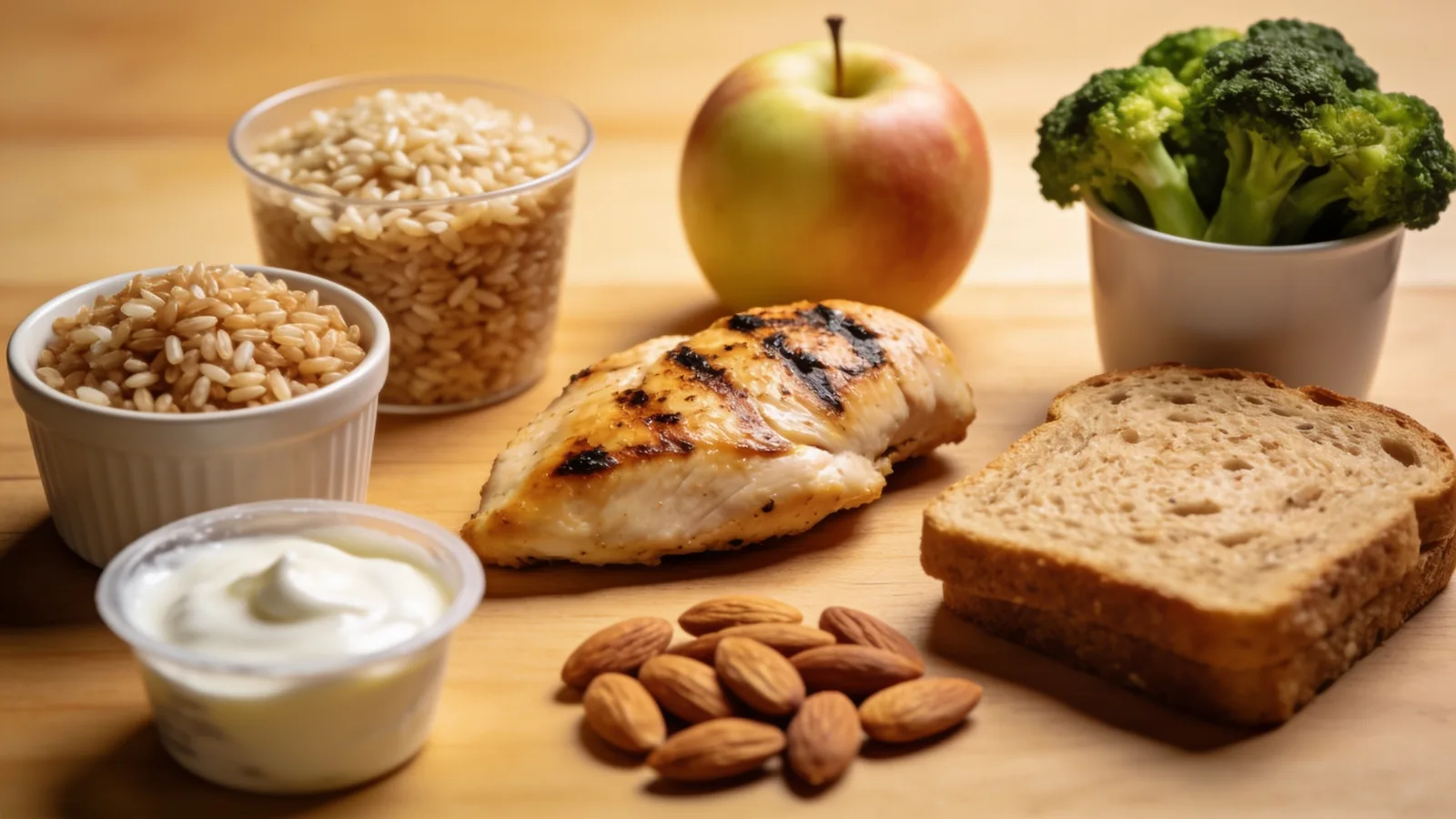
The whole game on 1200 calories is protein density — grams of protein per calorie spent. Chicken breast is cited by registered dietitians as one of the best high-protein, low-calorie foods. Four egg whites (half a cup from a carton) provide 13g of protein and are almost entirely protein with no saturated fat (Cleveland Clinic, 2025). One-percent cottage cheese gives about 14g of protein for just 81 calories per 113g serving (USDA FoodData Central). Lean fish, plain Greek yogurt, and tofu round out the list. Anchor each meal with one of these, then fill the rest of the plate with non-starchy vegetables that add volume and fibre for almost no calories. For a deeper menu of options, see our roundup of high-protein, low-calorie snacks under 200 calories.
Pitfall: Avoid “high-protein” packaged bars and shakes that smuggle in 200+ calories of sugar and fat per serving. On 1200 calories you cannot afford the padding — read the label and judge protein per calorie, not the marketing.
Close the gap with a single-ingredient isolate
Whole foods will get you most of the way, but the last 20 to 30g is where people stall — and where a protein isolate earns its place. Whey protein isolate is 90 to 95 percent protein with under one percent lactose (mindbodygreen, 2023), so a scoop delivers protein without much else. If dairy is a problem, potato protein isolate is a complete plant option: 25g of it stimulated muscle protein synthesis at rest and after exercise in young women (Nutrients, PMID 32349353), its DIAAS has been reported as high as 100% (Food Science & Nutrition, Herreman et al., 2020, PMID 33133540), and Monash University classifies it as a low-FODMAP source (Monash FODMAP, 2019). A single-ingredient powder also keeps your label honest — you can read it without squinting. If you are new to it, start with what potato protein actually is.
Tip: It disappears into food. Stir an unflavoured isolate into oats, soup, or mashed potato to add 20g of protein without changing the calorie math much.
Spread protein across the day
Map your floor onto a real schedule. A workable 1200-calorie day might look like: cottage cheese with berries and four egg whites at breakfast (about 27g protein, ~220 calories), a large chicken-and-vegetable salad at lunch, an isolate shake mixed with water mid-afternoon, and a portion of lean fish with greens at dinner. That structure clears 100g of protein while leaving room for a little olive oil and fruit. Protein’s satiety advantage compounds across the day — it reduces subsequent energy intake more than carbohydrate or fat (PMID 18469287), so each protein-led meal makes the next calorie cut easier to sustain rather than harder. That same satiety is why 74 percent of GLP-1 medication users now seek out high-protein products (Food Business News, 2025): hunger management and muscle preservation pull in the same direction.
Track for one week, then adjust
Log everything for seven days using a food scale — eyeballing portions is where 1200-calorie plans quietly become 1600-calorie plans. Check two things: are you consistently hitting 90g+ of protein, and is the scale trending down over two weeks rather than two days. If you are losing strength or feeling flat, your protein is probably too low before your calories are; raise protein first, calories second. The deeper context on why protein protects the scale-friendly tissue you actually want to keep is in our pillar on protein for weight loss.
Checklist
- Daily protein target of 90–120g written down before the week starts
- 25–30g of protein anchoring each main meal
- Every plate led by a protein-dense food (chicken, egg whites, cottage cheese, fish, tofu)
- A single-ingredient isolate on hand to close the last 20–30g
- Non-starchy vegetables filling volume for minimal calories
- One week of weighed, logged food before changing anything