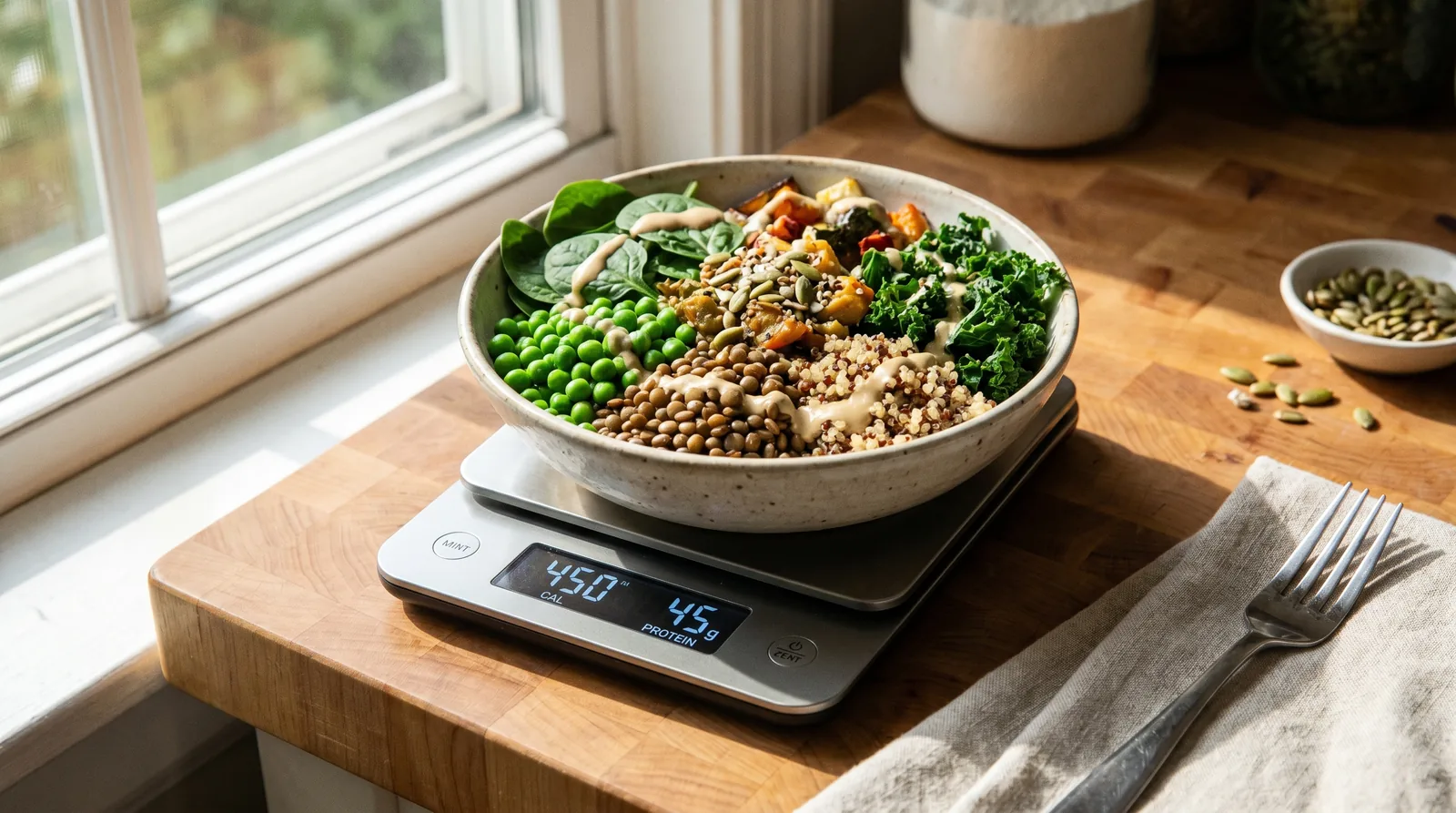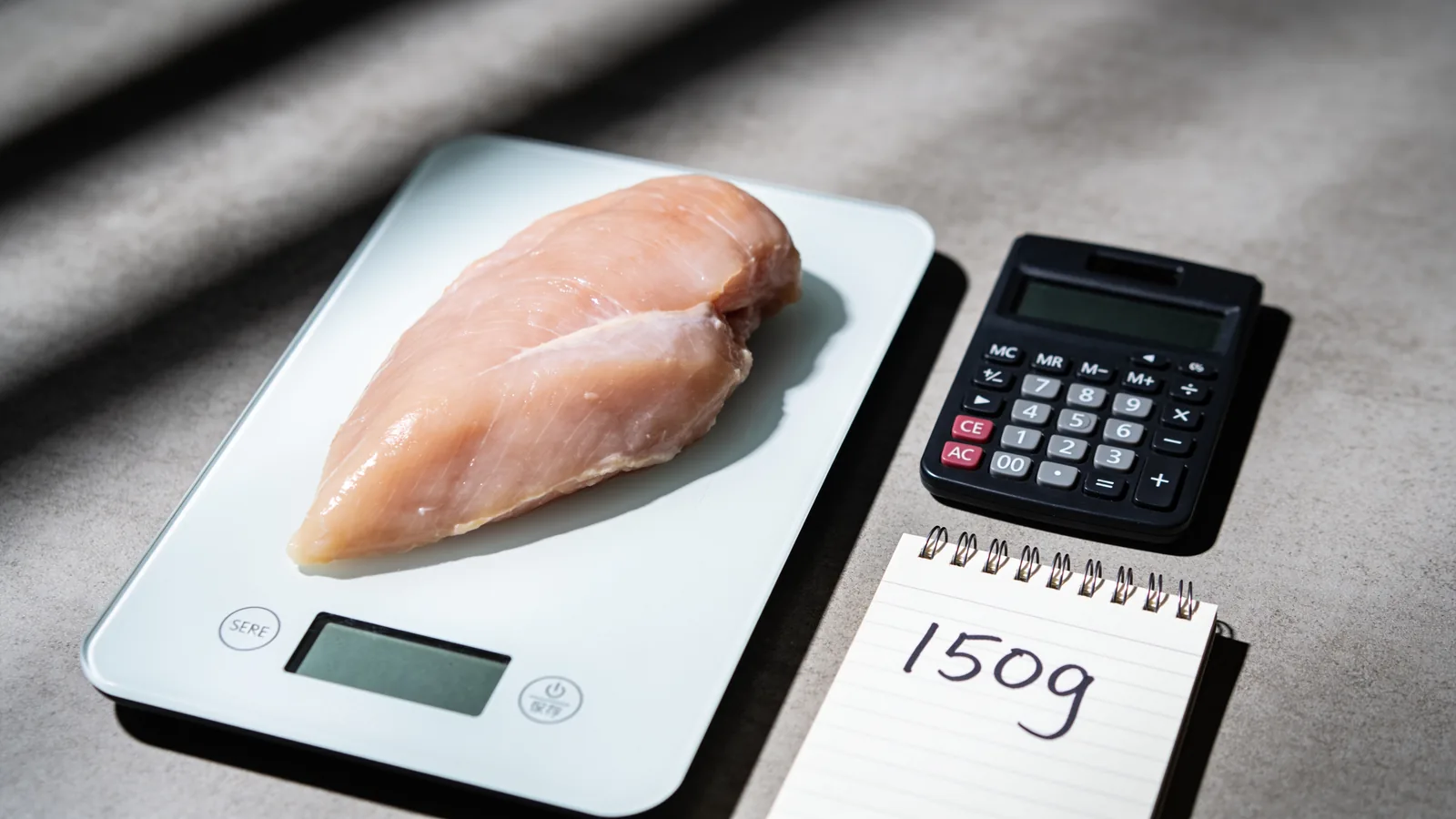
The single number that decides how much protein per day to lose weight is your body weight in kilograms, multiplied by a target between 1.2 and 1.6 grams. For most adults in a calorie deficit, roughly 1.6 g/kg is the figure that protects muscle while the fat comes off — about twice the basic RDA of 0.8 g/kg. The rest is arithmetic and meal timing.
To lose weight while keeping muscle, most adults in a calorie deficit need roughly 1.6 grams of protein per kilogram of body weight per day — about double the basic RDA of 0.8 g/kg. For a 70 kg (154 lb) person, that is around 112 grams daily. Protein also increases satiety and thermogenesis more than carbohydrate or fat, which makes the deficit easier to hold (Journal of the American College of Nutrition, 2004, PMID:15466943).
By the end of this you will have one specific daily protein number, split across your meals, that holds onto muscle while you lose fat. What you need: A body-weight figure (kg or lb) · A calculator · 10 minutes · Time: 13 min
How to Calculate Your Protein Target
There are six steps. The first four give you a single daily number. The last two make that number actually work — by splitting it across the day and choosing sources that are absorbed well. Protein matters more during weight loss than at maintenance, because a calorie deficit signals the body to break down tissue for energy, and muscle is a target unless you give it a reason not to be.
Convert your body weight to kilograms
The research recommendations are all written in grams per kilogram, so start there. If you know your weight in pounds, divide by 2.205. A 165 lb person weighs 74.8 kg. A 130 lb person weighs 59 kg. Write that number down — it anchors every calculation below.
Tip: If your goal weight is far from your current weight, calculate against a target between the two rather than a distant goal. Using a weight far below where you are now produces a protein number too low to hold muscle through the deficit.
Choose your grams-per-kilogram multiplier
The RDA of 0.8 g/kg keeps a sedentary adult in nitrogen balance — it is a floor for survival, not a target for losing fat while keeping muscle. In a deficit, aim higher. A daily intake above 1.6 g/kg is proposed as the level needed to maximally stimulate muscle protein synthesis (Naclerio & Seijo, 2019). Most people setting a weight-loss target land between 1.4 and 1.6 g/kg.
Higher protein also does the heavy lifting on appetite: it increases satiety and reduces later energy intake more than carbohydrate or fat (PMID:18469287). For the full reasoning on why protein leads the macros during fat loss, see our pillar guide to protein for weight loss.
Pitfall: Do not confuse a high-protein diet with one where 40% or more of total calories come from protein. You are setting a gram target tied to body weight, not flipping your whole plate to meat. The two are different things.
Adjust for age and training
Two factors push the multiplier up. The first is age. After about 50, muscle responds less to a given dose of protein — a phenomenon called anabolic resistance (PMID:23558692). Older adults appear to need 1.0–1.2 g/kg just to defend against muscle loss (Clinical Nutrition, 2014, PMID:24814383), and in a deficit that floor rises. In one study, adults aged 70–79 who ate around 91 grams of protein a day lost 40% less lean mass than those who ate less (American Journal of Clinical Nutrition, PMID:18175749). If you are over 60, read our guide on how to tell if you have anabolic resistance before settling on a number.
The second factor is training. Endurance athletes need roughly 1.4–1.8 g/kg, and vegetarian or vegan athletes are advised toward 1.3–1.7 g/kg (The Whole U, University of Washington, 2015). If you lift or run while dieting, set your target at the top of your range, not the bottom.
Multiply to get your daily gram target
Body weight in kilograms × your multiplier = grams of protein per day. A 74.8 kg person at 1.6 g/kg needs about 120 g. A 59 kg person at 1.5 g/kg needs about 89 g. A 90 kg person at 1.4 g/kg needs about 126 g. Round to the nearest 5 grams — precision past that does nothing.
For reference, the RDA for a general adult woman is just 46 grams per day — which explains why someone who has been under-eating protein for years can roughly double their intake and still be within reason. Losing fat without losing muscle is the whole point of setting this number high; our guide on how to lose fat without losing muscle covers the training side that pairs with it.
Split the total across your meals
Distribution may matter as much as the daily total for holding onto muscle (J Frailty Aging, 2016, PMID:26980369). Divide your target across three or four meals so each one lands a meaningful dose rather than back-loading everything into dinner. A single post-exercise dose above 0.40 g/kg is proposed as the amount that maximally stimulates muscle protein synthesis (Naclerio & Seijo, 2019) — about 30 g for a 75 kg person.
A 120 g target splits cleanly into four meals of 30 g, or three meals of 40 g. Whichever you pick, no single meal should be near zero. The goal is to keep amino acids available across the day, not to chase one giant protein hit.
Tip: If breakfast is your weak point — and for most people it is — that is the meal to fix first. A 30 g breakfast often closes most of the daily gap on its own.
Choose sources that actually get absorbed
A gram target only counts if the protein is digested and used. Animal proteins generally score higher on quality metrics like PDCAAS and DIAAS than plant proteins, largely because of leucine content, the amino acid that triggers muscle protein synthesis. But the gap is narrower than it once looked. Potato protein isolate — typically 80–95% protein — stimulated muscle protein synthesis in young women at 25 g taken twice daily (Nutrients, 2020, PMID:32349353), performing as a high-quality plant source.
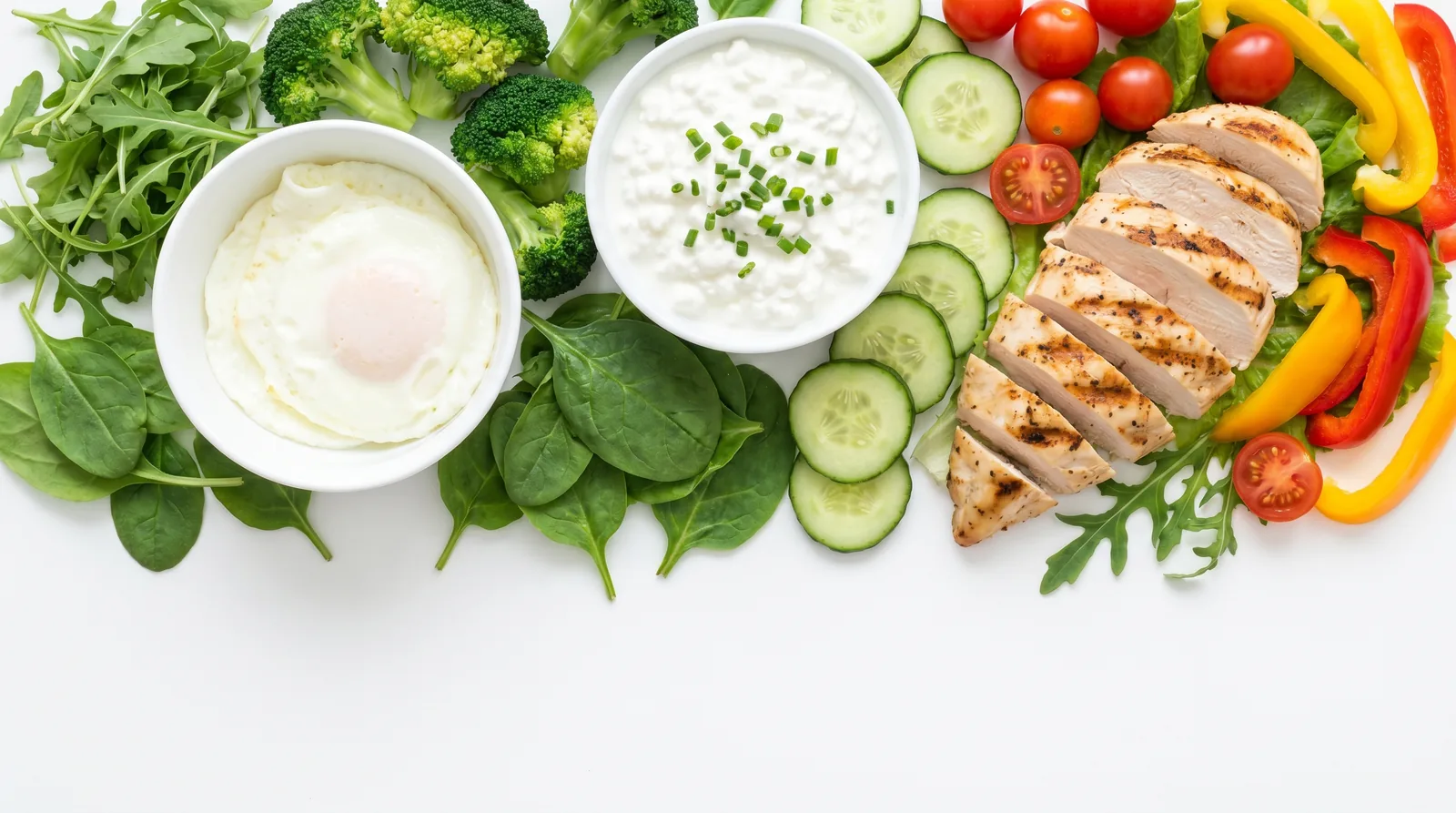
During a deficit, prioritise high-protein, lower-calorie sources so the grams fit your reduced calorie budget: egg whites (four whites give 13 g of almost isolated protein), lean meat, dairy, and single-ingredient protein powders. If you react to whey, soy, or pea, potato protein is also low-FODMAP (Monash University, 2019). For more on it, see what potato protein is.
Checklist
- Body weight converted to kilograms
- Multiplier chosen (1.2–1.6 g/kg, higher if over 60 or training)
- Daily gram target calculated and rounded to the nearest 5 g
- Total split into 3–4 meals of roughly 30–40 g each
- Sources chosen for protein quality and calorie cost