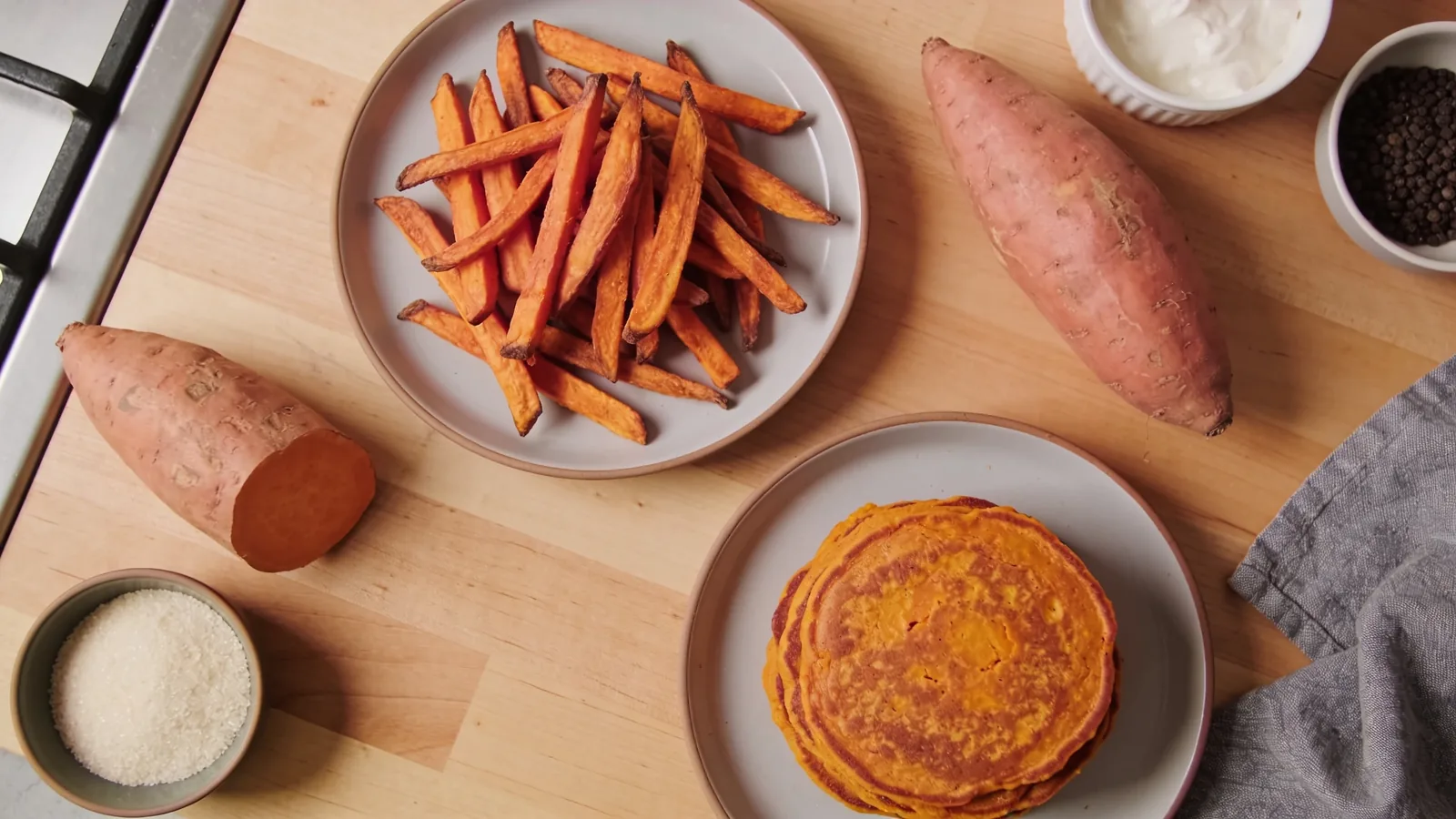
Sweet potato fries protein is modest, because a sweet potato is a starch-storage root, not a protein food. A serving of sweet potato fries or sweet potato pancakes made from the vegetable alone provides only a few grams of protein, and no amount of frying, baking, or mashing changes that. The protein on your plate comes from whatever you cook or pair the sweet potato with — eggs, dairy, a meat side, or an added protein isolate.
Why Sweet Potato Is a Low-Protein Food
A sweet potato stores energy as starch, which is why its calories are dominated by carbohydrate. Protein is a minor fraction of the tuber by weight. That biology is fixed: the way a root vegetable allocates its mass between starch and protein is set before it reaches your kitchen.
This is the same reason ordinary potatoes are low in protein per serving, even though the protein they do contain is unusually high quality. We cover the whole-vegetable numbers in How Much Protein Is in a Sweet Potato? — if you want the per-cup breakdown for the raw and cooked vegetable, start there.
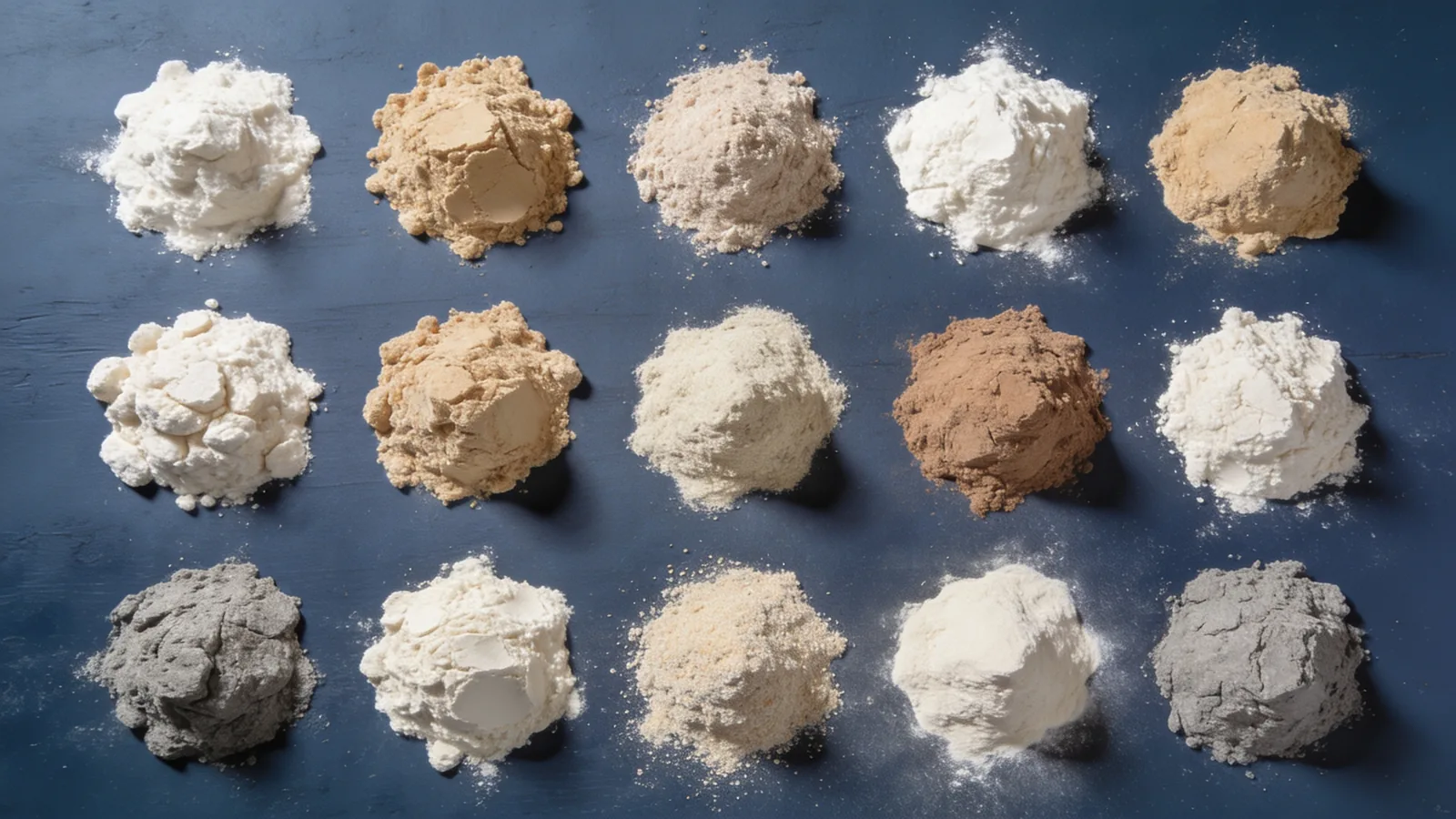
The important distinction for this article is between the vegetable and its concentrated protein. The common potato (Solanum tuberosum) is the raw material for potato protein isolate, a powder that is 80–95% protein by weight. Sweet potato (Ipomoea batatas) is a different plant — the two are not closely related — and there is no comparable sweet potato isolate on the market. We unpack that in Sweet Potato Protein Powder: Does It Exist?.
How Much Protein Is in Sweet Potato Fries?
Sweet potato fries are a low-protein food. Because sweet potato is a starch-storage root, a typical serving contributes only a few grams of protein, and frying adds oil and calories without adding any protein at all. The cited recipe sources do not report a precise per-serving protein figure for sweet potato fries, so treat them as a carbohydrate side, not a protein source.
If your goal is a protein target — most people aiming to preserve muscle want 25–40g per meal — sweet potato fries do not move the needle on their own. They are best understood as the carbohydrate part of a plate. The protein has to come from somewhere else.
The honest takeaway: order or make the fries for taste and texture, then build the protein into the rest of the meal. A baked filet, eggs, Greek yogurt dip, or a shake alongside does far more for your protein total than anything you can do to the fries themselves.
Does Cooking or Frying Change the Protein?
Cooking method does not meaningfully change how much protein a sweet potato contains. Frying adds fat and calories from oil; baking, boiling, and mashing add nothing to the protein column. The grams of protein per serving are essentially set by the weight of vegetable you start with.
There is one nuance worth stating precisely. Processing potato into flour has been shown to improve protein digestibility relative to the raw tuber — protein and starch digestibility of potato flour was significantly higher than that of raw potatoes in one analysis (PMID: 9839814). Digestibility describes how well your body can use the protein that is present; it does not increase the quantity of protein in a serving. So a milled or cooked product may be slightly easier to digest, but it is not suddenly a high-protein food.
Sweet Potato Pancakes Protein: What the Recipes Show
Sweet potato pancakes made from the vegetable alone contain little protein, and the published numbers bear this out. A mashed potato pancake recipe (Hot Pan Kitchen) yields about 4g of protein per serving at 126 kcal — a useful reference point for any starchy-vegetable pancake. Recipes deliberately formulated with added protein powder report a much wider range, from 10g to 18g per serving.
The gap between those two figures is the entire story of sweet potato pancakes protein: the base batter is a carbohydrate vehicle, and the protein content is determined by what you add. Eggs, milk, and an added isolate are doing the work, not the sweet potato.
That also explains why pancake recipes vary so much in calories without much protein to show for it. A “Perchance to Cook” recipe using almond and tapioca flour lands at 189 calories per pancake, but its protein comes from external foods served alongside — sausage, eggs, salmon — rather than from the batter.
| Item | Protein per serving | PDCAAS / quality note |
|---|---|---|
| Mashed potato pancakes (no added protein) | ~4g | Starchy base; low protein |
| Pancakes formulated with added protein powder | 10–18g | Protein from eggs, dairy, or isolate |
| Sweet potato fries | — | Per-serving figure not reported in cited sources |
| 25g potato protein isolate (added to batter) | ~20–24g | PDCAAS 0.92–1.00 |
Source note: Per-serving pancake figures from Hot Pan Kitchen and competitor recipe blogs; potato protein isolate purity (80–95%) from industry specifications; PDCAAS range for potato protein isolate from published reviews.
How to Add Protein With an Isolate
To make either dish protein-adequate, add the protein rather than expect the vegetable to supply it. Potato protein isolate is 80–95% protein and holds GRAS approval for use in baked goods at levels from 0.01% to 10%, so a 25g scoop folded into a pancake batch contributes roughly 20–24g of protein. That is the difference between a 4g pancake stack and one that anchors a meal.
The quality is there to match the quantity. Potato protein isolate contains all nine essential amino acids, carries a PDCAAS of 0.92–1.00, and has a Digestible Indispensable Amino Acid Score reported as high as 100% (Herreman et al., 2020) — figures that place it alongside animal proteins. In a controlled trial, 25g of potato protein isolate taken twice daily stimulated muscle protein synthesis in young women (Oikawa et al., 2020). For the full quality picture, see Is Potato Protein High Quality?.
A few formulation notes, because isolates behave differently from flour in batter:
- Balance the dryness. Adding protein powder to pancakes requires extra liquid and fat to keep the texture right; an isolate alone tends to dry out and not hold together. Recipe developers recommend mixing it with oat flour or a gluten-free blend rather than using it on its own.
- Texture help. Enzymatically hydrolyzed potato proteins have been shown to reduce batter density, increase specific volume, and improve springiness in gluten-free cakes (Foods, 2025) — a hint of why potato protein works as a baking ingredient and not just a macro additive.
- Pairing beats substitution for fries. You cannot easily fold powder into fries, so for that dish the simplest route is a high-protein dip or side. The general principle is covered in Can You Use Protein Powder Instead of Flour? and across the recipe index.
A single-ingredient potato protein isolate suits this job for a practical reason beyond macros: it disappears into food. It is also a low-FODMAP, allergen-conscious option for households avoiding dairy, egg, soy, and nuts — relevant if you are adding protein to a kid’s pancakes.
Potato Protein vs Sweet Potato: Not the Same Thing
It is worth restating, because the names invite confusion: the potato protein isolate discussed above is not derived from sweet potato. It is extracted from the common potato — specifically from potato fruit juice, a byproduct of starch production. Sweet potato is eaten whole as a vegetable and is not a commercial protein source.
That difference matters for amino acids. Potato protein isolate provides 37% essential amino acids by composition, compared with 43% for whey isolate (Amino Acids, 2018) — close enough that potato protein stimulates muscle protein synthesis with anabolic properties comparable to whey. Potato protein reaches a DIAAS of about 100% for adults, classifying it as an excellent-quality protein alongside casein and egg, while soy and whey sit a step below in the high-quality tier (Herreman et al., 2020). None of that quality lives in a sweet potato fry.
If the starch-versus-protein distinction is the part that trips you up, Is Potato Protein the Same as Potato Starch? walks through how the two fractions are separated during processing.
Limitations and What We Don’t Know
Two honest caveats. First, the cited sources do not provide a verified per-serving protein figure for sweet potato fries specifically; the qualitative answer (low) is sound, but we will not print a gram count we cannot back. For the whole-vegetable numbers, the dedicated sweet potato article is the better reference.
Second, the muscle-protein-synthesis evidence for potato protein comes from isolate at a measured dose — 25g twice daily in the 2020 trial — not from sweet potato pancakes or fries. Scattered animal and in-vitro studies on sweet potato extracts and signaling pathways exist, but they do not establish that eating sweet potato meets protein needs. The practical message stands: enjoy sweet potato as a carbohydrate, and add protein deliberately — from an isolate, eggs, dairy, or a protein side — when you want the meal to count toward muscle. For broader context on intake after midlife, see Protein After 40.
The table comparing protein sources by quality also reflects published values for egg (PDCAAS 1.00) and wheat gluten (PDCAAS 0.25) from Schaafsma’s reference work, which frames where potato protein isolate (0.92–1.00) sits among plant and animal options.