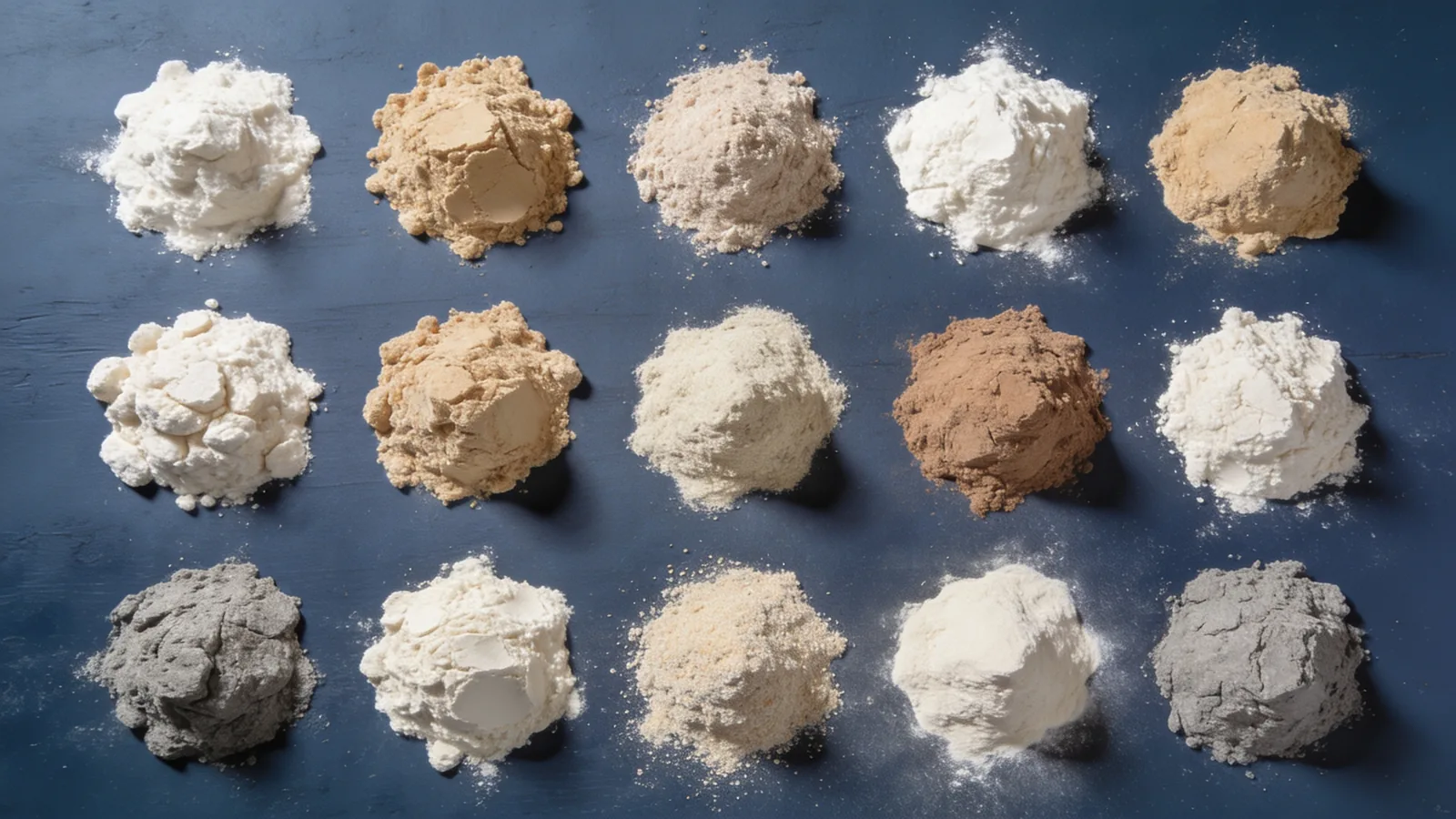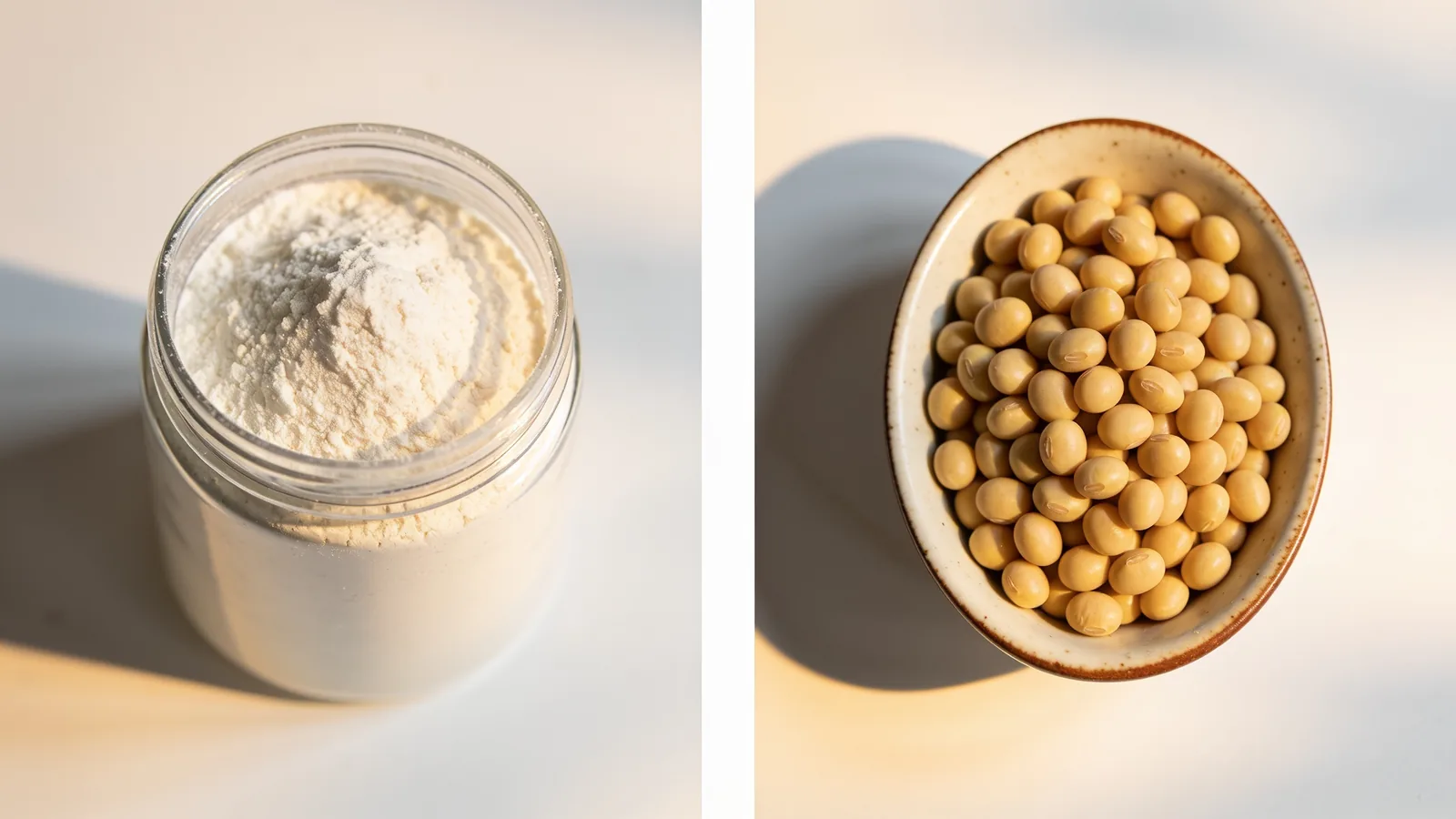
In the matchup of potato protein vs soy protein, both are complete plant proteins that supply all nine essential amino acids. Soy protein isolate scores a PDCAAS of 1.00, the maximum; potato protein isolate scores 0.92–1.00. On amino-acid quality, the two are close enough that the deciding factors are allergens, digestibility, and how much direct muscle research exists behind each.
The Verdict: Soy Has More Data, Potato Has Fewer Inputs
If you tolerate soy and want the largest body of human muscle research, soy protein is the better-studied choice. If you are avoiding soy, managing allergies or IBS, or simply want the shortest possible ingredient list, potato protein matches soy on completeness while removing soy’s drawbacks.
Both proteins are complete and high-quality. Soy wins on the depth of its research record. Potato protein wins on allergen profile, FODMAP status, and the absence of isoflavones. Neither is a weak option — the right answer depends on what you are trying to avoid.
Potato Protein vs Soy: Side-by-Side Comparison
| Attribute | Potato protein isolate | Soy protein isolate |
|---|---|---|
| Protein content (dry) | 80–95% (commonly 90%) | — |
| PDCAAS | 0.92–1.00 | 1.00 |
| DIAAS (adults) | up to 100% | ≥75% |
| Complete (9 EAAs) | Yes | Yes |
| Major regulated allergen | No | Yes |
| FODMAP status | Low-FODMAP | May contain GOS/fructan |
| Isoflavones | None | Contains isoflavones |
| Taste | Largely neutral | Beany; “far from flavorless” |
| Direct human muscle trials | Fewer, positive | More extensive |
Sources: PDCAAS truncates above 1.00 to 1.00 (Schaafsma, Journal of Nutrition 2000, PMID:10867064); potato classified as an excellent-quality protein with an average DIAAS above 100 and soy as a high-quality protein with an average DIAAS ≥75 (Herreman et al., Food Science & Nutrition 2020, PMID:33133540); potato low-FODMAP and soy FODMAP content (Monash University FODMAP); soy taste (Drink Wholesome). A single reliable verified protein-content figure for soy isolate is not in our sources, so that cell is left without a number.
How Do Potato and Soy Compare on Protein Quality?
On protein quality, soy and potato are near-equals. Soy protein isolate earns a PDCAAS of 1.00, the same score given to milk, whey, egg, and casein. Potato protein isolate scores 0.92–1.00. On the newer DIAAS scale, potato protein is classified as an excellent-quality protein with an average DIAAS above 100, while soy is classified as a high-quality protein with an average DIAAS at or above 75 (Herreman et al., Food Science & Nutrition 2020) — the tier most protein scientists now treat as the meaningful benchmark.
PDCAAS truncates any score above 1.00 down to 1.00 (Schaafsma, Journal of Nutrition 2000), so a flat soy figure does not mean soy is “perfect” while potato falls short — it means both clear the bar that defines a complete, high-quality protein. For a fuller breakdown of how these two scoring systems differ, see DIAAS vs PDCAAS: Why the Newer Score Matters and our explainer on whether potato protein is high quality.
Plant proteins, as a category, tend to score lower than animal proteins and generally carry less leucine. Potato protein isolate contains 37% essential amino acids by composition versus 43% in whey protein isolate (Amino Acids 2018). Soy sits in a similar plant range. Neither potato nor soy reaches whey’s leucine density, which matters most for older adults trying to clear the leucine threshold for muscle protein synthesis. The pillar guide What Is Potato Protein? covers the amino-acid profile in more detail, and Is Potato Protein a Complete Protein? confirms it supplies all nine EAAs.
Which Has More Muscle-Building Research?
Soy has the deeper research record. Soy protein isolate has been tested directly in human muscle-protein-synthesis trials for over a decade, including the well-known comparison by Tang et al. (Journal of Applied Physiology 2009) that pitted whey hydrolysate, casein, and soy against each other after resistance exercise.
That study is also honest about soy’s ceiling: whey stimulated post-exercise muscle protein synthesis more than casein or soy, attributed to whey’s faster digestion and higher leucine content (Journal of Applied Physiology 2009). A separate line of research found that a dairy-protein meal activated mTOR pathway signaling — a key anabolic pathway — while a soy-protein meal did not (Nutrition & Metabolism 2014). So while soy is well-studied, much of that data shows it trailing whey, not beating it.
Potato protein has fewer trials, and we will not pretend otherwise. But the research that exists is encouraging. A 2020 McMaster University study found that 25g of potato protein isolate taken twice daily stimulated muscle protein synthesis in young women, while the control group showed no increase at rest (Nutrients 2020). The authors concluded potato protein isolate is a high-quality, plant-based protein capable of driving muscle protein synthesis. Notably, that potato trial was never run head-to-head against soy, so no study lets you rank the two directly for muscle outcomes. If muscle is your priority, see How Much Protein Per Day for Muscle Gain and How Much Leucine Per Day to Build Muscle.
Allergens: The Clearest Difference Between Potato and Soy
This is where potato protein separates itself. Soy is one of the major regulated food allergens, listed alongside milk, egg, wheat, and tree nuts. Potato protein is not a major allergen and is repeatedly described in the literature as a high-quality, allergy-free protein (Food Research International 2021).
For the allergy parent or the soy-avoidant adult, this is decisive. A single-ingredient potato protein isolate is free of dairy, egg, nuts, gluten, and soy at once — there is nothing in the bag to cross-react with. Our Allergen-Free Protein Guide and Dairy-Free Protein Powder walk through the full reasoning.
One honest caveat: potato protein is not allergen-free for everyone. A murine study identified patatin and a 53kDa protein as potato’s potential allergens (Molecular Immunology 2018), and that allergen remains present in the isolate. If you have a diagnosed potato allergy, you should not consume potato protein. For the general population, potato allergy is uncommon and the protein is treated as Generally Recognized As Safe by the FDA.
FODMAPs and Digestion: Why Sensitive Stomachs Often Prefer Potato
Potato protein is the lower-risk option for IBS and sensitive guts. Monash University lists potato protein as a low-FODMAP protein source. Soy-derived proteins, by contrast, can contain FODMAPs such as GOS and fructan, which Monash notes may trigger IBS symptoms even in small amounts.
Monash also explains that plant proteins like soy and pea can be particularly difficult to purify and often retain some FODMAPs, even though the finished powders are typically 70–90% protein. If bloating or gut discomfort has been your experience with plant proteins, that processing detail is often the cause. We cover this in Protein Powder and Gut Health and Best Protein Powder for IBS and Sensitive Stomachs.
Potato protein is also water-soluble and stays soluble at low pH, which is useful in acidic beverages and means it disperses without the chalky residue some plant proteins leave behind.
The Soy Hormone Question
Soy contains isoflavones — plant compounds structurally similar to estrogen — and this is the single most common reason people deliberately seek soy-free protein. Potato protein contains no isoflavones, so it removes the question rather than answering it.
We are not going to overstate the evidence in either direction. Human research on soy isoflavones and hormonal markers is mixed, and this is health-sensitive territory where a confident verdict would be dishonest. The practical point is narrower: if you would rather not think about it, potato protein contains none of the compounds the debate is about. For some readers — particularly those managing hormone-related conditions — that simplicity is the entire appeal.
Taste and Price
Neither protein is flavorless. Soy protein isolate is often cited as the closest thing to a neutral vegan protein, yet it is still described as “far from flavorless,” carrying a characteristic beany note (Drink Wholesome). A well-processed potato protein isolate is largely neutral and tends to disappear into food — soups, sauces, oatmeal, and baked goods — better than it performs as a standalone shake.
On price, the two occupy a similar mid-range bracket among plant proteins, with soy generally the more commoditized and widely available of the two. Specific pricing shifts constantly by brand and format, so treat it as roughly comparable rather than a deciding factor. For broader selection help, see How to Choose a Protein Powder: The Complete Buyer’s Guide.
Who Should Choose Which
Choose soy protein if you tolerate it well, want the largest evidence base, and have no concerns about isoflavones or FODMAPs. It is complete, inexpensive, and thoroughly studied.
Choose potato protein if you are avoiding soy, managing food allergies, dealing with IBS, or you simply want one ingredient and nothing to react to. It matches soy on completeness, it is low-FODMAP, and it carries no isoflavones. The trade-off you accept is a thinner stack of direct muscle trials — a real limitation, but one the McMaster data has begun to close.
If you are weighing potato against other plant options too, compare it with pea protein’s bioavailability and potato vs rice protein before deciding.