Yes — potato protein isolate is a complete protein. It contains all nine essential amino acids the body cannot synthesize on its own: histidine, isoleucine, leucine, lysine, methionine, phenylalanine, threonine, tryptophan, and valine. Anyone asking is potato protein a complete protein is really asking whether it supplies every one of those nine, and the answer, confirmed across nutritional databases and a growing body of clinical work, is that it does. That places potato protein in the same category as whey, egg, and soy — and apart from the common assumption that plant proteins are categorically “incomplete.”
The completeness question matters because it is the dividing line nutritionists draw between proteins that can support tissue maintenance on their own and those that need pairing. Potato protein sits on the favorable side of that line, and the supporting numbers — a DIAAS reported as high as 100% and a PDCAAS of 0.92 to 1.00 — back it up.
The Nine Essential Amino Acids and Potato Protein’s Profile
A complete protein is defined narrowly: it must contain all nine essential amino acids in amounts sufficient to support human requirements. “Essential” here means dietary-essential — the body cannot manufacture these compounds and must obtain them from food. The other eleven amino acids used in human physiology are non-essential because the body can build them internally from other inputs.
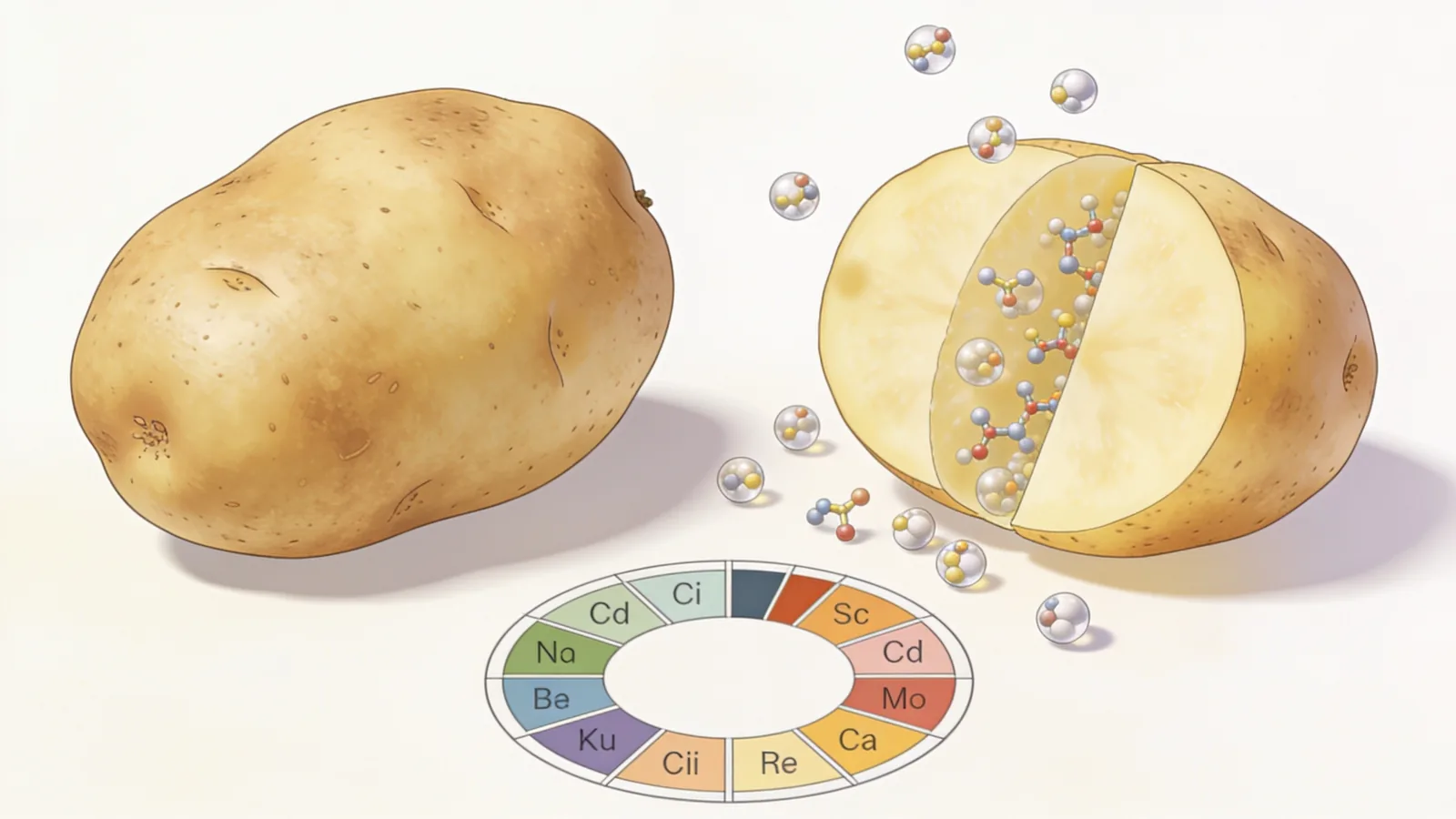
Potato protein isolate meets that bar. It is extracted from potato fruit juice, a byproduct of starch production, and concentrated to 80–95% protein on a dry basis. The dominant protein fraction is patatin, a storage protein that carries a balanced spread of essential amino acids. Commercial isolates such as those used in research typically specify 90% protein or higher.
By total essential amino acid density, potato protein is slightly behind the leading animal sources. One amino acid analysis found potato protein isolate is approximately 37% essential amino acids by weight, compared with about 43% for whey protein isolate (Amino Acids, 2018). That gap is real but modest — and it does not change the completeness verdict, because completeness is about presence of all nine, not the absolute total. For a broader treatment of where potato protein comes from and how it is processed, see our overview of what potato protein is.
Which Amino Acids Are Lowest in Potato Protein?
Potato protein’s reported amino acid score (AAS) is around 65%, which signals a limiting essential amino acid — one present in a lower proportion relative to the reference pattern — rather than a missing one. A limiting amino acid lowers the score but does not strip a protein of its complete status; all nine are still there in usable amounts.
Comparative work has also flagged differences outside the essential set that show up in digestion rather than in completeness. In a head-to-head crossover study, whey produced a larger insulin and glycaemic response than potato protein, while the plant-derived proteins showed a lower insulinaemic response and better glucose maintenance; the study found no significant difference in appetite between the proteins (Nutrients, 2021). These are metabolic and digestion-kinetics distinctions, not a marker of whether potato protein is a complete protein.
The practical takeaway is that potato protein’s weaker point is proportion, not presence. Plant proteins as a class tend to score lower than animal proteins on quality metrics like PDCAAS and DIAAS (Foods, 2024), and potato protein is no exception — it simply lands near the top of the plant category rather than the middle.
How Does Potato Protein Compare to Soy and Whey?
Potato protein is complete, and so are soy and whey — but the quality scores let you rank them with precision. In one comprehensive DIAAS analysis, potato protein reached an average DIAAS above 100% for children and adults, placing it in the excellent-quality tier alongside casein and egg, while whey and soy were classified as high-quality proteins (DIAAS at or above 75%). On PDCAAS, potato protein lands between 0.92 and 1.00, where 1.00 is the truncated maximum that several high-quality proteins share.
| Protein source | Essential amino acid (% by weight) | DIAAS | PDCAAS | Complete? |
|---|---|---|---|---|
| Potato protein isolate | 37% | ~100% | 0.92–1.00 | Yes |
| Whey protein isolate | 43% | ≥75% | 1.00 | Yes |
| Soy protein isolate | — | ≥75% | 1.00 | Yes |
Source notes: essential amino acid percentages from Amino Acids, 2018 (PMID: 30167963); DIAAS values from Herreman et al., Food Science & Nutrition, 2020 (PMID: 33133540); PDCAAS reference framework from Schaafsma, Journal of Nutrition, 2000 (PMID: 10867064). A reliable EAA-by-weight figure for soy isolate is not established in the cited data, shown as an em-dash.
The DIAAS comparison is the most informative line in that table. DIAAS measures how much of each indispensable amino acid is actually absorbed at the end of the small intestine, so it captures digestibility more accurately than the older PDCAAS method. The fact that potato protein lands in the excellent-quality tier — above whey and soy on this scale — is the strongest single piece of evidence that “plant protein equals incomplete” is outdated. For a deeper look at how these two scores differ, see DIAAS vs PDCAAS, and for the direct dairy comparison, potato protein vs whey.
Whey retains two advantages worth stating plainly. It carries a higher proportion of total essential amino acids, and it digests rapidly, producing a faster rise in blood amino acids. Whey has been shown to stimulate postprandial muscle protein accretion more effectively than slower-digesting casein in older men (American Journal of Clinical Nutrition, 2011). Those are speed-and-density advantages, not completeness advantages — potato protein supplies the same nine essentials, just with a slightly different distribution and absorption curve.
Why Completeness Matters for Muscle
Completeness matters for muscle because protein synthesis is an all-or-nothing assembly process. To build a muscle protein, a cell needs every required amino acid available at once; a shortfall in even one essential amino acid caps the rate at which new tissue can be assembled. A complete protein removes that bottleneck by delivering all nine in a single source. Our guide to protein after 40 explains why this becomes more pressing as anabolic sensitivity declines with age.
Leucine deserves a separate mention. It is the essential amino acid that acts as the primary trigger for the mTOR signaling pathway that initiates muscle protein synthesis, which is why plant proteins lower in leucine are sometimes considered less effective per gram than animal proteins. Readers tracking this number can review how much leucine per day to build muscle. Potato protein’s standing here is supported not by theory but by direct human trials.
In a 2020 study, 25g of potato protein isolate taken twice daily stimulated muscle protein synthesis rates in young women, both at rest and during recovery from resistance exercise (Nutrients, 2020). The McMaster University team behind that work, led by Stuart Phillips, reported that the women given supplemental potato protein increased their rate of muscle protein synthesis while the placebo group did not. A subsequent analysis from the same research line concluded that potato protein ingestion raises muscle protein synthesis rates at rest and during post-exercise recovery — a result that would not be possible if the protein were missing an essential amino acid.
This is the bridge from a label classification to a measurable outcome. “Complete” is a chemistry definition; the trial data show that the chemistry translates into the biological response that actually matters for preserving and building lean mass.
Practical Application
For most people, the practical implication is that potato protein can stand alone as a primary protein source rather than requiring complementary pairing the way a single incomplete grain or legume might. The Academy of Nutrition and Dietetics notes that varied plant foods eaten across a day supply all essential amino acids and support adequate nitrogen retention in healthy adults (Craig and Mangels, 2009) — and a complete isolate clears that bar in one ingredient.
Dosing in the clinical work centered on 25g servings, which is a reasonable real-world target per serving for an adult. Because potato protein is allergen-friendly — it is not among the FDA’s major allergens — it suits people avoiding dairy, egg, soy, and gluten who still want a complete amino acid profile. Reviews characterize potato protein as a high-quality, allergy-friendly source with favorable functional properties (Food Research International, 2021). If completeness is your priority but you are comparing options across categories, our best protein powder guide frames the full set of trade-offs.
Limitations and What the Evidence Does Not Yet Show
Two honest caveats apply. First, the human trial base for potato protein, while positive, is smaller than the decades of research behind whey, casein, and soy. The strongest data come from a focused set of studies on young women, and broader confirmation across ages and populations is still accumulating.
Second, completeness is necessary but not sufficient for a maximal anabolic response. Whey’s higher leucine density and faster digestion can produce a sharper acute rise in muscle protein synthesis, and potato protein’s amino acid score of roughly 65% reflects a limiting amino acid that keeps it just below the theoretical ceiling. Plant proteins in general carry lower quality scores than animal proteins (Foods, 2024), and being honest about that gap is more useful than pretending it does not exist.
None of this unseats the core answer. Potato protein isolate contains all nine essential amino acids, posts a DIAAS as high as 100%, and has been shown in controlled trials to stimulate muscle protein synthesis. It is a complete protein by definition and by demonstrated effect — a plant source that does not need an asterisk.