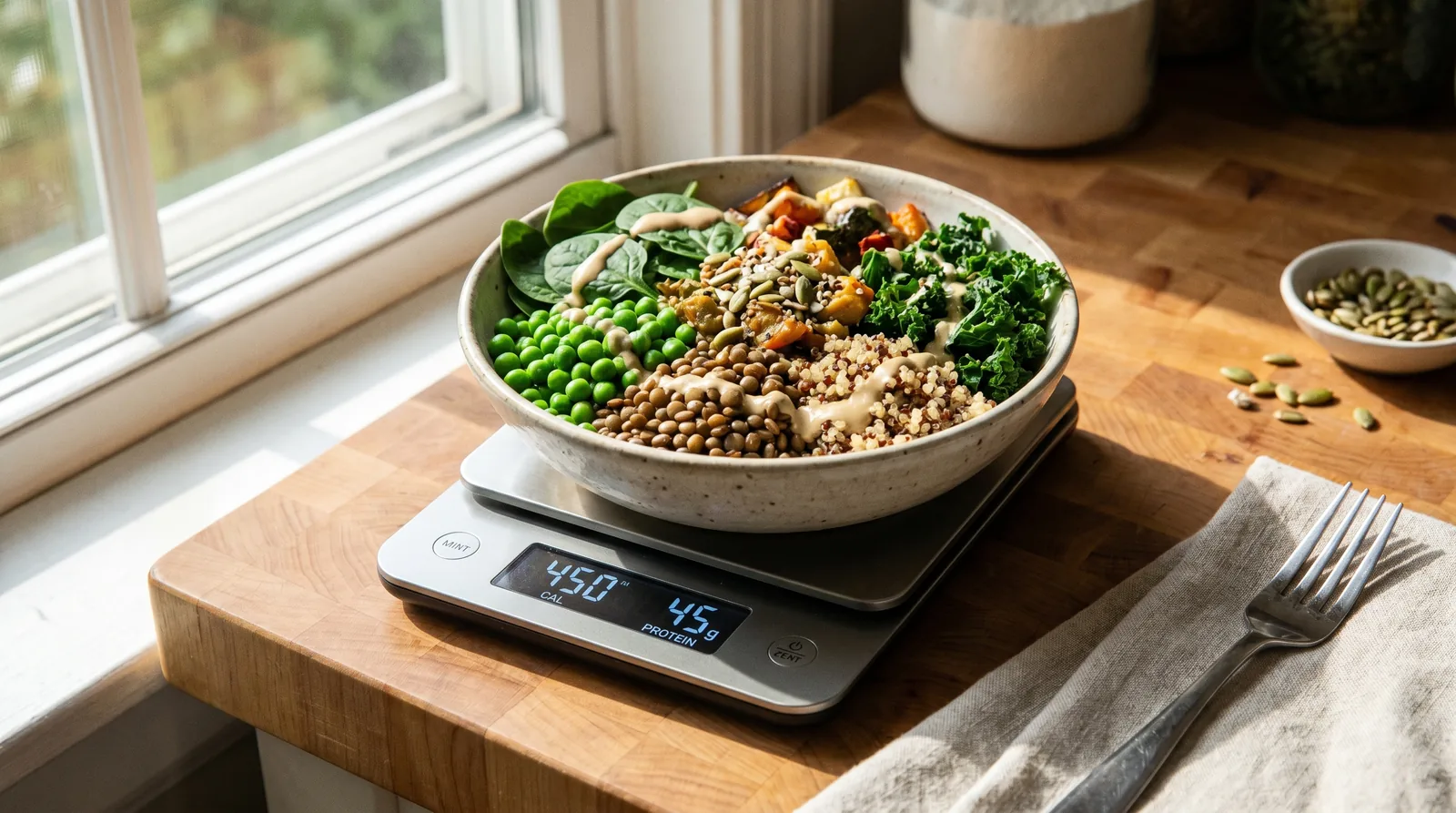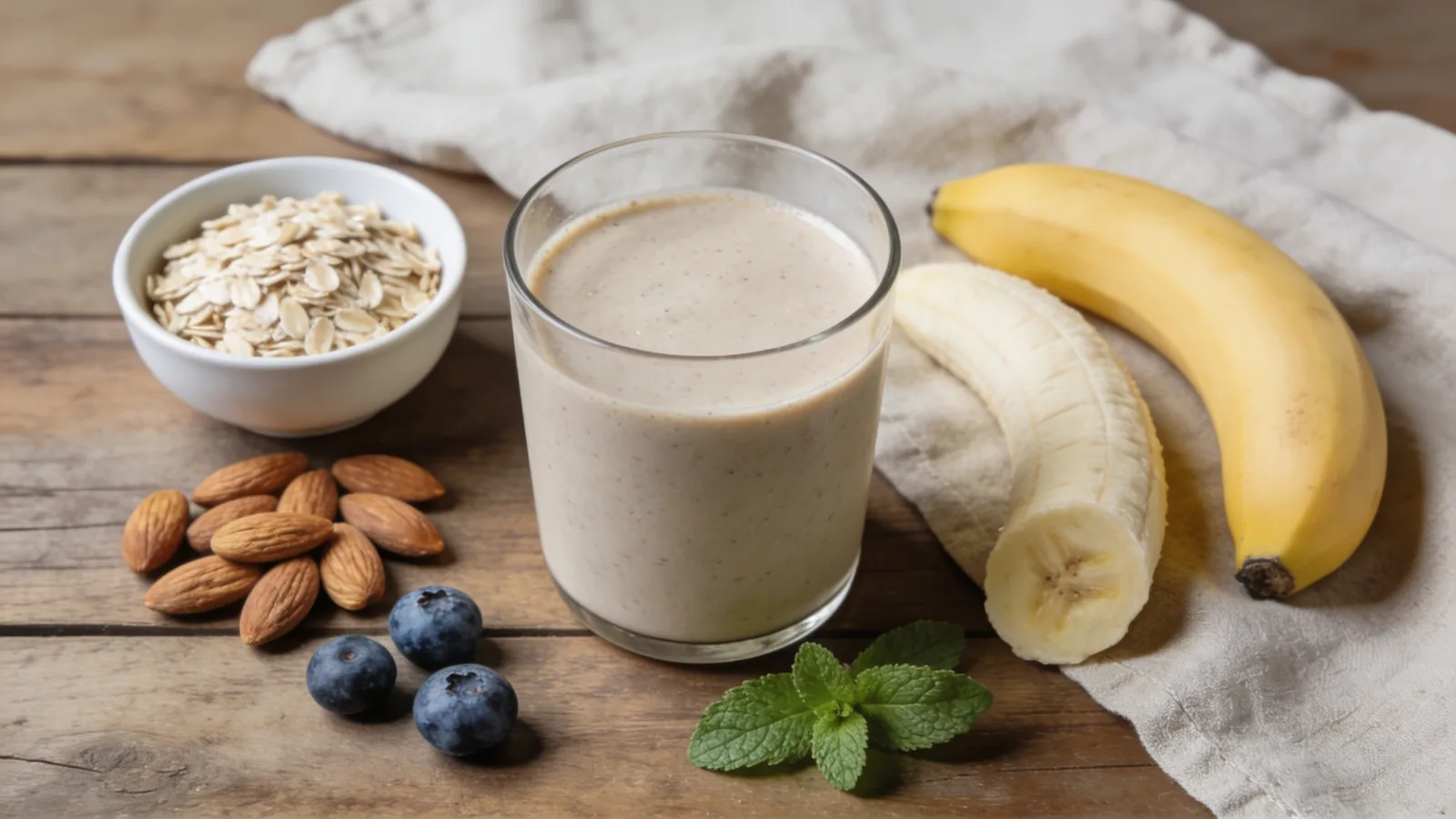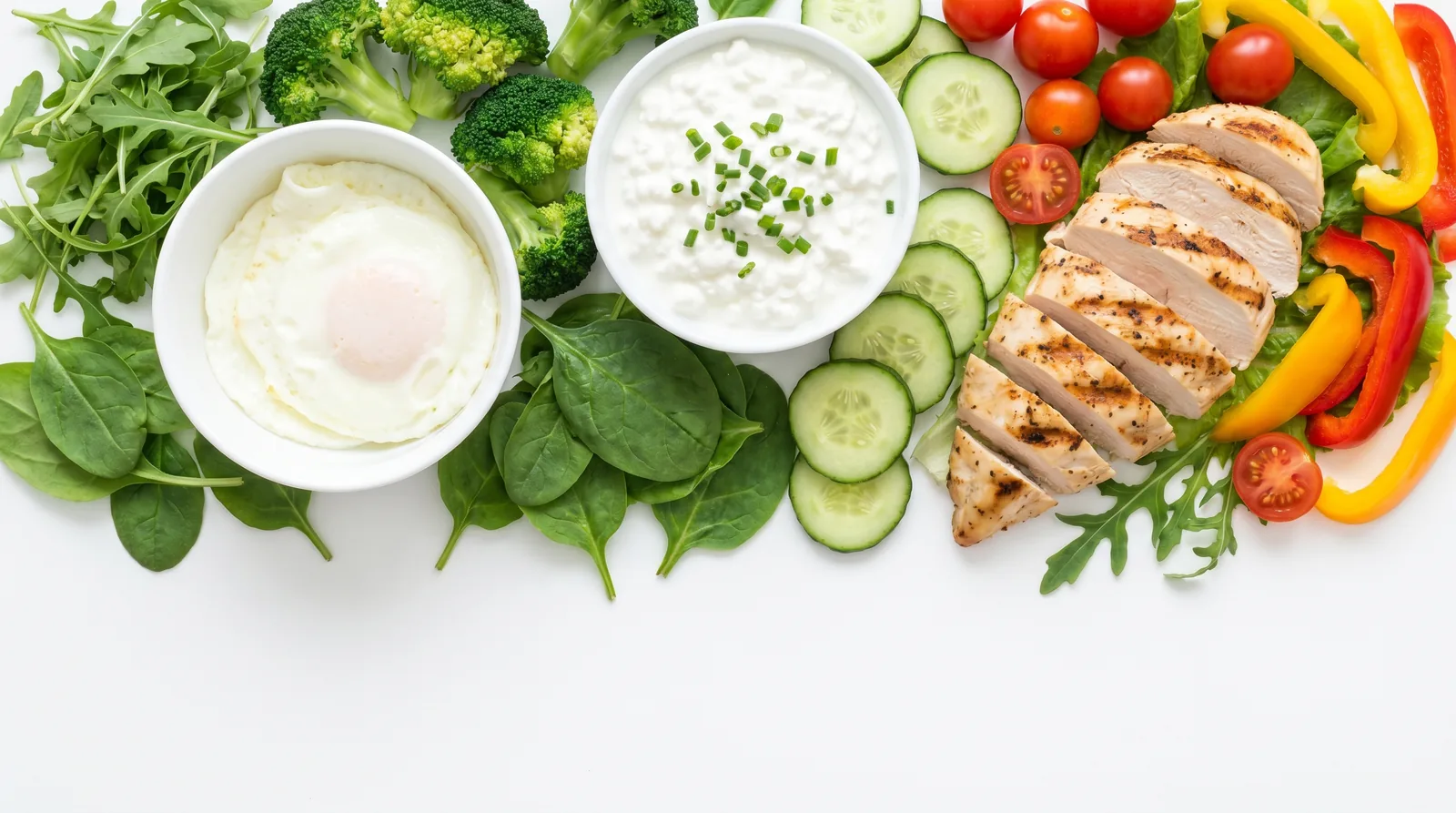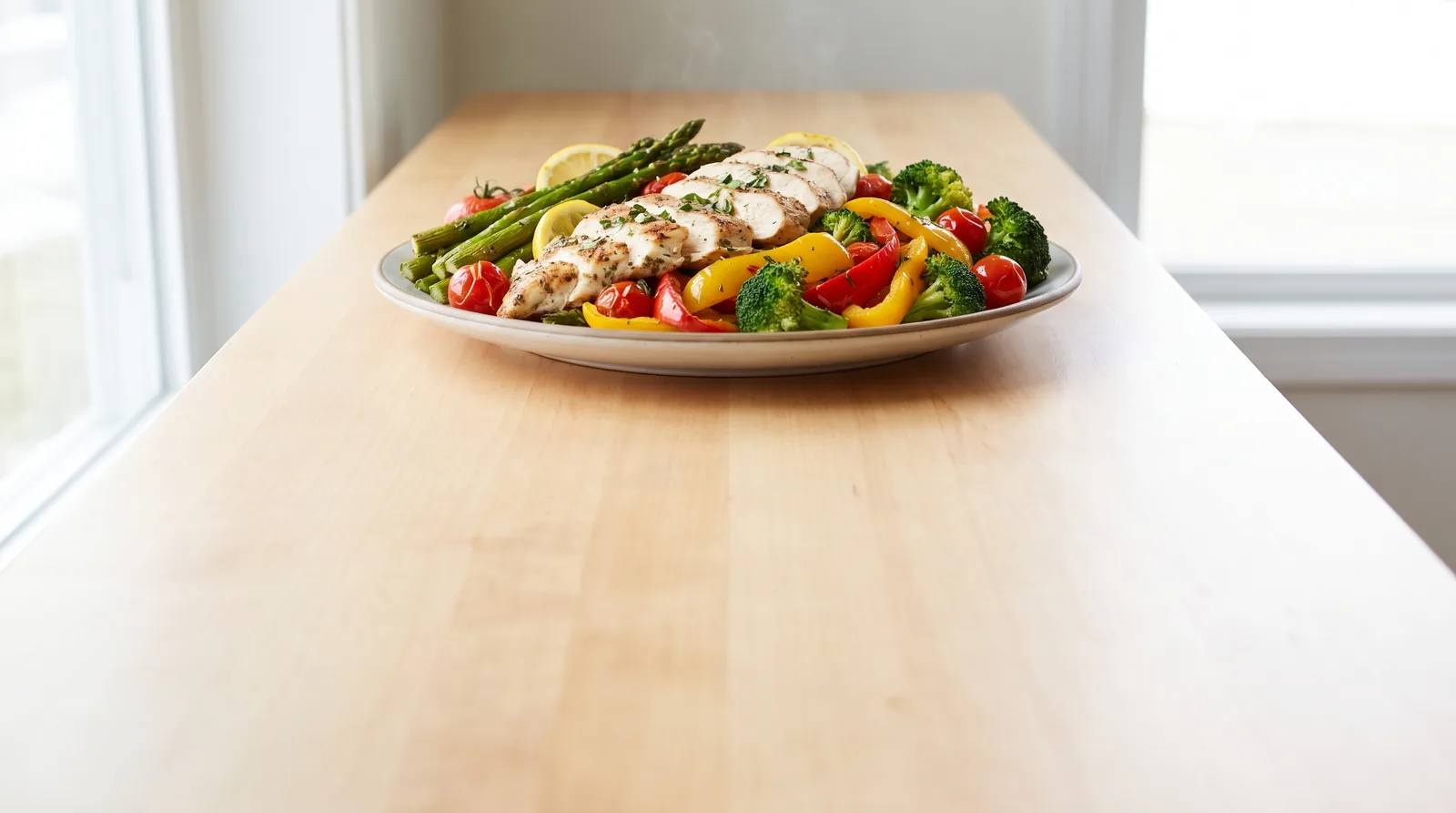
The most useful high protein low calorie foods are the ones you can eat in large, filling portions without crossing a calorie ceiling: chicken breast, egg whites, white fish, and 1% cottage cheese. Volume eating is the simple strategy of building meals around foods with a high protein-to-calorie ratio and a high water or fibre content, so the plate looks generous while the math stays in a deficit. Protein does the heavy lifting because it keeps you full longer than carbohydrate or fat at the same calorie load.
High-protein, low-calorie foods for volume eating include chicken breast, egg whites, white fish, and low-fat cottage cheese. Four egg whites (half a cup from a carton) provide 13g of protein with no saturated fat, and 113g of 1% cottage cheese gives 14g of protein for 81 calories. These foods let you eat large, satisfying portions while protein increases satiety and slightly raises the calories your body burns digesting it.
Interest in this approach is not niche. Searches for high-protein foods rose 105% over the past year, and a market survey of GLP-1 medication users found 74% were specifically seeking high-protein or protein-fortified products. The logic is consistent across all of them: protein is the macronutrient that makes a smaller calorie budget feel survivable.
The Best High-Protein, Low-Calorie Foods
The best foods for volume eating share three traits: a high protein-to-calorie ratio, low energy density (lots of water or fibre per gram), and minimal added fat. Chicken breast is cited by registered dietitians as one of the best high-protein, low-calorie foods. The table below lists confirmed figures; where a reliable serving-level value is not established, the cell is left as an em-dash rather than estimated.
| Food | Serving | Protein | Calories | Note |
|---|---|---|---|---|
| Egg whites (carton) | ½ cup (4 whites) | 13g | — | Almost isolated protein, no saturated fat |
| Cottage cheese, 1% fat | 113g | 14g | 81 | Low energy density, casein-rich |
| Chicken breast, skinless | — | — | — | Named a top pick by dietitians |
| Potato protein isolate | 100g (dry) | 80–95g | — | Single ingredient, low-FODMAP |
Egg whites are almost isolated protein with no saturated fat, which is why they show up in nearly every volume-eating plan: you can scramble six of them into a mound that costs very little against your daily total. Cottage cheese earns its place because casein digests slowly and stays satisfying for hours. Chicken breast remains the default centre-of-plate protein for a reason — lean, dense, and easy to cook in batches.
What Is Volume Eating?
Volume eating means choosing foods with low calorie density so you can eat a physically large amount of food while staying in a calorie deficit. Energy density is calories per gram; water and fibre lower it, fat raises it. A bowl of egg whites, vegetables, and cottage cheese might weigh 400 grams and still come in low, which signals fullness to your body without overspending calories.
The strategy works against a real problem in weight loss: hunger. Cutting calories shrinks portions, and small plates leave you reaching for more an hour later. Volume eating fixes the portion-size complaint directly. You are not eating less food — you are eating different food, weighted toward protein and produce instead of calorie-dense fats and refined carbohydrates.
Why High-Protein Low-Calorie Foods Work for Weight Loss
Protein keeps you fuller than carbohydrate or fat at the same number of calories, and your body spends slightly more energy digesting it. Protein increases satiety and reduces subsequent energy intake more than carbohydrate or fat, an effect mediated by diet-induced thermogenesis and hormonal responses (PMID:18469287). High-protein meals also increase satiety and thermogenesis more than standard-protein meals (Journal of the American College of Nutrition, 2004, PMID:15466943).
That combination — staying full and burning a little more — is the entire mechanism behind why these foods help. It is not that protein is magic; it is that for a fixed calorie budget, protein buys you the most fullness and the least metabolic slowdown. Protein also protects lean mass during a deficit, which matters because muscle is what you want to keep while losing fat. For the full picture, see our complete guide to protein for weight loss.
How Much Protein Should You Aim For?
For weight loss while preserving muscle, most adults do well between roughly 1.4 and 2.0 grams of protein per kilogram of body weight per day, distributed across meals. The exact target depends on activity and starting muscle mass, but the practical rule is to anchor every meal with a clear protein source and build the rest of the plate around it. Spreading protein across the day matters more than hitting a single large dose.
For specifics on calculating your number, see how much protein per day to lose weight and our breakdown of protein shakes for weight loss. If you are over 40, your protein needs are often higher, not lower — aging is associated with a reduced muscle-protein-synthetic response to protein intake, a condition called anabolic resistance (PMID:23558692).
Is a Higher-Protein Diet Safe for Your Kidneys?
In healthy adults, higher-protein intake does not harm kidney function. A 2018 systematic review and meta-analysis of 28 trials including 1,358 participants found that the change in glomerular filtration rate did not differ between higher-protein and lower- or normal-protein diets, concluding that high-protein intakes do not adversely influence kidney function on GFR in healthy adults (Devries MC et al., The Journal of Nutrition, 2018, PMID:30383278).
The study defined high protein as at least 1.5 g/kg body weight, 20% or more of energy intake, or 100 g or more per day — comfortably above what most volume-eating plans require. This applies to people with healthy kidneys; anyone with diagnosed chronic kidney disease should follow their clinician’s individualised protein guidance, which is a different conversation.
Where a Single-Ingredient Protein Fits
Whole foods are the best source of protein, but a protein isolate is useful when you need a large amount of protein for very few calories and no added fat. Potato protein isolate contains 80–95% protein on a dry basis, which means a scoop delivers a dense dose of protein with little else. It is also a complete-enough plant protein for muscle: consuming 25g of potato protein isolate twice daily was effective at stimulating muscle protein synthesis in young women (Nutrients, 2020, PMID:32349353).
Two practical advantages matter for this audience. Potato protein is considered a low-FODMAP protein source (Monash University, 2019), so it sits better than some pea and whey-concentrate powders for sensitive stomachs. And the Protein Digestibility Corrected Amino Acid Score for potato proteins is among the highest of any vegetable protein source. It disappears into food — stir it into cottage cheese, blend it into an egg-white shake, or fold it into oats. If you want the background, read what potato protein is and our notes on building a low-calorie protein shake.
Building a Day of Volume Eating
The simplest structure is three protein-anchored meals plus produce. A breakfast of scrambled egg whites with vegetables; a lunch of chicken breast over a large salad; a dinner of white fish with roasted vegetables; and cottage cheese as a slow-digesting snack. Each plate is large by weight, low by calories, and high in protein — the three numbers that determine whether a deficit feels tolerable.
Keep the additions honest. The fastest way to undo volume eating is calorie-dense extras: oils, dressings, cheese, and nut butters add up quickly and erase the deficit you built. Use them deliberately, measure them, and let the lean protein and produce do the work of filling the plate.