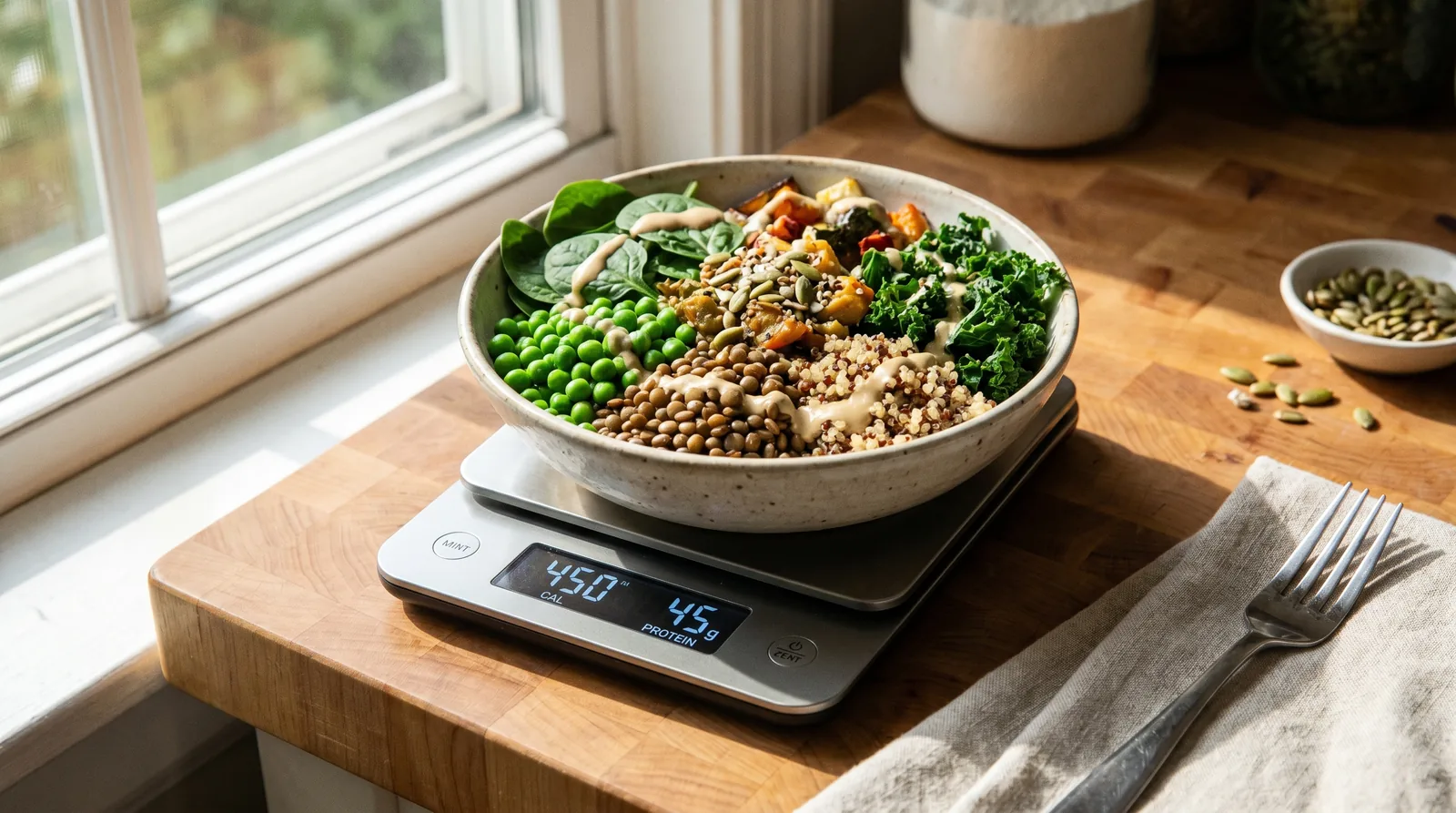
A meal replacement protein powder has to do something a protein shake does not: stand in for an entire meal. That means protein, carbohydrate, fat, and fiber in one serving, usually landing somewhere between 400 and 600 calories. A scoop of protein isolate in water gives you 100 to 120 calories and one macronutrient. It is a fine snack. It is not a meal.
A true meal replacement protein powder provides all four macronutrients — protein, carbohydrate, fat, and fiber — plus added vitamins and minerals, in a serving of roughly 400–600 calories. Plain protein powder, by contrast, supplies one macronutrient at around 100–120 calories per scoop and cannot replace a meal on its own. Complete formats — a complete meal-replacement powder or a ready-to-drink meal-replacement — are formulated for this; a single-ingredient protein isolate is a base you build a meal around, not the meal itself.
The fair standard for a meal replacement is an actual meal, not a recovery drink. Here is how the main category options compare against that standard.
Top Options by Category
Complete Meal-Replacement Powder
Powdered, nutritionally complete
A complete meal-replacement powder is built from the start as a nutritionally complete meal, not a protein supplement. A serving typically delivers all four macronutrients in roughly meal-sized proportions, plus a full vitamin and mineral blend, a fiber source such as oats or flaxseed, and a plant protein base — pea and rice are common. It is the closest thing in this category to swapping in a real meal: balanced macros, meaningful fiber, and micronutrients that plain protein powders skip. If you want one product that genuinely substitutes for breakfast or lunch, this format is the most direct answer.
Pros:
- All four macronutrients plus a complete micronutrient blend
- Caloric density in the meal-replacement range
- Substantial fiber when oats or flaxseed are included
- Often sold with full ingredient disclosure rather than proprietary blends
Cons:
- Long ingredient list — the opposite of single-ingredient simplicity
- Plant protein blends can carry FODMAPs that bother sensitive guts (Monash)
- Flavored versions typically use added sweeteners and gums
Ready-to-Drink Meal-Replacement
Liquid, no preparation
A ready-to-drink meal-replacement covers the same brief as a complete meal-replacement powder — complete macros, added micronutrients, meal-level calories — and is commonly sold in ready-to-drink bottles, which makes it the more convenient option when you will not be near a blender. These often use a soy protein base, which is a complete protein providing all nine essential amino acids. The trade-offs versus a powder are usually lower fiber and a higher cost per serving for the liquid format. For someone who wants grab-and-go, it is the better fit.
Pros:
- Complete macros and micronutrients in a meal-sized serving
- Soy protein is a complete protein with all nine essential amino acids
- Ready-to-drink format requires no preparation
Cons:
- Soy is a top allergen — not suitable for soy-sensitive readers
- Generally lower fiber than a complete meal-replacement powder
- Liquid format usually costs more per serving than powder
Potato protein isolate + oats + nut butter
Single-ingredient base you assemble yourself (DIY)
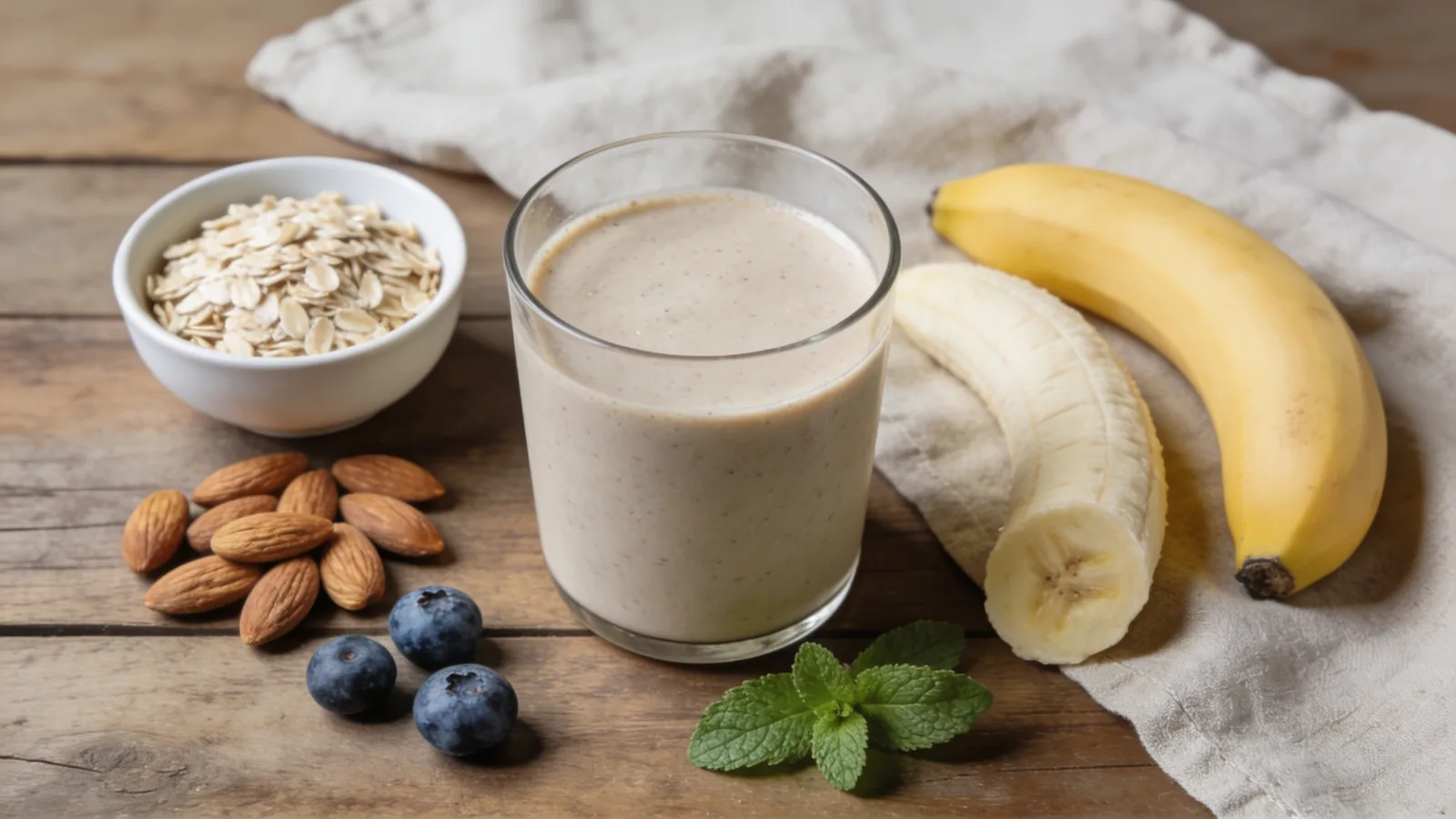
Potato protein isolate is a protein source, not a complete meal replacement. One ingredient — potato protein isolate — gives you the protein, and nothing else. It is not a finished meal. What it is, instead, is a clean base for a meal you assemble yourself: potato protein isolate for the protein, rolled oats for the carbohydrate and fiber, and a spoonful of nut butter for the fat. You end up in the same 400–600 calorie, four-macro territory as a complete meal-replacement powder — but you control every ingredient and you can read the entire label without squinting. The protein itself scores well: potato protein isolate has a reported DIAAS as high as 100%, and it is a low-FODMAP source, which the pre-blended plant powders often are not. The trade-off is that you have to add your own micronutrients through whole foods, and you have to do the building. For readers who already weigh their olive oil, that is a feature.
Pros:
- Total ingredient control — you know every gram
- Potato protein isolate DIAAS reported as high as 100%
- Low-FODMAP protein base, gentler on sensitive guts
- No soy, dairy, egg, or nut in the protein itself; allergen risk is whatever you choose to add
Cons:
- Not a complete meal on its own — requires assembly
- No built-in vitamin or mineral blend; you supply micronutrients from whole foods
- Less convenient than a pre-mixed product
What to Look For on Your Own
The single most common mistake is buying a protein powder and treating it as a meal replacement. They are different categories. A protein powder solves one problem — getting enough protein. A meal replacement solves a bigger one — replacing the protein, carbohydrate, fat, fiber, and micronutrients of a plate of food. If a label shows 25 grams of protein and almost no fat, carbohydrate, or fiber, it is a protein shake. Useful, but it will leave you hungry if you skip a meal for it.
Start with the macros. Look for protein in the 20–35 gram range, real carbohydrate (ideally with fiber attached, from oats or other whole sources), and some fat. The presence of all four is what separates a meal from a snack. Then check calories: aim for 400–600 per serving for a meal that actually holds you. Higher-protein meals are also more satiating and increase thermogenesis more than standard-protein meals, which is part of why a complete, protein-forward meal replacement does a better job than a low-calorie shake at keeping hunger down. That satiety effect is one reason protein matters so much in protein for weight loss — the goal is staying full on fewer calories, not just drinking them.
Next, the micronutrients. A meal you skipped contained vitamins and minerals. A complete meal replacement adds them back; a protein powder does not. If you are building your own from a protein base, you make up the difference with whole foods — fruit, oats, seeds — rather than a synthetic blend.
Then contaminant testing, which is not optional in this category. Consumer Reports tested 23 protein powders and ready-to-drink shakes in October 2025 and found that more than two-thirds contained more lead per serving than its own safe daily limit of 0.5 micrograms, with plant-based products averaging nine times the lead of dairy-based ones. The Clean Label Project’s 2025 Protein Study 2.0 tested 160 products across 70 brands and found 47% exceeded at least one federal or state safety standard, with plant-based powders carrying five times more cadmium than whey-based varieties. Whatever you buy, look for third-party heavy-metal testing and a published certificate of analysis.
Finally, the protein quality of the base matters because it determines how much of the protein you actually absorb. Animal proteins generally score higher than plant proteins on quality metrics like PDCAAS and DIAAS, but the gap is narrowing and a few plant proteins score very well. Here is how the common protein bases compare.
| Protein source | Quality score | Complete protein? | Allergen / FODMAP notes |
|---|---|---|---|
| Potato protein isolate | DIAAS reported as high as 100% | Yes | No common allergens; low-FODMAP (Monash, 2019) |
| Whey isolate | High; 90–95% protein, <1% lactose | Yes | Dairy allergen; isolate carries little lactose |
| Soy protein isolate | High | Yes — all nine essential amino acids | Soy is a top allergen; can contain GOS/fructan FODMAPs |
| Pea protein | Good; limiting amino acid is methionine + cysteine (~2.6 g/100g) | Near-complete | Can contain GOS/fructan FODMAPs (Monash) |
| Egg white | PDCAAS 1.00 | Yes | Egg allergen |
| Wheat gluten | PDCAAS ~0.25 | No | Gluten; not suitable as a sole protein base |
For a deeper look at the protein base itself, see what potato protein is and the case for single-ingredient protein powder. If your interest is the low-calorie end rather than full meal replacement, our low calorie protein shake guide covers that side.