Potato protein is recovered from potato fruit juice, the liquid left after starch is extracted from potatoes during starch manufacturing, rather than from a crop grown specifically for protein. Is potato protein sustainable? In that narrow, defensible sense, yes: recovering protein from a stream that was historically discarded adds no new farmland and repurposes material that would otherwise need disposal. The honest version of the story stops short of the broad environmental claims that get attached to it in marketing copy.
Is Potato Protein Sustainable?
Potato protein is sustainable mainly as an upcycled byproduct, not as an independently low-footprint crop. It is captured from potato fruit water, a side stream of starch production that was historically a waste stream. Recovering protein from an existing waste stream avoids dedicating land and inputs to a separate protein crop, which is the strongest part of the sustainability case.
The weaker part is everything that goes beyond that. Extraction, concentration, and drying require energy and processing infrastructure, and the lifecycle accounting for those steps is not reported as standardized figures in the peer-reviewed literature cited here. So the defensible claim is specific: the raw material is upcycled. Claims about total carbon, land, and water savings are plausible but not, on the evidence below, quantified.
This page sits within our broader explainer on what potato protein is, and the sustainability question is really a question about where the protein comes from before it ever reaches a bag.
What Is Potato Protein Made From?
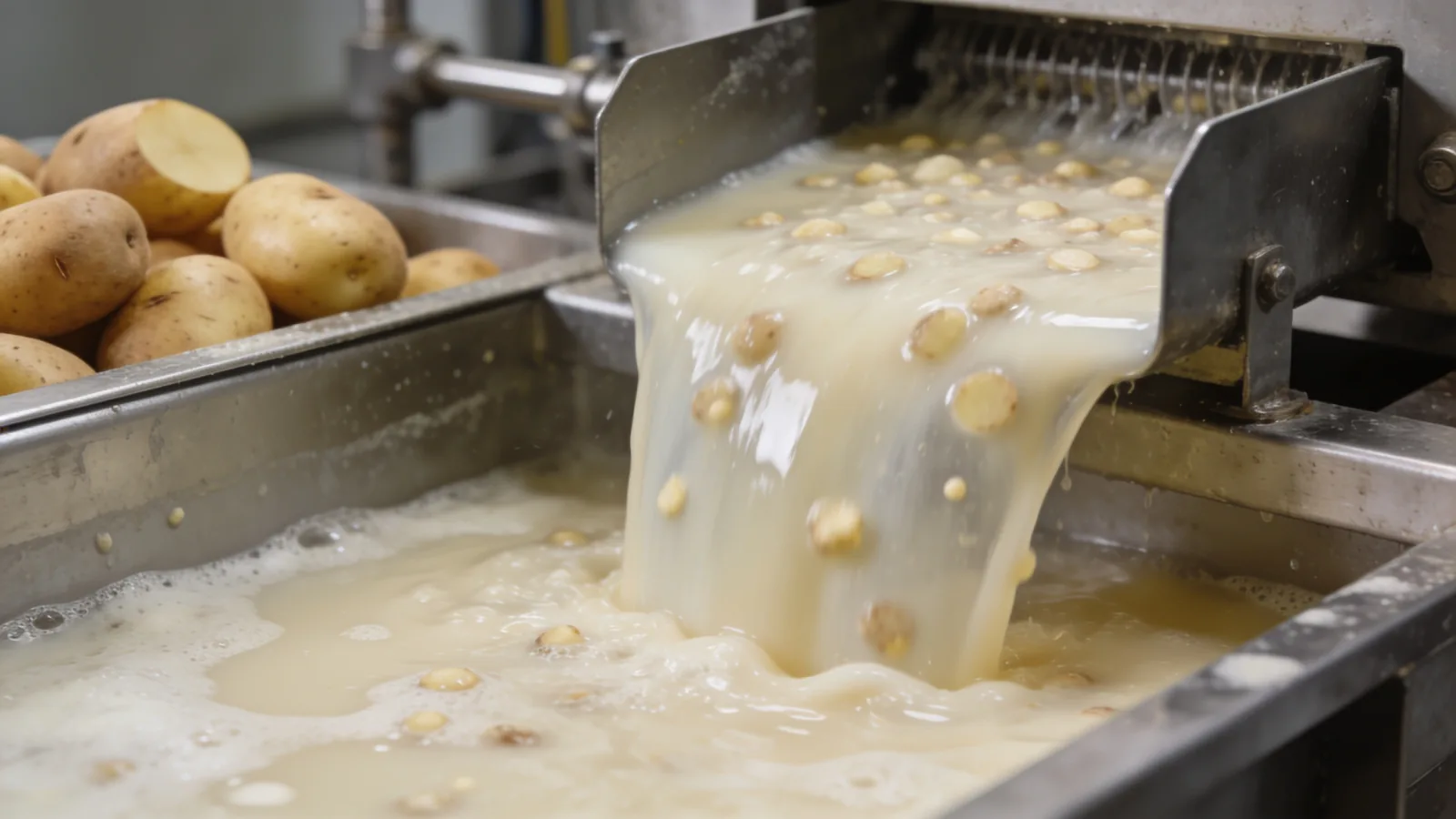
Potato protein is made from potato fruit juice (PFJ), also called potato fruit water (PFW). When potatoes are processed for starch, the tubers are ground and the starch is separated out. What remains is a protein-containing liquid. That liquid is the input for potato protein isolate. Commercial isolates typically contain 80–95% protein on a dry basis, and a 2009 analysis of concentrates precipitated from potato fruit juice documented their detailed amino acid composition and nutritional value.
The key framing for sustainability is that this liquid is not grown on purpose. The potatoes are processed primarily for starch; the protein is what was left in the water. Historically, that protein-bearing water was treated as a waste stream from starch production and from the processing of consumption potatoes. Capturing the protein converts a disposal problem into a product. For a fuller account of the processing steps, see our explainer on how potato protein isolate is made.
Potato Fruit Juice: From Waste Stream to Ingredient
The economic logic here is the same one that produced whey protein. Liquid whey was once a disposal headache for cheese makers before it became a protein category. Potato fruit water follows a similar arc: a side stream of an established industry that turns out to contain a usable, high-quality protein. Industrial-scale recovery required developing dedicated extraction, concentration, and drying processes, because the proteins are sensitive and the liquid is dilute. Manufacturers have built and expanded capacity specifically to recover this protein at scale.
That history matters for the sustainability conversation. The protein exists whether or not anyone collects it. The choice is between treating it as waste and treating it as food, and the second option is the one that keeps an already-grown input out of the disposal stream.
Patatin: The Major Protein in Potato Fruit Juice
Patatin is the major storage protein in potato and the dominant soluble protein in potato fruit juice. It accounts for a large fraction of the protein recovered, and it carries most of the functional behavior that makes potato protein useful in food: foaming, emulsification, and gelation. Patatin can also release bioactive peptides when it is enzymatically hydrolyzed, which has drawn research interest beyond basic nutrition. The protein has been characterized in detail down to its N-glycan structures, which influence stability and, in some studies, allergenicity.
For the sustainability story, patatin’s relevance is practical. Because patatin is functional as well as nutritious, recovered potato protein can replace egg white in some foaming applications and stabilize emulsions in others. An input that does double duty — nutrition plus food function — gets more use out of the same recovered material, which is consistent with the upcycling rationale rather than in tension with it.
Patatin is also a recognized potato allergen, so “upcycled” does not mean “allergen-free for everyone.” Anyone with a diagnosed potato allergy should avoid potato protein because the allergenic protein is still present. For readers approaching potato protein from the allergy angle rather than the sustainability angle, our allergen-free protein guide covers that trade-off in more depth.
Potato Protein Environmental Impact: What We Can and Can’t Claim
The potato protein environmental impact story is strongest on inputs and weakest on totals. Potato protein is widely marketed as having a smaller carbon footprint and as environmentally friendly. Those are marketing positions, and they are directionally reasonable for an upcycled byproduct — but the sources cited here do not provide a standardized, peer-reviewed lifecycle assessment with specific carbon, land, or water numbers for potato protein isolate.
So the responsible claims are these. First, the raw material is a byproduct, which means no additional farmland is dedicated to producing it. Second, recovering protein diverts material from a waste stream. Third, the same recovery logic extends to other potato side streams. What we cannot responsibly claim is a specific percentage reduction in carbon or water footprint versus whey, pea, or soy, because that number is not in the verified evidence. State the mechanism, not a fabricated figure.
It is also worth being plain about the processing energy. Turning dilute, protein-bearing water into a shelf-stable 80–95% protein powder takes concentration and drying, both energy-intensive. A complete footprint accounting would weigh those steps against the disposal costs avoided. Without that accounting published, the honest position is that potato protein has a credible upcycling story and an unquantified total footprint.
How Potato Protein Compares by Source Stream
The clearest way to see the upcycling argument is to sort protein sources by where their raw material comes from — a dedicated crop versus a side stream of another industry.
| Protein | Origin stream | Upcycled or dedicated crop? | Protein quality |
|---|---|---|---|
| Potato protein isolate | Potato fruit juice from starch manufacturing | Upcycled byproduct | PDCAAS reported 0.92–1.00; DIAAS up to 100% |
| Whey protein isolate | Liquid whey from cheese making | Upcycled byproduct | High (egg-equivalent) |
| Pea protein | Field peas grown for food and protein | Dedicated crop | Moderate |
| Wheat gluten | Wheat grown for flour and gluten | Co-product of milling | PDCAAS ~0.25 |
| Egg white protein | Eggs | Dedicated production | PDCAAS 1.00 |
Source note: egg white PDCAAS (1.00) and wheat gluten PDCAAS (~0.25) are established FAO/WHO reference values. Potato protein DIAAS reported as high as 100% is from Herreman et al., Food Science & Nutrition, 2020 (PMID: 33133540). The potato PDCAAS range and the qualitative whey and pea entries reflect reported figures; standardized single-source PDCAAS values for whey isolate and pea are not consistently reported in the cited literature.
Two of the five sources here are upcycled byproducts: potato (from starch) and whey (from cheese). That is the company potato protein keeps. And it does not pay a quality penalty for being a byproduct — a 2020 Nutrients study (Oikawa et al.) found that potato protein isolate increased muscle protein synthesis rates in young women, and a 2021 Food Research International review described potato protein as a high-quality source. Quality and an upcycled origin are not in conflict. If you want the quality detail on its own, see our breakdown of whether potato protein is high quality and the DIAAS versus PDCAAS explainer.
Recovering Protein From Potato Peels
The byproduct story does not end with fruit juice. Potato peels are another large waste stream from potato processing, and a 2025 study demonstrated the recovery of proteins and bioactive peptides from potato peels via enzymatic hydrolysis, describing it as a sustainable source. Peel-derived recovery is earlier in development than fruit-juice extraction and is not yet a mainstream commercial protein source, but it points in the same direction: capturing value from material that would otherwise be discarded.
This matters because it reflects the underlying philosophy of single-ingredient potato protein. The input is recovered, not constructed. Nothing has to be added to make it perform; the protein and its functional behavior were already in the plant. That is also why potato protein behaves differently from potato starch — two distinct fractions of the same tuber, covered in our piece on whether potato protein is the same as potato starch.
The Honest Limitations
A few limits keep this from being an overclaim. The verified evidence does not include a published lifecycle assessment, so any specific footprint number for potato protein isolate would be invented, and we will not invent it. Processing energy for concentration and drying is real and partly offsets the disposal savings. Patatin remains an allergen for people with potato allergy, so “sustainable” is not a synonym for “safe for everyone.” And recovered protein is still a processed ingredient, even if it starts from a single plant input.
What survives all of that is a specific, defensible claim: potato protein is upcycled from a starch-manufacturing byproduct, it does not require land dedicated to a protein crop, and its quality holds up against animal proteins on PDCAAS and DIAAS. That is a stronger and more honest position than a vague “eco-friendly” badge. The sustainability of potato protein rests on where it comes from — and it comes from water that used to be thrown away.