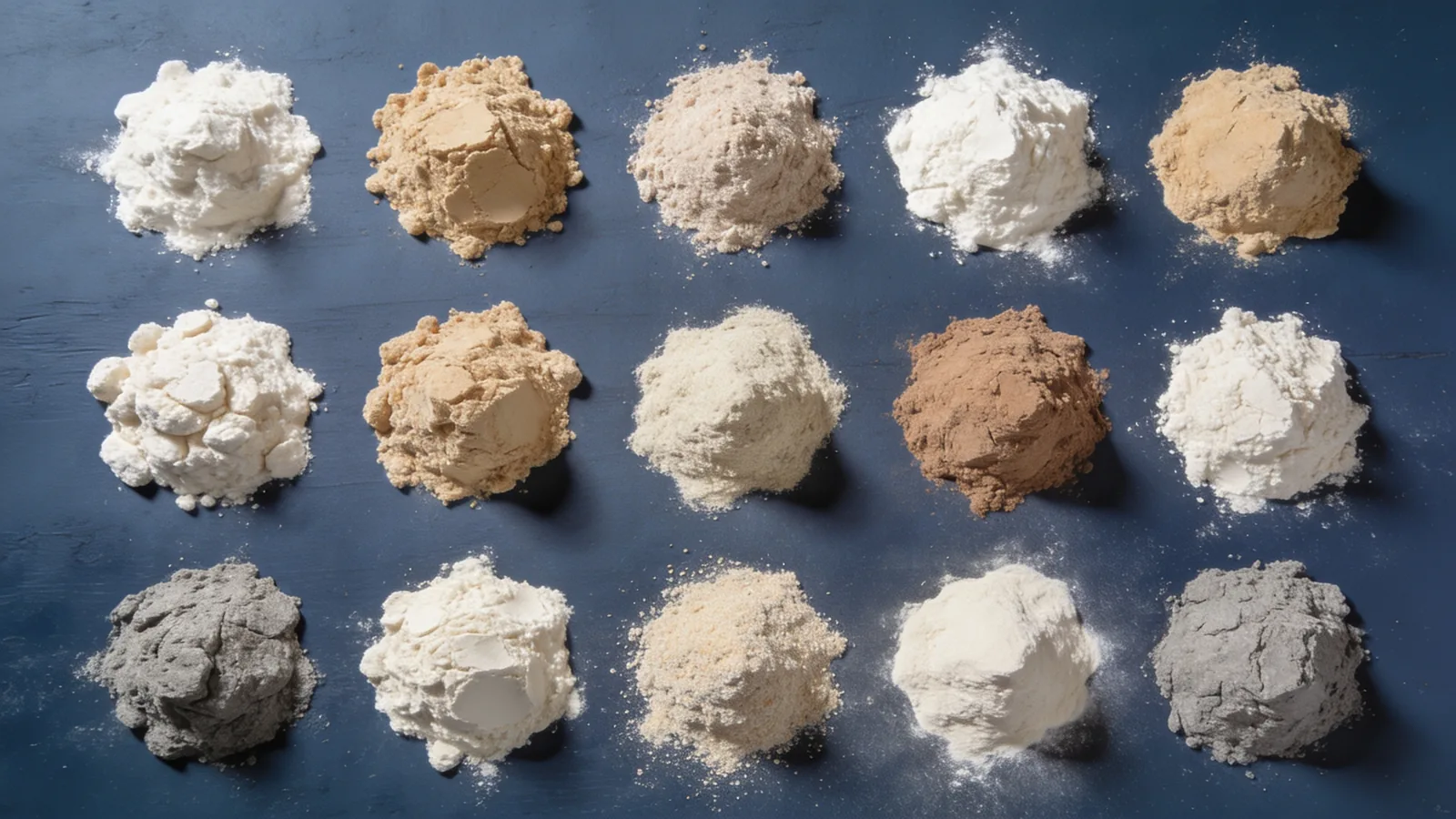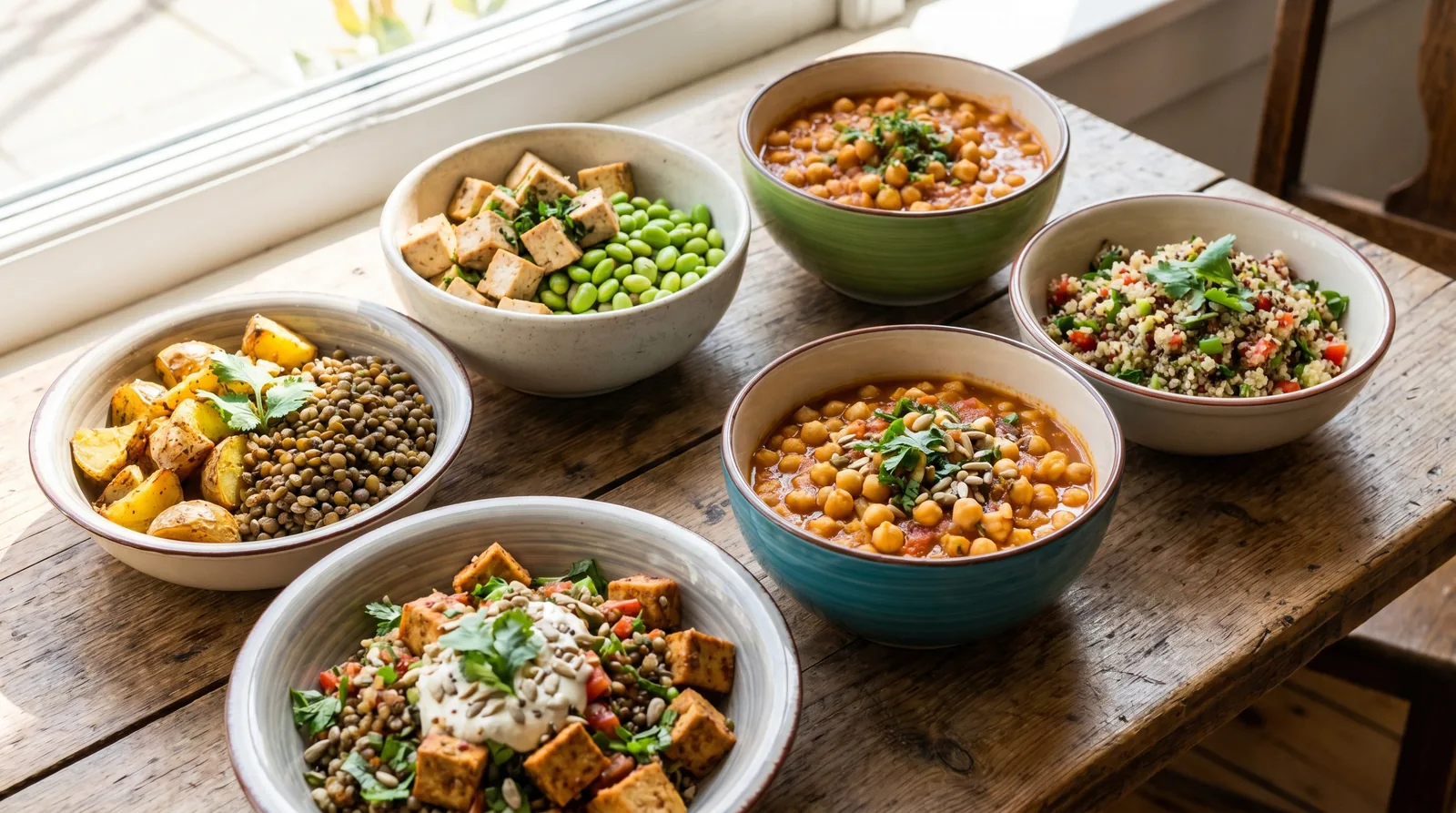
The reliable plant sources of complete protein are soybeans, quinoa, buckwheat, hemp seed, amaranth, and potato protein isolate — each supplies all nine essential amino acids in adequate amounts. Most other plant proteins are limited in one amino acid, which is why pairing or combining them matters. A “complete” protein is simply one that meets human requirements for every indispensable amino acid; it is not a measure of how much muscle it builds.
Few single plant foods are complete proteins. Soy, quinoa, buckwheat, hemp seed, amaranth, and potato protein isolate contain all nine essential amino acids; potato protein isolate carries a PDCAAS among the highest of any vegetable protein and a DIAAS reported as high as 100% (Food Science & Nutrition, 2020, PMID:33133540). Most other plant proteins — pea, rice, wheat, beans, grains — are limited in one essential amino acid and become complete when combined over the course of a day.
What Makes a Protein “Complete”?
A complete protein contains all nine essential amino acids in amounts that meet human requirements. Essential amino acids cannot be made by the body and must come from food; if one falls short of the reference pattern, it becomes the “limiting” amino acid and caps how much of the protein the body can use. This is a question of amino acid composition, not source.
Protein quality is graded with two scores. PDCAAS, the FAO/WHO method, rates a protein against human amino acid requirements adjusted for digestibility, with values above 1.00 truncated to 1.00 (Journal of Nutrition, 2000, PMID:10867064). DIAAS, the newer measure, accounts for digestibility at the end of the small intestine. Egg protein scores a PDCAAS of 1.00, while wheat gluten scores around 0.25. Plant proteins generally carry lower quality scores than animal proteins (Journal of Nutrition, 2024, PMID:38890999), but several plants clear the bar for completeness. We cover the scoring system in more detail in our PDCAAS explained guide.
Plant Sources of Complete Protein: The Full List
The table below sorts common plant proteins by whether a single serving supplies all nine essential amino acids. The complete sources can stand alone; the incomplete ones need a complementary partner.
| Plant source | All 9 essential amino acids? | Relative limiting amino acid | Quality note |
|---|---|---|---|
| Soy protein | Yes | — | Shares the same PDCAAS value as whey protein |
| Quinoa | Yes | — | Whole grain that supplies all nine EAAs |
| Buckwheat | Yes | — | Pseudo-grain, naturally gluten-free |
| Amaranth | Yes | — | Pseudo-grain that supplies all nine EAAs |
| Hemp seed | Yes | Lysine (modest) | Complete but relatively low in lysine |
| Potato protein isolate | Yes | — | PDCAAS among the highest of plant proteins; DIAAS reported up to 100% |
| Pea protein | No | Methionine + cysteine | Sulfur amino acids score about 46%; high in lysine |
| Rice protein | No | Lysine | Complements pea protein |
| Wheat gluten | No | Lysine | PDCAAS around 0.25 |
Soy is the most studied complete plant protein: soy protein isolate and whey protein share the same PDCAAS value, though they can stimulate muscle protein synthesis differently (Applied Physiology, Nutrition, and Metabolism, 2020). Quinoa, buckwheat, and amaranth are pseudo-grains that each supply the full essential amino acid set. Hemp seed technically contains all nine but runs relatively low in lysine, so it sits at the edge of the complete category.
Why Potato Protein Ranks So High
Potato protein isolate is one of the few plant proteins with a quality score in the same range as animal proteins. Its PDCAAS is among the highest of any vegetable source, and its DIAAS has been reported as high as 100% (Food Science & Nutrition, 2020, PMID:33133540). Commercial isolates contain roughly 80–95% protein on a dry basis.
The muscle data is direct. In a 2020 study, young women who consumed 25 g of potato protein isolate twice daily increased muscle protein synthesis at rest and after resistance exercise (Nutrients, 2020, PMID:32349353). A later trial from Luc van Loon’s group compared potato protein to milk protein and concluded that potato protein isolate is a high-quality plant-based source that effectively stimulates muscle protein synthesis (Medicine & Science in Sports & Exercise, 2022, PMID:35438672). Both studies were conducted in younger adults, so they speak to anabolic response in that population rather than to older adults specifically.
Potato protein has two further advantages for sensitive eaters: it is considered a low-FODMAP protein source (Monash University, 2019) and a high-quality, allergy-free protein, free of dairy, egg, soy, gluten, and nuts. For the full background, see what potato protein is and how it is made. It disappears into food, which is the point of a single-ingredient isolate.
Incomplete Plant Proteins (and How to Combine Them)
Most legumes and grains are incomplete, but predictably so — they tend to be limited in opposite amino acids. Pea protein is rich in lysine; across new pea genotypes lysine averaged 7.9 g per 100 g of protein, but the limiting sulfur amino acids (methionine plus cysteine) scored only about 46% (Molecules, 2024, PMID 39519674). Rice and wheat are the mirror image: ample sulfur amino acids, limited lysine. Combine them and the gaps close.
You do not need to combine proteins within a single meal. The Academy of Nutrition and Dietetics states that “an assortment of plant foods eaten over the course of a day can provide all essential amino acids and ensure adequate nitrogen retention and use in healthy adults” (Journal of the American Dietetic Association, 2009, PMID:19562864). For manufactured blends, the math can be made deliberate: linear programming can formulate mixtures of pea, rapeseed, and rice to match the WHO reference amino acid profile (Frontiers in Nutrition, 2022, PMID:35187024). We cover practical pairings in what two vegetables make a complete protein and the best plant-based complete proteins and how to combine them.
Completeness Is Not the Same as Muscle Response
A protein can be complete and still trigger a smaller muscle response than whey. Plant proteins generally produce a lower and slower postprandial rise in essential amino acids and leucine, the amino acid that primarily triggers muscle protein synthesis. In one trial, 20 g of a plant-based blend raised myofibrillar muscle protein synthesis to 0.041%/h versus 0.046%/h for whey — a real but modest gap (J Nutr, 2024, PMC11153912). Adding free leucine to bring the plant blend to 3.0 g of leucine closed that gap, with a response (0.049%/h) statistically indistinguishable from whey.
The takeaway is practical: complete plant proteins work, and a slightly larger dose or attention to leucine evens the field. For a side-by-side, see whey vs plant protein for muscle growth and whether pea protein is highly bioavailable.
The Health Case for Plant Protein
Beyond muscle, the substitution data favors plants. A meta-analysis found that swapping animal protein for plant protein lowers cardiovascular disease risk (International Journal of Epidemiology, 2021, PMID:33411911). Individuals with the highest ratio of plant-to-animal protein had a 19% lower risk of cardiovascular disease across three prospective cohorts (American Journal of Clinical Nutrition, 2024, PMID:39631999), and higher plant protein intake was associated with lower all-cause and cardiovascular mortality (PMID:32076944). Diets rich in plant proteins also increase butyrate-producing gut bacteria and microbial diversity compared with animal-protein diets (Nutrients, 2023, PMID:37375578).