Healthy meal replacement protein shakes come down to four parts: a complete protein base, fiber, a source of fat, and the micronutrients a real meal would otherwise supply. The version you build at home almost always reads better than a pre-mixed powder carrying two dozen listed ingredients, because you control every input. The part most commercial shakes get wrong is the protein itself — too little of it, and the wrong quality.
A healthy meal-replacement shake should provide about 25–30g of complete protein, plus fiber, a source of fat, and the vitamins and minerals a meal would normally deliver. Build it on a single-ingredient protein with a high quality score — potato protein isolate carries a DIAAS reported as high as 100%, comparable to whey — and add whole-food sources of fiber and fat rather than a long pre-mixed ingredient list. The fewer additives you cannot identify, the better.
What makes a meal-replacement shake healthy?
A meal-replacement shake is healthy when it does the job of a meal: enough complete protein to support muscle, fiber and fat to slow digestion, and the micronutrients a meal would provide. High-protein meals increase satiety and thermogenesis more than standard-protein meals (Journal of the American College of Nutrition, 2004, PMID:15466943), which is the entire reason a shake can stand in for food without leaving you hungry an hour later.
The qualifier matters. A shake built on a high-quality protein, a real fiber source, and a handful of recognizable ingredients behaves like a meal. A shake built on a sweetened powder with thirty components and 4g of protein behaves like a dessert. The label tells you which one you are holding.
Start with a complete protein base
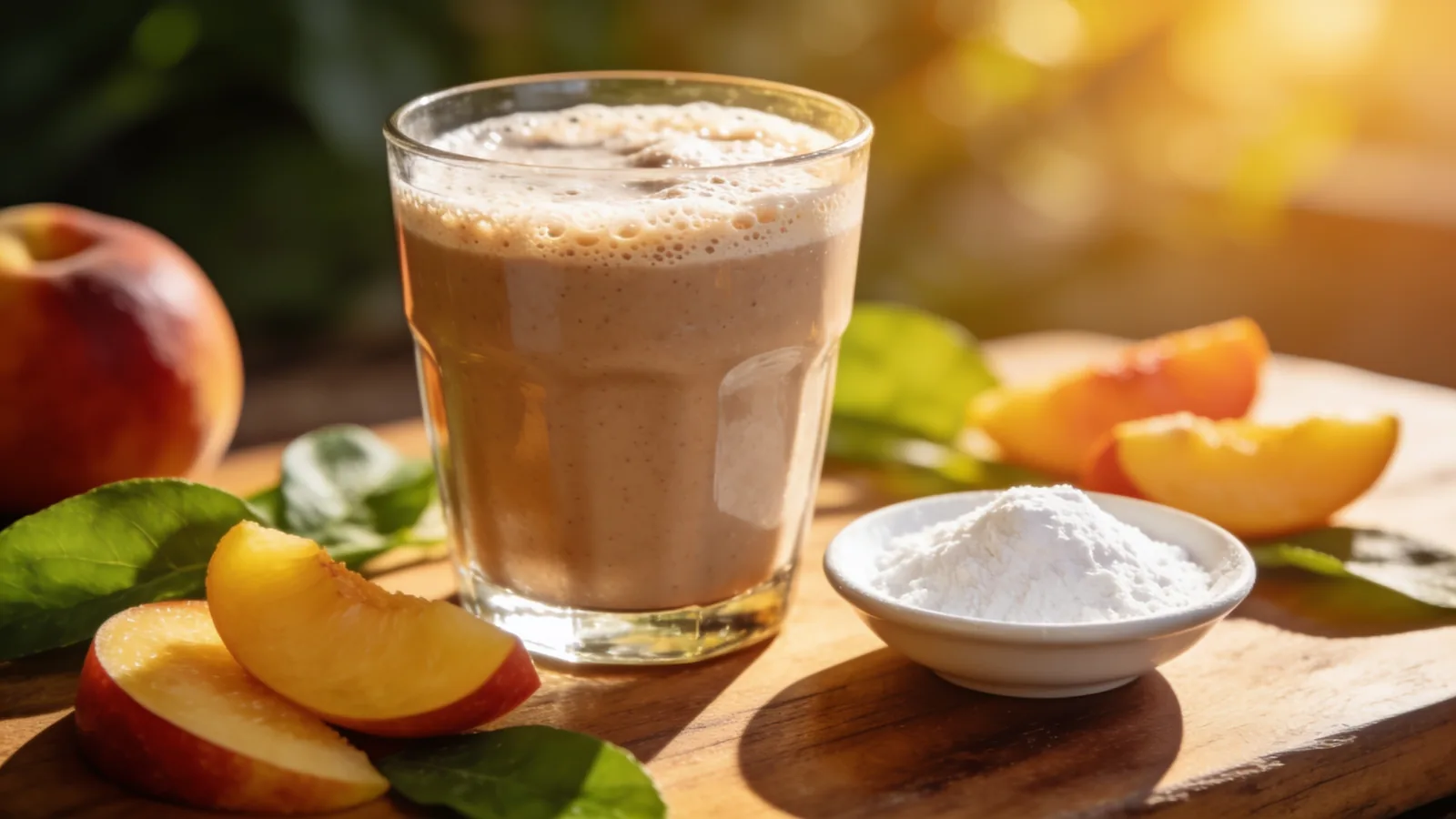
The protein base is the decision that determines everything else. It needs to be a complete protein — all nine essential amino acids — with enough leucine to stimulate muscle protein synthesis. Animal proteins generally score higher than plant proteins on quality metrics like PDCAAS and DIAAS (Foods, 2024, PMID:38890999), but a small number of plant isolates close that gap. Potato protein isolate is one of them: 25g consumed twice daily stimulated muscle protein synthesis in young women, and the authors called it a high-quality plant-based source (Nutrients, 2020, PMID:32349353).
| Protein base | Protein content | Quality score | Common allergen? | FODMAP status |
|---|---|---|---|---|
| Potato protein isolate | 80–95% | DIAAS reported up to 100% | No | Low-FODMAP |
| Whey isolate | 90–95% | PDCAAS 1.00 | Yes (dairy) | Less lactose than concentrate |
| Soy protein isolate | — | PDCAAS 1.00; DIAAS ~90% | Yes (soy) | Can contain FODMAPs |
| Pea protein | 70–90% | Limiting in methionine + cysteine | No | Can contain GOS and fructan |
Whey isolate is 90–95% protein with less than 1% lactose and a PDCAAS of 1.00 — under the PDCAAS method, values above 100% are truncated to that maximum, which several high-quality proteins reach (The Journal of Nutrition, Schaafsma G, 2000, PMID:10867064). If you tolerate dairy, it is hard to beat. If you do not, potato protein isolate is the closest single-ingredient match on quality, and its DIAAS has been reported as high as 100% (Food Science & Nutrition, Herreman et al., 2020, PMID:33133540). Pea protein is workable but limited by its sulfur amino acids — methionine plus cysteine are its weak point — so a pea-only shake leaves a gap that a blend or a different base avoids.
There is also a digestive angle. Potato protein is classified as low-FODMAP by Monash University (2019), whereas soy and pea proteins can be challenging to purify and often carry FODMAPs such as GOS and fructan (Monash University FODMAP). For anyone with a sensitive gut, the base is not a detail. If you want the full breakdown of how this ingredient is made and why it scores the way it does, see our guide to what potato protein actually is.
How much protein should a meal-replacement shake have?
A meal-replacement shake should contain roughly 25–30g of complete protein. That is the dose shown to stimulate muscle protein synthesis — 25g of potato protein isolate did so in clinical work (Nutrients, 2020, PMID:32349353), and 30g of whey raised myofibrillar protein synthesis over placebo in a controlled trial (Med Sci Sports Exerc, 2023, PMID:37202878). Below about 20g, you are drinking a snack, not replacing a meal.
Distribution matters as much as the per-serving number. Spreading protein across meals may be as important as the daily total for maintaining muscle, particularly with age (J Frailty Aging, 2016, PMID:26980369). A shake that hits 25–30g is a simple way to anchor one of those meals. If you are using shakes specifically to lose fat while holding onto muscle, the dose logic is covered in our pillar guide to protein for weight loss.
What to add: fiber, fat, and micronutrients
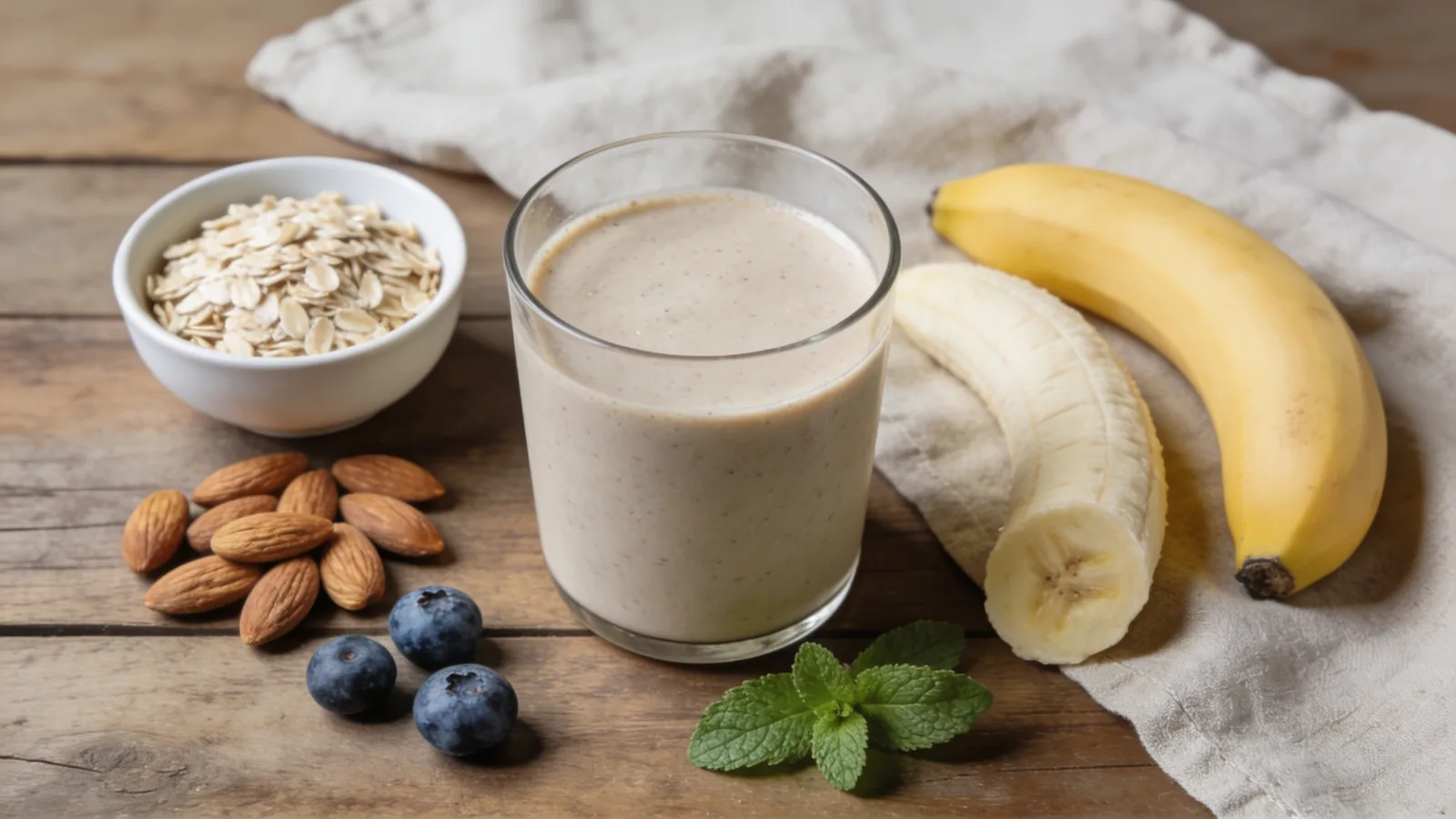
Protein alone does not make a meal. A real meal slows digestion with fiber and fat and supplies vitamins and minerals — your shake should do the same. Add fiber from oats, chia, ground flax, or a piece of fruit. Add fat from nut butter, whole milk or a plant milk, avocado, or seeds. These are the ingredients that turn a fast-digesting protein drink into something that holds you for hours.
Micronutrients are the quietly skipped step. A pre-mixed “complete” shake fortifies with a vitamin premix; a build-your-own shake gets there through whole foods — spinach you will not taste, frozen berries, cocoa, a banana. There is a cardiovascular reason to lean plant-forward here, too: people eating the highest ratio of plant to animal protein had a 19% lower risk of cardiovascular disease across three prospective cohorts (American Journal of Clinical Nutrition, Glenn AJ et al., 2024, PMID:39631999). A potato-protein base plus produce gets you most of the way to that ratio without thinking about it.
A simple starting ratio
- Protein: 25–30g from a single-ingredient isolate
- Fiber: a fruit plus a tablespoon of chia, flax, or oats
- Fat: a spoon of nut butter, or build it on whole or soy milk
- Liquid + micros: milk of choice, a handful of greens, cocoa or berries
What to leave out
The shortest path to a healthier shake is subtraction. Three things are worth actively avoiding.
Added sugar. Many ready-to-drink and powdered meal replacements lead with sugar, which undoes the satiety advantage you came for. If your base is sweetened, you have less control; an unsweetened single-ingredient powder lets you decide. The market has caught up to this — 74% of GLP-1 users surveyed sought high-protein or protein-fortified products (Food Business News, 2025), and the better ones are not the sweetest.
Heavy metals you cannot see. Powder quality varies more than the marketing suggests. In the Clean Label Project’s 2025 Protein Study 2.0, certified organic protein powders averaged three times the lead of non-organic products, and chocolate-flavored powders contained 110 times more cadmium than vanilla, with 65% of chocolate powders exceeding California Prop 65 levels. “Organic” and “chocolate” are not safety signals. Third-party testing is the only thing that is.
The unreadable ingredient list. A meal-replacement powder with two dozen components is not inherently dangerous, but it is harder to trust and harder to troubleshoot if something disagrees with you. A single-ingredient base inverts the problem: nothing to react to, nothing to decode. For allergy households especially — no dairy, eggs, nuts, or soy — the fewest possible inputs is the entire point, and potato protein is recognized as an allergen-free option (Food Research International, 2021, PMID:34507729).
Are homemade meal-replacement shakes actually worth it?
For most people, yes — a homemade shake built on a high-quality protein base usually outperforms a pre-mixed one on protein dose, sugar, and ingredient transparency, at a lower cost per serving. The trade-off is convenience: a bottled shake is grab-and-go, while a build-your-own takes a blender and two minutes. If you rely on bottled options, it is worth knowing how they are formulated — we cover that in our look at whether RTD protein shakes are actually healthy.
One reassurance for anyone nervous about hitting a higher protein intake: in a 2018 meta-analysis of 28 trials and 1,358 participants, the change in glomerular filtration rate did not differ between higher- and lower-protein diets in healthy adults (The Journal of Nutrition, Devries MC et al., 2018, PMID:30383278). A 25–30g shake once or twice a day is not a kidney risk in healthy people.