A low calorie protein powder is simply one that delivers the most protein per calorie — and the only reliable way to get there is a high-purity isolate with as few other ingredients as possible. Calories in a protein powder do not come from the protein you want; they come from the carbohydrate, fat, sugar, and filler that ride alongside it. The closer a powder gets to being protein and nothing else, the lower its calorie count for the same protein dose.
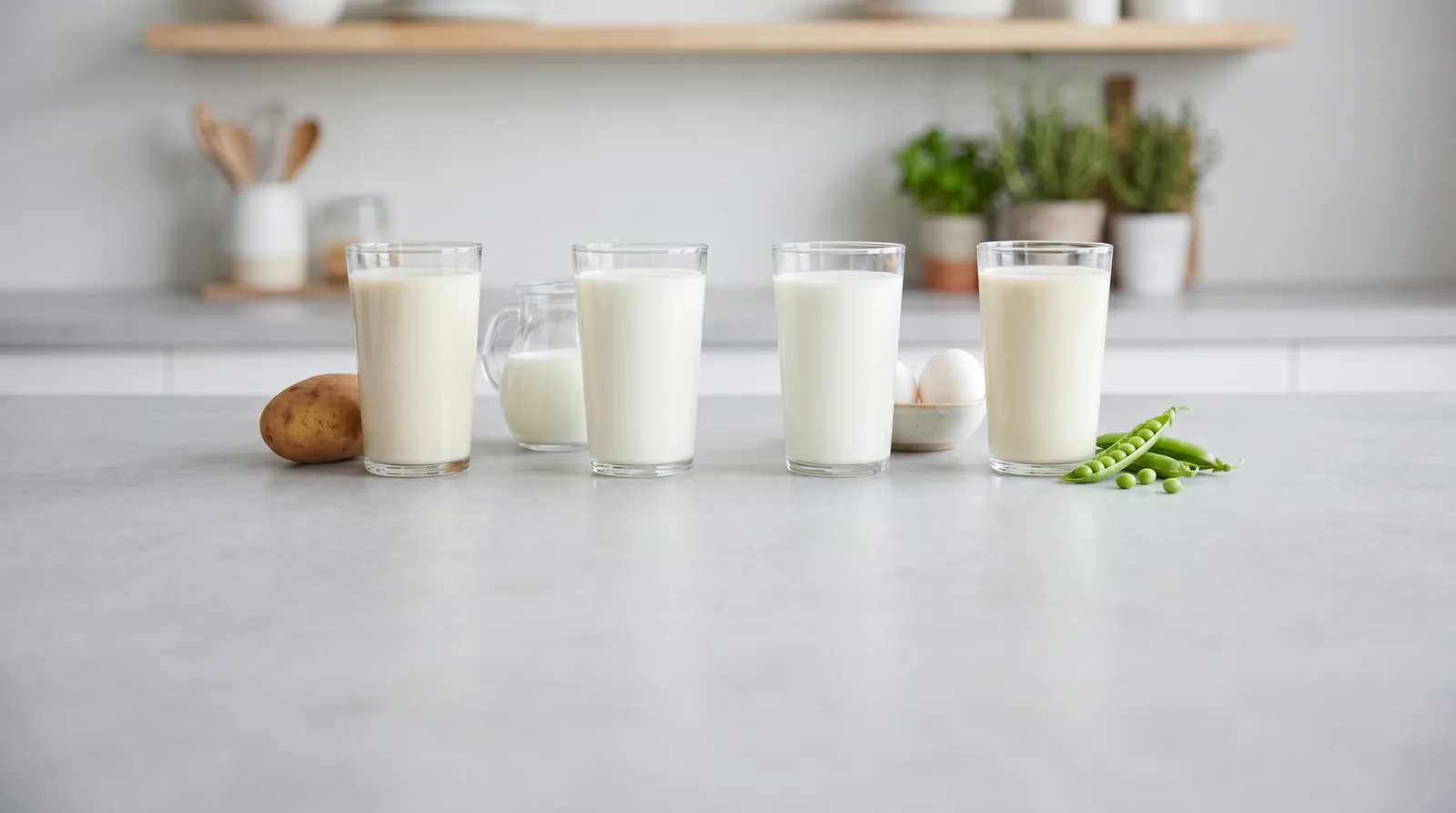
The lowest-calorie protein powders are near-isolated isolates that are 80–95% protein by weight with no added sugars, oils, or maltodextrin. Because protein carries roughly 4 calories per gram, a powder that is mostly protein and little else gives you close to the theoretical minimum calories for the protein it provides. Single-ingredient potato, whey, and egg-white isolates are the strongest candidates; blends with sweeteners, gums, and “creamy” additives are not.
This guide explains how to evaluate the options across plant and animal protein, and shows the math so you can read any label yourself.
Top Options by Category
Potato Protein Isolate
Single-ingredient plant isolate
Potato protein isolate runs 80–95% protein on a dry basis, which puts it in the same density bracket as the leading animal isolates and well ahead of most plant blends. It is a single ingredient: potato protein, nothing added. There is no sweetener, no oil, no gum, and therefore nothing contributing calories except the protein itself. On quality, the numbers are unusually good for a plant source — the Digestible Indispensable Amino Acid Score (DIAAS) for potato protein isolate has been reported as high as 100%, and a 2020 trial found that 25 g stimulated muscle protein synthesis at rest and after resistance exercise in young women (Nutrients, PMID:32349353). It is also a low-FODMAP protein source, which is rare among plant options.
Pros:
- High protein density with no added carbohydrate or fat
- Single ingredient — never squint to read the label
- DIAAS reported as high as 100%; stimulates muscle protein synthesis in published trials
- Low-FODMAP and free of dairy, soy, egg, and nuts
Cons:
- Earthy taste that needs flavoring or blending into food
- Less widely stocked than whey or pea
Whey Protein Isolate (single-ingredient)
Dairy-derived animal isolate
Whey protein isolate is 90–95% protein and less than 1% lactose, which makes it one of the most protein-dense — and therefore lowest-calorie-per-gram — powders on the market. It is a complete protein providing all nine essential amino acids, and its rapid digestion and high leucine content make it effective at stimulating muscle protein accretion (The American Journal of Clinical Nutrition, PMID:21367943). If you tolerate dairy, an unflavored, single-ingredient whey isolate is a sound low-calorie choice. The isolate, not the concentrate, is the more protein-dense form: Monash University notes that concentrate carries more of the FODMAP lactose, while isolate is more extensively processed to a higher protein percentage.
Pros:
- 90–95% protein, very low lactose
- Complete protein, fast-digesting, high leucine
- Mixes smoothly with no flavoring needed
Cons:
- Dairy-derived — off the table for the allergy or dairy-free buyer
- Concentrate versions are lower in protein and higher in lactose
Egg White Protein Powder
Single-ingredient animal protein
Egg white is almost entirely protein with no saturated fat — four egg whites (half a cup from a carton) supply 13 g of protein according to Cleveland Clinic — and dried egg-white powder follows the same profile. Egg protein scores a PDCAAS of 1.00, the maximum, so the protein is highly digestible and well used. As a low-calorie option it is excellent, with the obvious caveat that egg is a top allergen and a non-starter for the dairy-and-egg-free household.
Pros:
- Very high protein-to-calorie ratio
- PDCAAS of 1.00 — top protein quality
- No saturated fat, minimal carbohydrate
Cons:
- Egg is a major allergen
- Texture can be foamy and dries out baked goods
Pea Protein Isolate (single-ingredient)
Widely available plant option
Pea protein isolate is a reasonable low-calorie plant choice and the most stocked one. It is dense enough to keep calories down, and it is dairy- and egg-free. Two honest caveats: its limiting amino acid is the sum of methionine plus cysteine, averaging only 2.6 g per 100 g of protein across genotypes, which lowers its quality score relative to potato, egg, or whey; and Monash University notes that pea “can be particularly challenging to purify, and often contain some FODMAPs,” so it is more likely than potato to cause bloating in sensitive guts.
Pros:
- Dairy- and egg-free; widely available
- Good protein density in isolate form
- Low environmental footprint
Cons:
- Limited by methionine and cysteine — lower quality score
- Often retains FODMAPs that can trigger IBS symptoms
What to Look For on Your Own
The label tells you almost everything. Here is how to read it for calories.
Start with the protein-to-calorie ratio, not the calorie number alone. A 90-calorie powder that delivers 15 g of protein is worse, calorie-for-protein, than a 110-calorie powder that delivers 25 g. Divide grams of protein into calories. The lowest-calorie powders for your actual protein target land near 4 calories per gram of protein, because protein itself is about 4 calories per gram and there is little else in the tub.
Read the carbohydrate and fat lines. This is where the extra calories hide. Maltodextrin, “natural flavors” carried on a starch base, added oils for creaminess, and sugar all push the number up without adding a single gram of protein. A single-ingredient isolate has almost nothing on these lines. If you want the deeper rationale on why protein density matters for a deficit, our complete guide to protein for weight loss covers satiety, thermogenesis, and how much protein to target while losing weight.
Don’t ignore quality to chase a lower number. A protein you absorb poorly is calories spent inefficiently. PDCAAS and DIAAS are the standard quality measures, and animal proteins generally score higher than plant proteins — egg protein is 1.00 while wheat gluten is roughly 0.25. The notable exception among plants is potato protein isolate, whose DIAAS has been reported as high as 100%. You can read more on the ingredient in our overview of potato protein.
Insist on third-party heavy-metal testing. This is not optional in this category. The Clean Label Project’s 2025 Protein Study 2.0 tested 160 products and found 47% exceeded at least one federal or state safety standard, with plant-based powders containing five times more cadmium than whey-based varieties. Separately, Consumer Reports tested 23 powders and shakes in 2025 and found more than two-thirds carried more lead per serving than its safe daily limit, with plant-based products averaging nine times the lead of dairy-based powders. None of that means you should avoid plant protein — it means you should choose a product that publishes its third-party testing results.
Protein density and quality by source
| Protein source | Protein by weight | Quality score | Allergen / FODMAP notes |
|---|---|---|---|
| Potato protein isolate | 80–95% | DIAAS reported up to 100%; among the highest of plant proteins | Dairy/soy/egg/nut-free; low-FODMAP |
| Whey protein isolate | 90–95% | Complete; all nine essential amino acids | Dairy-derived; less than 1% lactose |
| Egg white protein | — | PDCAAS 1.00 | Egg allergen |
| Pea protein isolate | — | Limited by methionine + cysteine (2.6 g/100 g) | Dairy/egg-free; often retains FODMAPs |
| Wheat (gluten) protein | — | PDCAAS ~0.25 | Gluten |
Reliable protein-by-weight figures are not established for every isolate in the same way, which is why some cells above carry an em-dash rather than a guessed number. The pattern still holds: the densest, highest-quality, lowest-additive options are potato isolate, whey isolate, and egg white.