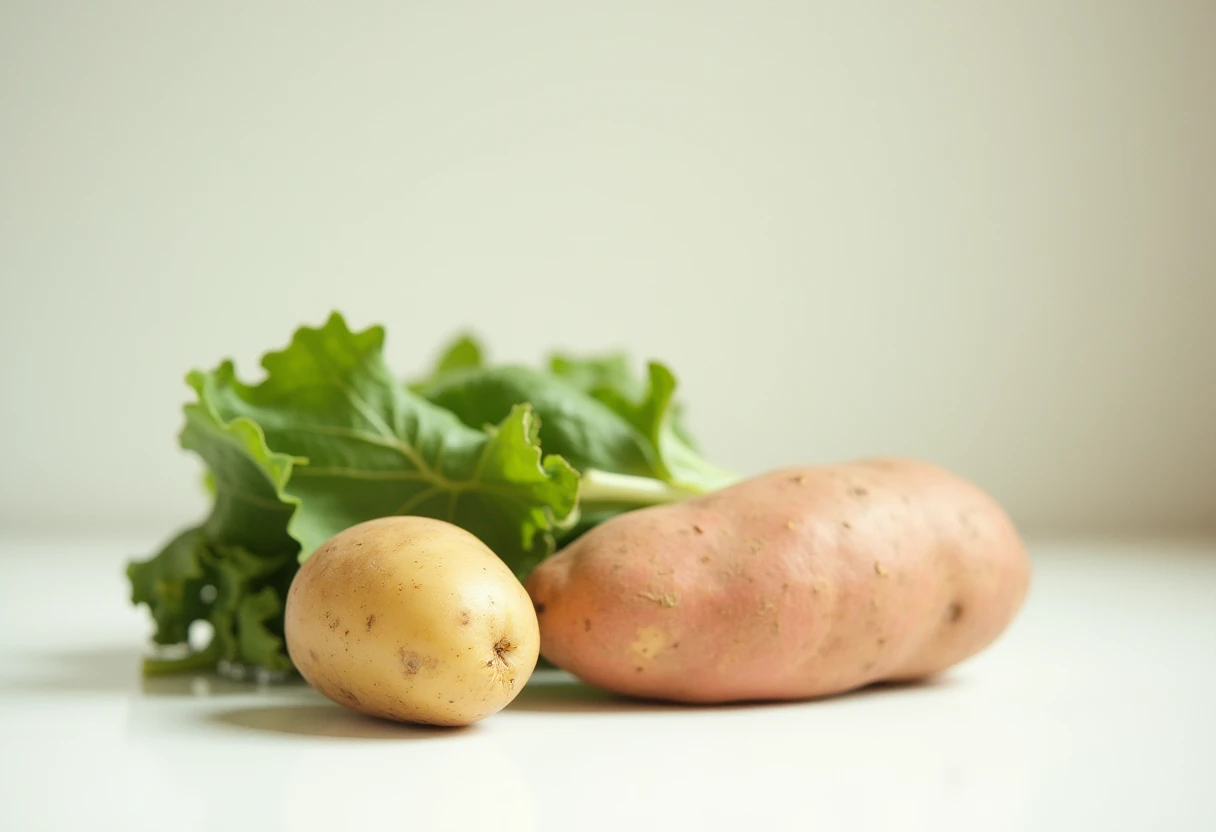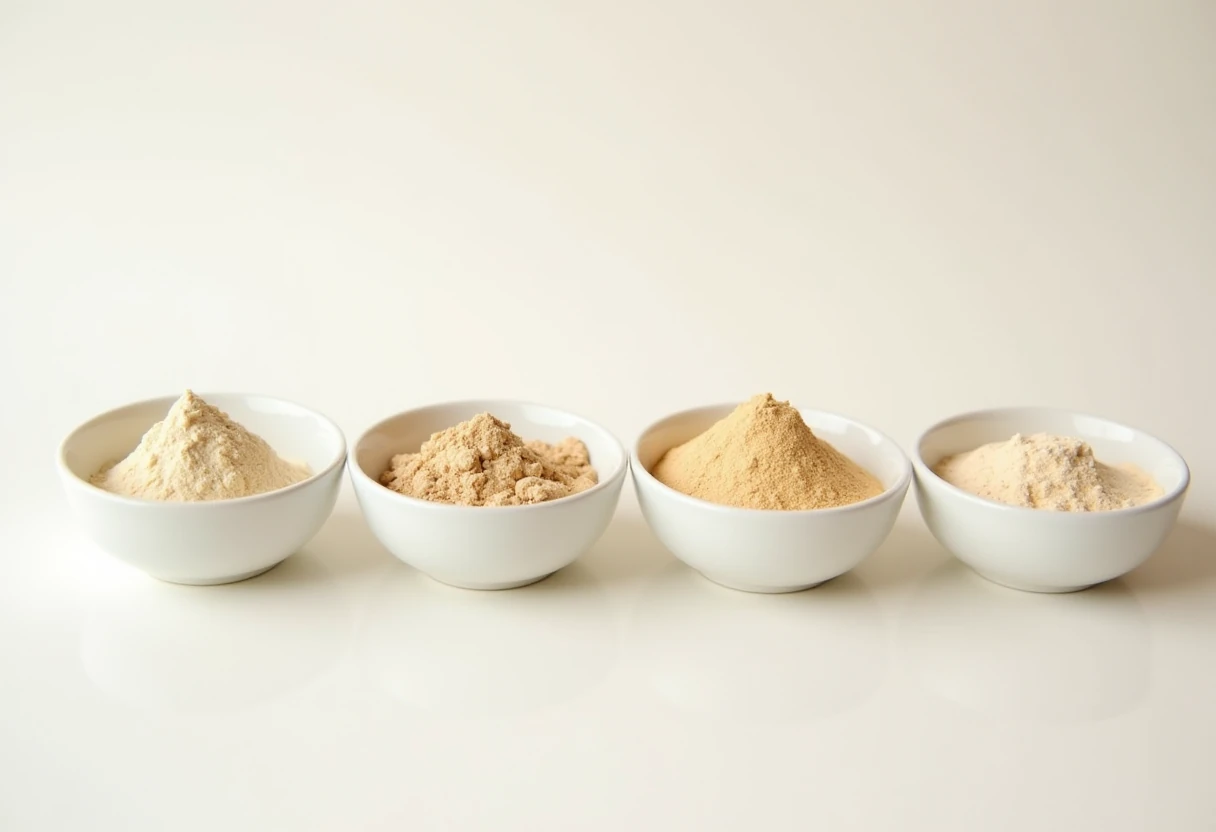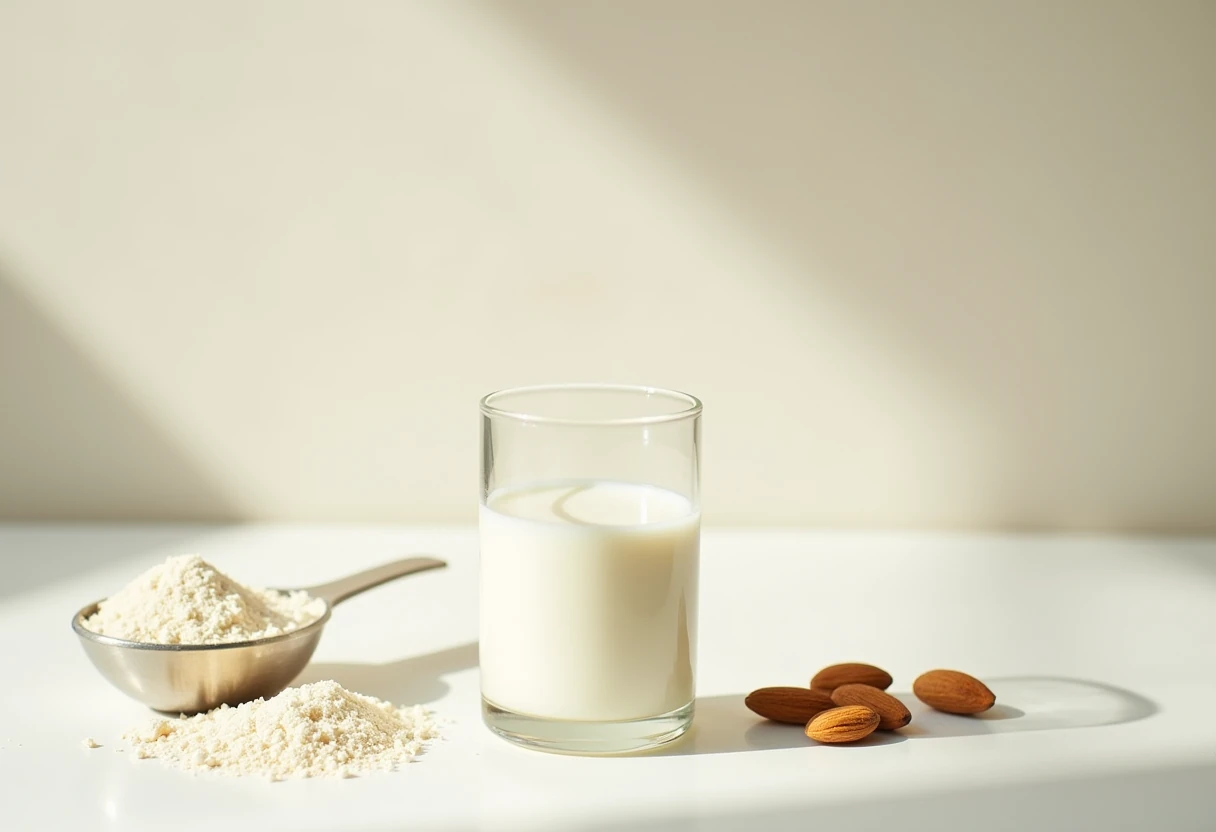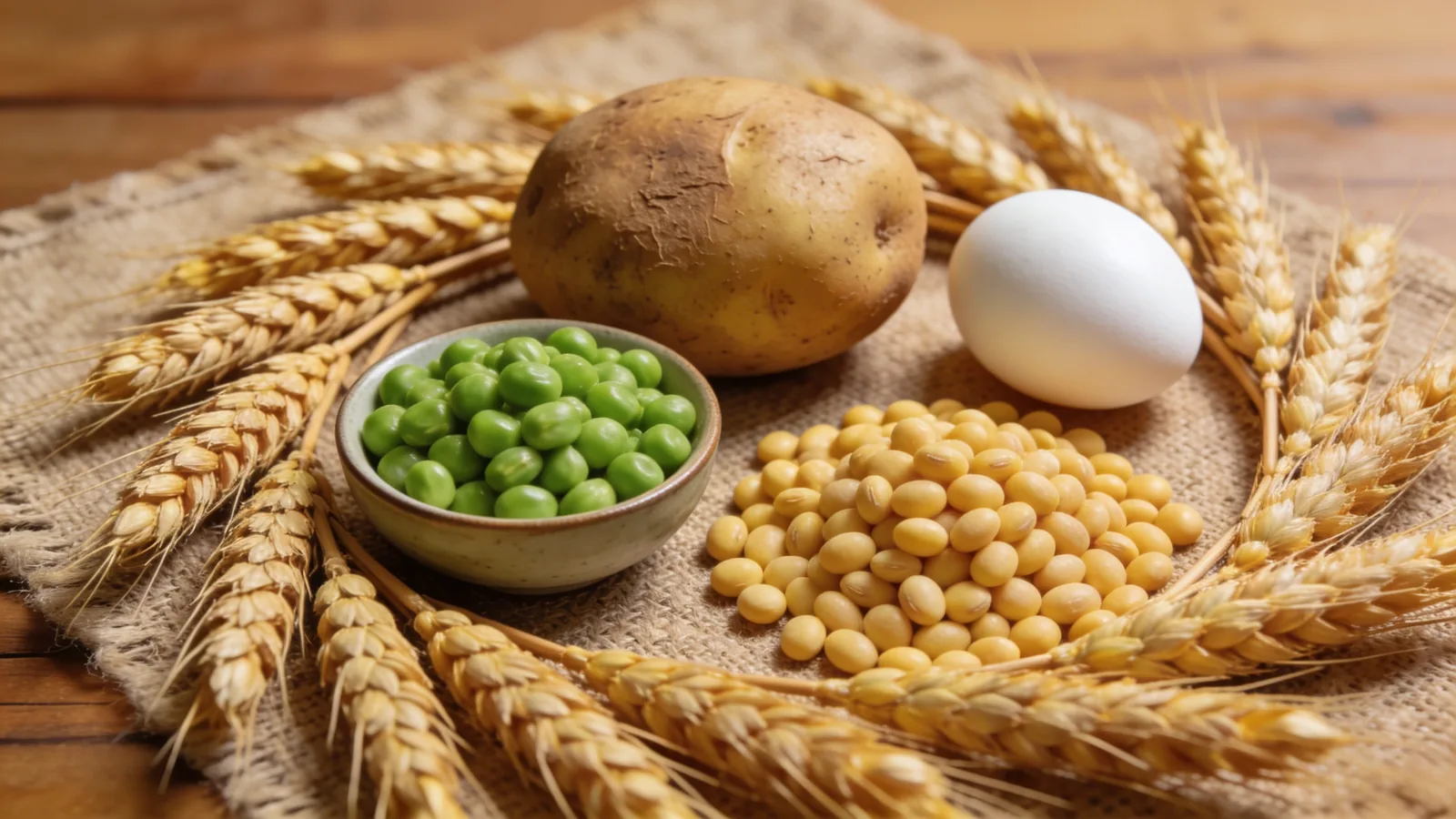
An easily digestible protein is one your small intestine absorbs almost completely, leaving little behind to reach the colon and ferment into gas. By that standard, the proteins that rank highest share three traits: high true digestibility, a low FODMAP load, and few common allergens. Pea protein isolate, for one, reaches roughly 93.6% real ileal digestibility in controlled human studies — and potato protein isolate is both low-FODMAP and allergen-free, which is why it sits near the top of any honest ranking.
The easiest proteins to digest for a sensitive stomach are low-FODMAP, highly absorbed, and low in common allergens: potato protein isolate, whey protein isolate, and egg white rank highest. Potato protein is low-FODMAP and allergen-free, with a DIAAS reported as high as 100%. Whey isolate contains less than 1% lactose. Pea and soy isolate digest well but often retain FODMAPs that trigger IBS symptoms.
What Makes a Protein Easy to Digest?
Digestibility comes down to how much of a protein your small intestine breaks down and absorbs before the remainder reaches the colon. Three factors decide it: the protein’s intrinsic absorption rate, its FODMAP content, and the allergens that travel with it. A protein can score high on amino acid quality and still upset a sensitive gut if it carries fermentable carbohydrates.
Ileal digestibility: the number that actually matters
The most rigorous digestibility measure is real ileal digestibility — the percentage of protein absorbed by the end of the small intestine. In a controlled human study, pea protein isolate averaged 93.6% ± 2.9% real ileal digestibility versus 96.8% ± 1.0% for casein, a difference that was not statistically significant. Whatever a protein leaves undigested does not vanish. When dietary protein exceeds small-intestinal capacity and reaches the colon, bacteria ferment it into short-chain and branched-chain fatty acids, ammonia, hydrogen sulfide, and phenolic and indolic compounds — the chemistry behind bloating and odor.
FODMAPs: the hidden trigger in plant powders
For people with IBS or a reactive gut, the protein molecule is often not the problem — the carbohydrates clinging to it are. Monash University, which developed the low-FODMAP framework, notes that plant-derived proteins such as soy and pea “can be particularly challenging to purify, and often contain some FODMAPs (eg. GOS and fructan),” and that even small amounts can trigger IBS symptoms. Dairy proteins have their own version of this: whey concentrate carries more lactose than isolate because it undergoes less processing. Potato protein, by contrast, is classified as a low-FODMAP protein source.
Allergen load
The easiest protein to digest is also one your immune system ignores. The eight major allergens — milk, egg, soy, wheat, peanuts, tree nuts, fish, and shellfish — cover most reactive proteins on the market. Potato protein falls outside all of them; a 2021 review in Food Research International describes it as a high-quality, allergy-free protein suited to allergen-free product formulation. If you are building a gut-friendly shortlist, our allergen-free protein guide covers the full screening logic.
Easily Digestible Proteins, Ranked
No single score captures digestibility, FODMAP status, and allergen load at once, so the table below combines them. Protein quality scores come from PDCAAS (the FAO/WHO standard) and DIAAS (its 2013 successor). Where a reliable verified figure does not exist for a given source, the cell shows an em-dash rather than a guess.
| Protein | Quality score | FODMAP status | Common allergen? |
|---|---|---|---|
| Potato protein isolate | DIAAS up to 100 | Low-FODMAP | No |
| Whey protein isolate | PDCAAS 1.00 | <1% lactose | Yes (dairy) |
| Egg white | PDCAAS 1.00 | — | Yes (egg) |
| Casein | DIAAS ~1.18 | Higher in lactose | Yes (dairy) |
| Pea protein isolate | DIAAS 1.00 | Often retains FODMAPs | No (legume) |
| Soy protein isolate | PDCAAS 1.00 | Often retains FODMAPs | Yes (soy) |
| Wheat gluten | PDCAAS 0.25 | — | Yes (wheat) |
Two things stand out. First, whey isolate and potato protein both score at the top for absorption, but only potato sidesteps the dairy allergen and the residual lactose entirely. Second, pea and soy are well absorbed yet keep the fermentable carbohydrates that make plant powders feel heavy — the same reason many people who tolerate the amino acids still report bloating. For a closer head-to-head, see potato vs rice protein.
The protein molecule is rarely the problem. The carbohydrates and allergens riding along with it usually are. On why “complete” and “digestible” are not the same thing
How to Choose for a Sensitive Stomach
For a reactive gut, pick a protein that is low-FODMAP, highly absorbed, and free of your known allergens — then keep the ingredient list short enough that nothing is hiding. Potato protein isolate meets all three criteria; whey isolate matches on absorption but only suits people who tolerate dairy. The fewer inputs on the label, the fewer suspects when something goes wrong.
Three practical rules follow from the science:
- Choose isolate over concentrate. Isolates undergo more processing, which strips fermentable carbohydrates. Whey isolate carries less than 1% lactose versus the higher load in concentrate.
- Read for hidden FODMAPs. Inulin, chicory root fiber, and added “prebiotic” blends are common in plant powders and ferment readily. A single-ingredient powder removes that risk by definition.
- Match the protein to your allergens. If dairy, egg, soy, or wheat is on your avoid list, that narrows the field fast. Potato protein is one of the few high-quality options outside every major allergen class.
If your symptoms persist regardless of source, the issue may be dose or timing rather than the protein itself — our roundup of common protein powder problems walks through the usual culprits. And if you are new to the ingredient, start with what potato protein actually is before comparing brands.
Limitations and Honest Caveats
Digestibility ratings are population averages, not personal guarantees. The pea-versus-casein study found no significant difference in overall ileal digestibility, yet leucine, valine, lysine, and phenylalanine were each significantly less digestible in pea than in casein — meaning a “well-digested” plant protein can still deliver fewer usable amino acids per gram. Casein’s DIAAS, around 1.18, also edges out the truncated scores of plant isolates, so for amino acid delivery alone, dairy proteins retain an edge where they are tolerated.
FODMAP content also varies by manufacturer and batch, because it depends on how thoroughly the carbohydrate fraction is removed during processing. A low-FODMAP classification for a protein type does not certify every product made from it. Finally, individual tolerance is real: some people digest soy comfortably while others react to trace fructans. Use these rankings as a starting filter, then test against your own response. None of this is medical advice, and a persistently reactive gut warrants a clinician, not a powder swap.