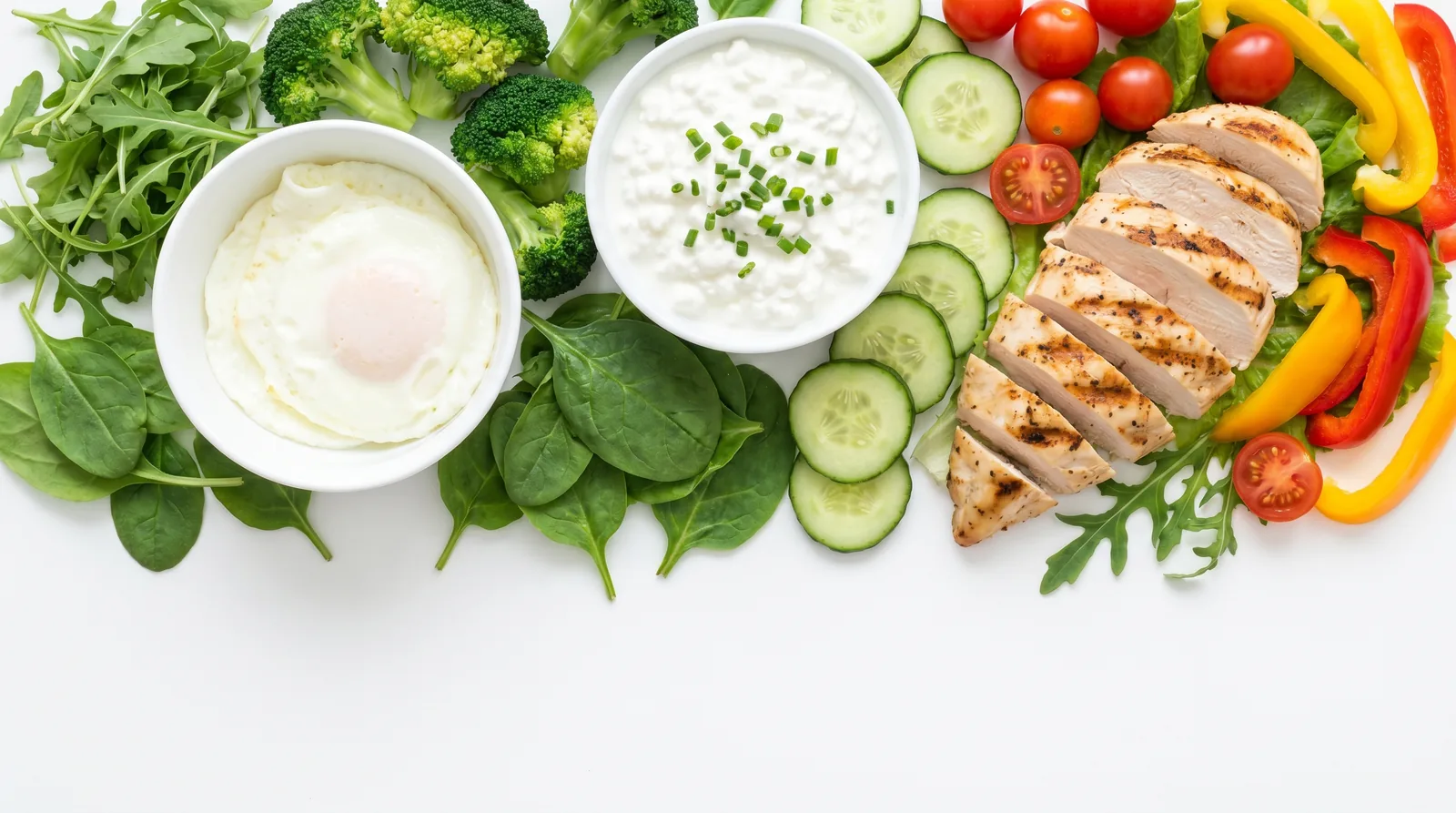
The most useful way to rank high protein low calorie foods is by protein density — grams of protein per 100 calories — not by total grams alone. By that measure egg whites lead, with about 13g of protein in roughly 52 calories (4 raw, separated whites), or about 25g of protein per 100 calories. Shrimp, white fish, skinless poultry breast, and protein isolates follow close behind. The list below is sorted from highest density to lowest.
The highest protein-density foods — the most protein per calorie — are egg whites, shrimp, white fish like cod and canned tuna, skinless poultry breast, and protein isolates. Egg whites provide about 13g of protein for roughly 52 calories, or about 25g of protein per 100 calories. Cottage cheese, nonfat Greek yogurt, seitan, and turkey breast all land between 17 and 21g of protein per 100 calories.
What does “high protein, low calorie” actually mean?
A high protein, low calorie food is one that delivers a large amount of protein for very few calories — measured as protein density, or grams of protein per 100 calories. Foods above roughly 15g per 100 calories qualify; the leanest options exceed 20g. This metric matters more than total protein because it tells you what you give up in calories to hit a protein target.
Two foods can both list “20g of protein” and behave completely differently on a plate. Twenty grams from skinless chicken breast costs you about 105 calories. Twenty grams from whole eggs costs about 240. When you are eating at a deficit, that gap is the entire point. Protein density is the number to read, and it is why egg whites outrank whole eggs despite coming from the same source.
High Protein Low Calorie Food List
This high protein low calorie food list is ordered by protein density, highest first. Figures are for the listed serving size; the final column is grams of protein per 100 calories, which is the figure that determines rank.
| Food | Serving | Protein (g) | Calories | Protein per 100 cal |
|---|---|---|---|---|
| Egg whites (raw, separated) | ~4 whites | 13 | ~52 | 25g |
| Shrimp, cooked | 100g | 24 | 99 | 24g |
| Whey protein isolate | 30g scoop | 25 | 110 | 23g |
| Potato protein isolate | 30g scoop | 25 | 110 | 23g |
| Canned tuna (in water) | 100g | 26 | 116 | 22g |
| Cod | 100g | 23 | 105 | 22g |
| Turkey breast, skinless | 100g | 29 | 135 | 21g |
| Seitan | 100g | 25 | 120 | 21g |
| Tilapia | 100g | 26 | 128 | 20g |
| Pea protein isolate | 30g scoop | 24 | 120 | 20g |
| Nutritional yeast | 2 tbsp | 8 | 40 | 20g |
| Scallops | 100g | 21 | 111 | 19g |
| Chicken breast, skinless | 100g | 31 | 165 | 19g |
| Pork tenderloin | 100g | 26 | 143 | 18g |
| Cottage cheese (1% fat) | 113g | 14 | 81 | 17g |
| Greek yogurt, nonfat | 170g | 17 | 100 | 17g |
| Lean beef sirloin | 100g | 26 | 158 | 16g |
| Firm tofu | 100g | 12 | 94 | 13g |
| Skim milk | 1 cup | 8 | 83 | 10g |
| Edamame, shelled | 100g | 11 | 121 | 9g |
| Whole egg | 1 large | 6 | 72 | 8g |
| Part-skim ricotta | 100g | 11 | 138 | 8g |
| Lentils, cooked | 100g | 9 | 116 | 8g |
| Black beans, cooked | 100g | 9 | 132 | 7g |
| Green peas | 100g | 5 | 81 | 6g |
| Quinoa, cooked | 100g | 4 | 120 | 3g |
Two of these figures come from named sources. Cottage cheese (1% fat, 113g) provides about 14g of protein for 81 calories, per USDA FoodData Central. Four raw, separated egg whites contain about 13g of protein and are almost entirely protein with no saturated fat, per Cleveland Clinic Health Essentials (2025). The remaining rows use standard reference values for cooked, edible portions.
The surprising entries
Most people expect chicken breast and tuna on a high protein low calorie food list. Several less obvious foods outperform them.
Egg whites sit at the top because the yolk — the calorie-dense part — is removed. You lose some micronutrients in the trade, but the protein-per-calorie ratio is the best on the list.
Canned tuna is the cheapest entry near the top. A single drained can delivers more than 25g of protein for around 116 calories, shelf-stable and requiring no cooking. Tuna in water, not oil, keeps the calorie count low.
Cottage cheese and nonfat Greek yogurt both land around 17g per 100 calories. They are slow-digesting dairy proteins, which makes them useful before a long gap between meals. Cottage cheese has had a deserved resurgence; the numbers back it up.
Nutritional yeast is the outlier — a plant seasoning that runs about 20g of protein per 100 calories. You will not eat 100 calories of it in one sitting, but two tablespoons add 8g of protein to a meal for 40 calories, which is a favorable exchange.
How to build meals from the list
The practical move is to anchor each meal with one food from the top half of the table, then add volume from low-calorie vegetables. Protein density does the heavy lifting; fiber and water do the rest.
A few combinations that hold a high ratio across the whole plate:
- Breakfast: egg whites scrambled with one whole egg, plus spinach. Roughly 19g of protein for around 130 calories.
- Lunch: canned tuna over greens with a yogurt-based dressing. Around 30g of protein, under 250 calories.
- Dinner: cod or tilapia with green peas and a side of cottage cheese. Around 35g of protein for roughly 300 calories.
- Snack: nonfat Greek yogurt with a spoon of protein isolate stirred in. Around 30g for under 200 calories.
Protein density matters most when you are eating at a deficit, because every calorie has to earn its place. For the full picture on how protein supports fat loss while preserving muscle, see our guide to protein for weight loss, and if you want a target number, how much protein per day to lose weight works through the math. High-protein meals also increase satiety and thermogenesis more than standard-protein meals, according to research in the Journal of the American College of Nutrition (PMID:15466943) — useful when the goal is to feel full on fewer calories.
Where protein powder fits
Protein isolates earn a place near the top of the list because processing strips away nearly everything that is not protein. Whey protein isolate is filtered to be almost entirely protein, with very little lactose remaining. A 30g scoop delivers around 25g of protein for about 110 calories — roughly 23g per 100 calories, matching the leanest whole foods.
Whole foods remain the better default; Harvard Health Publishing notes that protein supplements mainly benefit people who cannot reach their target through food alone. But a single-ingredient isolate is the most calorie-efficient way to close a gap. Potato protein isolate is one option for households avoiding dairy, soy, egg, and nuts — potato is not among the FDA’s declared major food allergens, and as a purified protein the isolate is generally low in FODMAPs.