Protein powder without artificial sweeteners is easier to find than it was five years ago, but the label still rewards careful reading: many products that skip sucralose and aspartame quietly add stevia, monk fruit, or “natural flavors” instead. The useful comparison is between categories of product on what is actually printed on the back of the tub — not the marketing on the front.
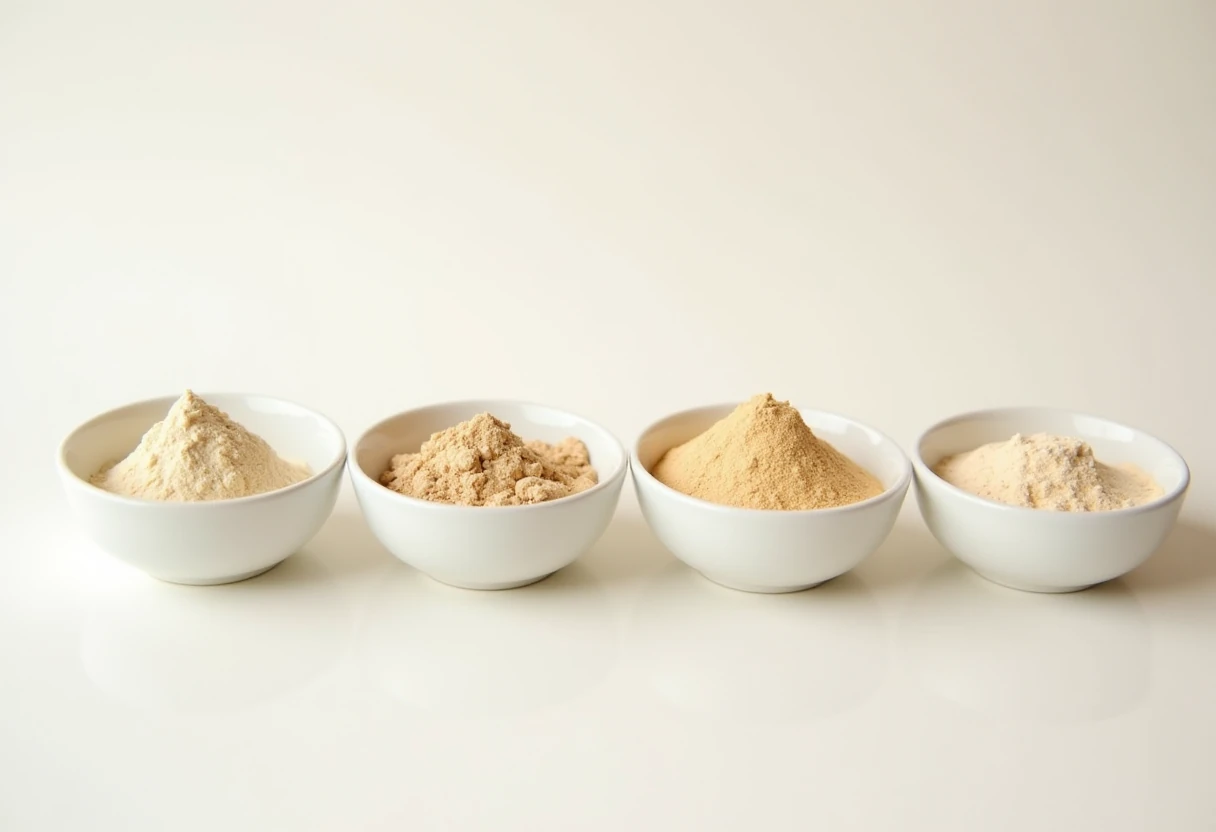
A protein powder without artificial sweeteners contains no sucralose, aspartame, acesulfame potassium, or saccharin. The shortest-ingredient versions are single-ingredient isolates — potato, pea, or whey — with nothing added at all, so they taste neutral rather than sweet. Stevia and monk fruit are plant-derived, not artificial, but they are still added sweeteners; if you want zero sweetener of any kind, choose an unflavored single-ingredient powder.
Below is how the main categories compare, the trade-offs of each, and the heavy-metal data that matters more than the sweetener question for most buyers.
Top Options by Category
Potato Protein Isolate
Single-ingredient, unsweetened
There is no sweetener to argue about because there is no sweetener — or anything else — added. Potato protein isolate runs 80–95% protein on a dry basis, and the Protein Digestibility Corrected Amino Acid Score for potato protein is among the highest of any vegetable protein source. A 2020 trial in Nutrients found that 25g of potato protein isolate, taken twice daily, stimulated muscle protein synthesis in young women — a result more often associated with whey than with plants (PMID:32349353). Reported DIAAS values for potato protein isolate reach as high as 100% (Food Science & Nutrition, Herreman et al., 2020, PMID:33133540). It is also a low-FODMAP protein source, per Monash University (2019), which matters if added sweeteners are not your only digestive concern.
Pros:
- Single ingredient — nothing to react to
- No dairy, egg, soy, nut, or gluten
- Protein quality competitive with animal sources
- Low-FODMAP; disappears into food
Cons:
- Unflavored and unsweetened — needs a recipe, not just water
- Neutral taste means you season it yourself
Single-Ingredient Pea Or Whey Protein
Single-ingredient, plant or dairy base
A single-ingredient protein is just one input — yellow pea protein, or whey isolate, with nothing else — and its unflavored versions carry no sweetener of any kind. If you want a one-line label but prefer pea or whey to potato, this is the honest comparison point. Whey isolate is a complete protein with all nine essential amino acids and is higher in leucine; a pea option is dairy-free. Either way, the front of the tub matches the back.
Pros:
- Single-ingredient unflavored versions
- Choice of plant or dairy base
- No added sweetener
Cons:
- Plant versions can carry FODMAPs that potato does not
- Whey versions unsuitable for dairy-allergy households
Organic Plant-Based Blend (Stevia-Free)
Multi-ingredient, plant-based
A stevia-free organic plant-based blend typically supplies roughly 15–20g of protein per serving with little to no sugar. It is a multi-ingredient blend rather than an isolate, so the label is longer, but the stevia-free versions explicitly skip stevia — useful if you find stevia’s aftertaste off-putting. Worth noting for anyone shopping organic specifically: in the Clean Label Project’s 2025 Protein Study 2.0, certified organic protein powders averaged three times the lead of non-organic products, so “organic” and “low-contaminant” are not the same claim.
Pros:
- Stevia-free versions skip both stevia and artificial sweeteners
- Little to no sugar per serving
- Convenient, ready to mix
Cons:
- Multi-ingredient blend, longer label
- Protein per serving often lower than a pure isolate
Organic Plant-Based Blend (Allergen-Friendly)
Multi-ingredient, allergen-conscious formulation
A simplified, stevia-free vegan blend typically provides somewhere around 18–22g of plant protein per serving while trimming the ingredient list relative to standard tubs. Multi-ingredient plant blends are a common pick for households juggling dairy, egg, soy, and nut restrictions, because the base proteins (pea, rice, and similar) avoid the major allergens. As with any plant blend, check the latest third-party heavy-metal results before committing.
Pros:
- Stevia-free, no artificial sweeteners
- Base proteins avoid dairy, egg, soy, and nut allergens
- Convenient, ready to mix
Cons:
- Still a blend, not a single ingredient
- Plant base may carry FODMAPs
How the Picks Compare
The table below lines up what is verifiable. Where a figure varies by product rather than by category, the cell shows a typical range rather than a single guessed number.
| Product | Protein / serving | Added sweetener | Ingredient count | Dairy / soy / nut free |
|---|---|---|---|---|
| Potato Protein Isolate | ~25g | None | 1 | Yes |
| Single-ingredient pea or whey (unflavored) | ~24–28g | None | 1 | Plant version: yes |
| Organic plant-based blend (stevia-free) | ~15–20g | None to minimal | Blend | Yes |
| Organic plant-based blend (allergen-friendly) | ~18–22g | None | Blend | Yes |
What to Look For on Your Own
“No artificial sweeteners” is a narrow claim. It rules out sucralose, aspartame, acesulfame potassium, and saccharin — and nothing else. A powder can carry that banner and still contain gums, oils, flavor systems, and a plant-derived sweetener. Here is how to read past the front label.
Distinguish “no artificial sweetener” from “no sweetener”
Stevia is a zero-calorie sweetener derived from the Stevia rebaudiana plant, so it is not artificial — but it is still an added sweetener with a taste many people notice. Some protein powders use monk fruit or coconut sugar instead. If you want nothing sweet at all, the only reliable route is an unflavored single-ingredient isolate. That is the trade-off: a neutral powder you season yourself versus a sweet one someone else seasoned for you.
Count the ingredients, not the buzzwords
The shortest ingredient list is the most honest label. A single-ingredient isolate gives an allergy parent or autoimmune-aware adult exactly one variable to track. This is the logic behind our broader allergen-free protein guide: fewest possible inputs, nothing hidden in a flavor system. If you have to squint to read your ingredient label, the product is working against you.
Check the heavy-metal data — it matters more than the sweetener
This is the part the front label never mentions. The Clean Label Project’s 2025 Protein Study 2.0 tested 160 protein powder products from 70 brands across 35,862 data points and found that 47% exceeded at least one federal or state safety standard, with 21% of samples exceeding twice the California Proposition 65 levels. Plant-based powders contained five times more cadmium than whey-based varieties, and chocolate-flavored powders contained 110 times more cadmium than vanilla. Consumer Reports’ October 2025 testing of 23 products reached a similar conclusion: more than two-thirds carried more lead per serving than its safe daily limit of 0.5 micrograms, and plant-based products averaged nine times the lead of dairy-based powders. Testing was performed by independent lab Ellipse Analytics using ICP-MS. The lesson is not “avoid plant protein” — it is “buy products that publish their third-party test results.”
Match the protein to what you need it to do
Animal proteins generally score higher on PDCAAS and DIAAS than plant proteins, which is why whey remains a reference point for muscle protein synthesis. The useful exception is potato: the 2020 Nutrients trial put it on anabolic footing with whey in young women (PMID:32349353), and its DIAAS has been reported as high as 100% (Herreman et al., 2020, PMID:33133540). If you want the science behind that, our explainer on what potato protein is goes deeper. For broader context on judging minimal-additive products, see how to actually judge a protein powder.