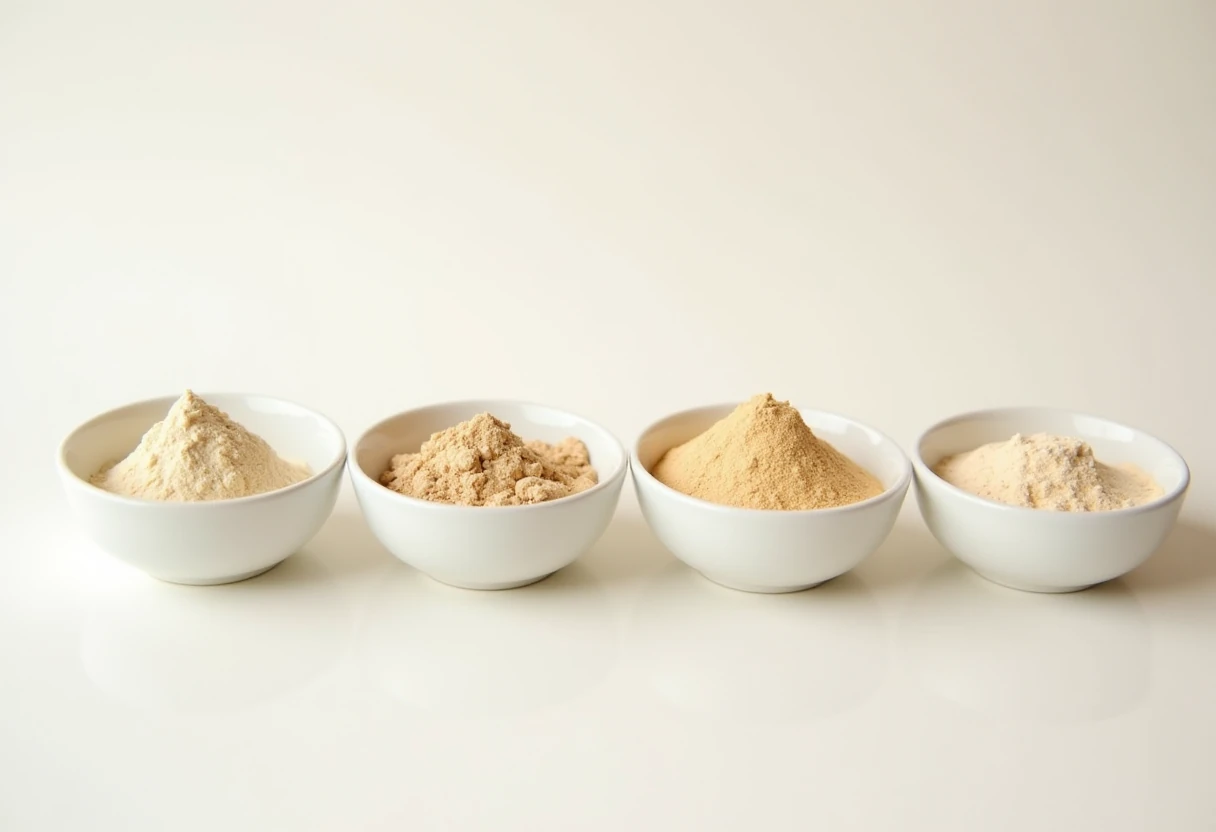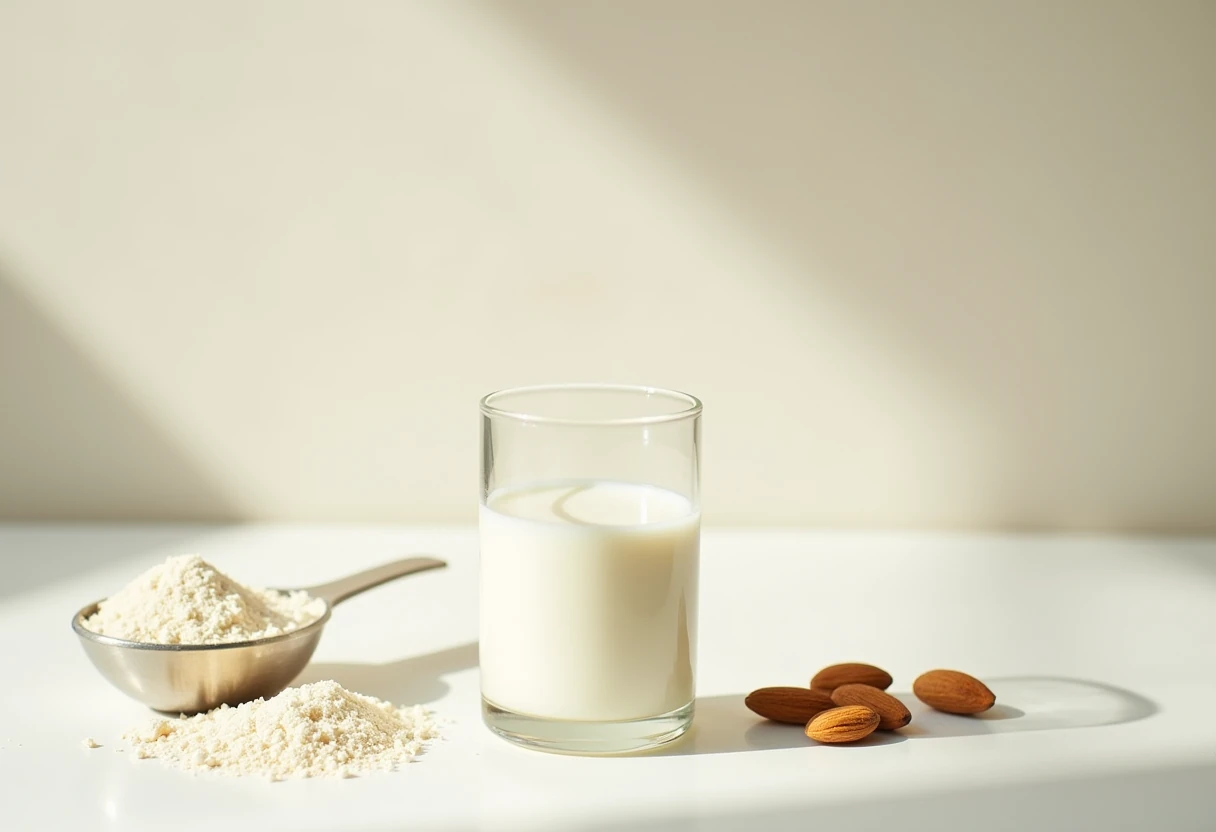
Whey protein for dairy intolerance is a more complicated question than most labels admit, because “dairy intolerance” describes two unrelated problems. Lactose intolerance is a reaction to a sugar. A milk-protein allergy is a reaction to casein or whey itself. The protein powder that solves one will not necessarily solve the other, and conflating them is how people end up sick from a product they thought was fine.
If you are lactose intolerant, whey protein isolate is usually tolerable — it contains less than 1% lactose because the processing removes most of the milk sugar. If you have a true casein or whey allergy, no dairy-derived powder is safe, and you need a plant isolate such as potato, pea, or rice protein. Lactose intolerance affects roughly 65% of the global population; a milk-protein allergy is far less common but more serious.
We evaluated dairy-free protein powders for two readers: the person whose gut cannot process lactose, and the person whose immune system reacts to milk protein. Here is how we judged them and which we recommend.
Lactose Intolerance vs Milk-Protein Allergy: Know Which One You Have
Lactose intolerance is a digestive issue: your body produces too little lactase to break down the milk sugar lactose, so undigested sugar ferments in the colon and causes gas, bloating, and diarrhea. It affects approximately 65% of the global population. A milk-protein allergy is an immune response to casein or whey protein, and it can range from hives to anaphylaxis. The two share a trigger food but nothing else.
This distinction decides your entire shortlist. If your problem is lactose, whey protein isolate is comprised of 90 to 95% protein and less than 1% lactose, which is why many lactose-intolerant people tolerate it without symptoms. Monash University notes that whey isolates undergo more extensive processing than concentrates, so the final product is higher in protein and lower in lactose — the concentrate carries more of the FODMAP milk sugar. If your problem is the protein itself, none of that helps: whey isolate still contains whey, and a casein allergy does not care how the powder was filtered. For a full breakdown of the allergen categories, see our allergen-free protein guide.
Top Options by Category
Potato Protein Isolate
Strongest all-around plant option — safe for both problems
Potato protein isolate contains no milk sugar and no milk protein, so it is safe whether your issue is lactose or a casein/whey allergy. It is also a Monash-recognized low-FODMAP protein source, which matters for anyone with IBS layered on top of dairy trouble. On protein quality it holds up against animal sources: the Digestible Indispensable Amino Acid Score for potato protein isolate has been reported as high as 100%, comparable to whey isolate (DIAAS 94–100%). A 2020 trial in young women (Oikawa et al.), published in Nutrients (PMID:32349353), found that potato protein isolate stimulated muscle protein synthesis at rest and after resistance exercise.
Pros:
- Zero lactose and zero milk protein — works for both dairy problems
- Low-FODMAP, so gentle for IBS
- DIAAS reported up to 100%; complete amino acid profile
- Single ingredient; nothing added to react to
- Published heavy-metal and allergen testing
Cons:
- Earthier taste than dairy whey
- Slightly lower essential-amino-acid share than whey (37% vs 43%)
- Less widely stocked than pea or whey
Pea Protein Isolate
Best mainstream option
Pea protein is the easiest dairy-free isolate to find, and the evidence for it is solid. An 84-day randomized comparator trial in sedentary adults (Nutrients, 2024, PMC11243455) found pea protein and whey produced comparable gains in muscle mass (2.3% vs 2.4%, P = 0.92) and strength when paired with resistance training. Pea is naturally high in lysine — averaging 7.9 g per 100 g of protein across new genotypes (Molecules, 2024, PMC11547519) — though its limiting amino acid is the methionine-plus-cysteine pair, so it scores slightly below potato and whey on completeness. Monash notes that pea can contain some FODMAPs (GOS and fructans) depending on how thoroughly it is purified, which is worth knowing if you also have IBS.
Pros:
- No dairy — safe for lactose intolerance and milk-protein allergy
- Muscle gains comparable to whey in a head-to-head trial
- Widely available; many single-ingredient versions exist
Cons:
- Limiting in methionine + cysteine
- Can carry residual FODMAPs unless well purified
- Distinct savory flavor some find off-putting
Rice Protein Isolate
Mildest flavor
Brown rice protein is the most neutral-tasting of the dairy-free isolates, which makes it the easiest to blend into food without changing the flavor. It is hypoallergenic for most people and free of dairy, soy, and gluten. The trade-off is amino acids: rice is limiting in lysine, so on its own it scores lower than potato, pea, or whey. This is why rice is frequently paired with pea in commercial blends — the two cover each other’s gaps. If you want a single mild-tasting protein and you are eating a varied diet, rice alone is reasonable; if it is your only protein source, a pea-rice blend is the stronger choice.
Pros:
- Most neutral flavor of the dairy-free isolates
- Free of dairy, soy, and gluten
- Easy on digestion for most people
Cons:
- Limiting in lysine — incomplete on its own
- Often blended with pea to fix amino acid gaps
- Some brands carry higher heavy-metal loads — check testing
How the Picks Compare
The table below shows where each option lands on the two things that matter most for dairy intolerance — whether it is truly dairy-free, and whether it is a complete protein.
| Protein | Lactose | Milk protein | Protein quality | FODMAP |
|---|---|---|---|---|
| Potato isolate | None | None | DIAAS up to 100 | Low |
| Pea isolate | None | None | High; limiting in Met+Cys | Variable |
| Rice isolate | None | None | Limiting in lysine | Low |
| Whey isolate | <1% | Yes (whey) | PDCAAS 1.00 | Low |
| Whey concentrate | Higher | Yes (whey) | PDCAAS 1.00 | Higher |
Read this table by your diagnosis, not by the protein column. A lactose-intolerant reader can use any row except whey concentrate. A reader with a milk-protein allergy can only use the three plant rows — the two whey rows both contain whey protein regardless of lactose content.
What to Look For on Your Own
Once you move past the headline ingredient, dairy hides in derivatives that do not always announce themselves. If you are reading labels for a milk-protein allergy, watch for: whey, casein, caseinate (sodium, calcium, or potassium), lactalbumin, lactoglobulin, lactoferrin, and “milk protein concentrate.” Some of these appear in protein blends, bars, and flavoring systems even when the front of the package says “plant-based.” If you cannot tell whether a derivative is dairy, treat it as dairy until the brand confirms otherwise.
For a true allergy, the more important question is cross-contamination. A plant protein produced on equipment shared with whey can carry trace casein, and trace is enough to trigger a reaction. Look for an explicit allergen statement and, ideally, third-party testing — a published certificate of analysis is the kind of document you want to see before you trust a powder with an allergy. Fewer ingredients also helps here: a single-ingredient isolate has fewer points where contamination can enter.
Finally, heavy metals deserve a glance. Plant proteins draw minerals from soil, and independent testing has repeatedly found them higher in metals than dairy powders. In the Clean Label Project’s 2025 Protein Study 2.0, plant-based powders contained five times more cadmium than whey-based varieties. Consumer Reports, testing 23 protein powders in October 2025, found lead levels in plant-based products averaged nine times higher than dairy-based powders. This is not a reason to avoid plant protein — it is a reason to buy from a brand that tests and publishes results. If you want a broader primer on choosing across categories, our best protein powder guide covers the wider field.