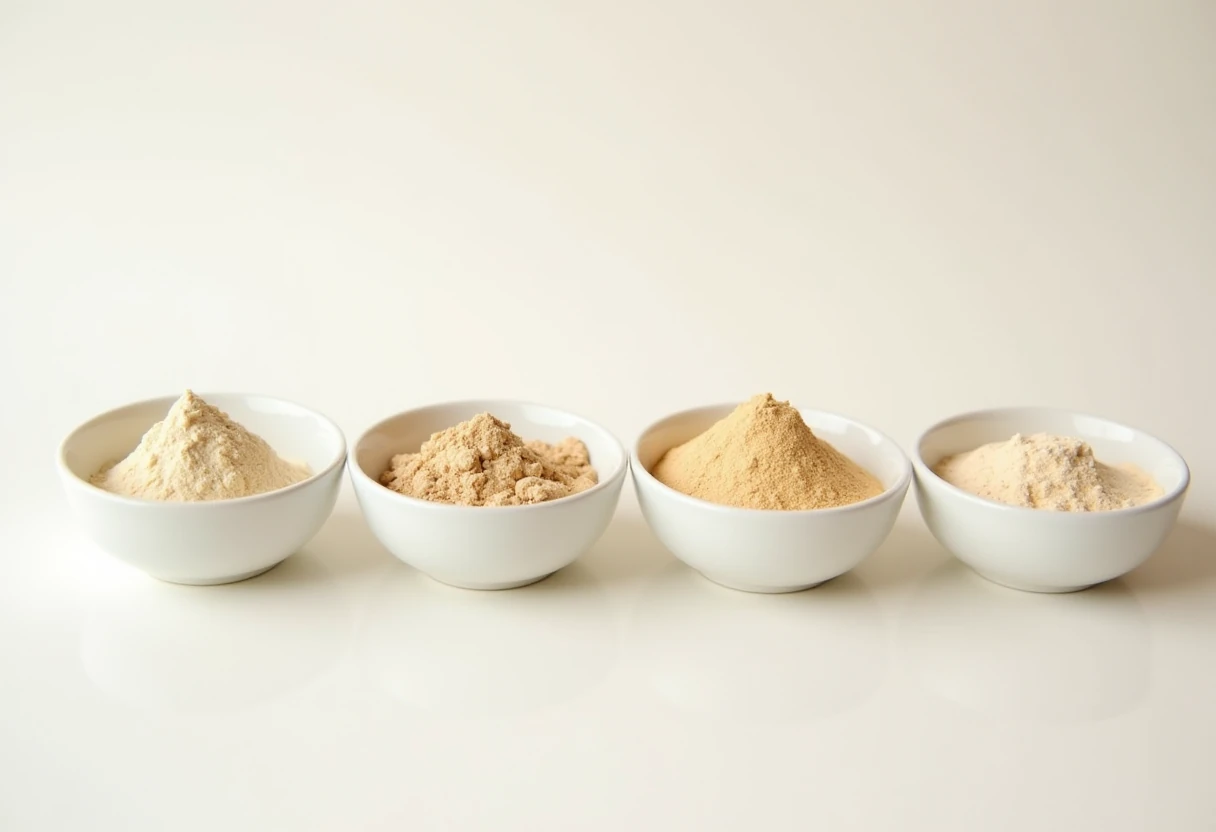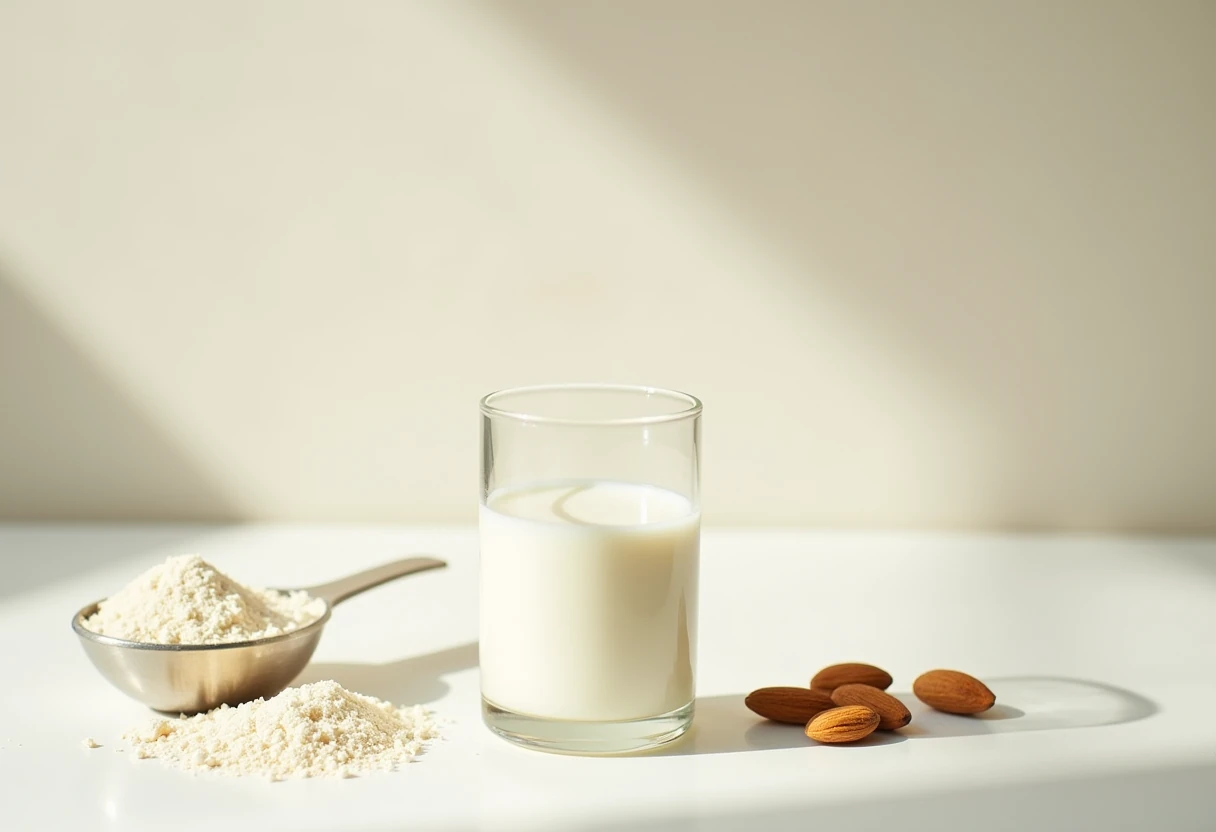
A whey allergy and lactose intolerance are not the same condition, and the distinction decides whether whey protein for dairy intolerance is fine for you or off the table entirely. A true milk allergy is an immune reaction to the protein itself; lactose intolerance is an enzyme shortfall that affects roughly 65% of the global population (StatPearls, 2025). Sorting out which one you have is the whole question.
If you are lactose intolerant, whey protein isolate — 90 to 95% protein and under 1% lactose — is usually tolerable, because most people with lactose intolerance handle up to 12 grams of lactose at one sitting. If you have a true whey or milk-protein allergy, no whey product is safe, since the allergen is the protein, not the sugar. In that case a single-ingredient plant protein such as potato protein isolate avoids dairy entirely while still scoring as a high-quality, complete protein.
- You drink a whey shake and feel bloated within an hour — reliably, every time.
- You have never been sure whether to blame the lactose or the protein.
- An allergist or a rash mentioned “milk protein,” and now you do not know what is actually safe.
- You bought whey isolate hoping it would be gentle enough, and it was not.
“You spent years assuming your stomach was the problem. It might just be the protein source — and which source matters more than you were told.”
Most articles collapse “allergy” and “intolerance” into one vague warning to avoid dairy. That is not useful, because the two problems lead to opposite advice. One lets you keep whey if you pick the right form. The other does not. Below is how to read your own symptoms, and what to do once you know.
What Makes Choosing Protein Harder With a Dairy Reaction
Two different problems, two different answers
Lactose intolerance is a digestive issue: your small intestine produces too little lactase to break down lactose, so undigested sugar passes into the colon, where bacteria ferment it into gas and draw fluid into the gut, producing bloating, diarrhea, and abdominal pain (NIDDK, 2018). A whey or milk allergy is an immune response to the proteins in milk — whey and casein — and it has nothing to do with the sugar. The two mechanisms behind lactose symptoms are an osmotic effect plus bacterial fermentation, and severity varies considerably between people (Leis et al., Nutrients, 2020, PMID 32443748). A milk allergy follows entirely different rules.
Whey isolate solves lactose, not allergy
Whey protein isolate is comprised of 90 to 95% protein and less than 1% lactose (mindbodygreen, Adam Meyer, 2023). Whey concentrate undergoes less processing and keeps more carbohydrate, so it carries more of the FODMAP lactose than isolate does (Monash University FODMAP). For lactose intolerance, that low residual lactose is often below the threshold that triggers symptoms — most people tolerate up to 12 grams at once and up to 24 grams across a day (InformedHealth.org/IQWiG, 2024). But isolate still contains intact whey protein. If your reaction is an allergy, removing the lactose changes nothing, because the allergen is exactly what is left behind.
Plant proteins are not automatically gentle
Switching away from dairy does not guarantee an easier stomach. Monash University notes that plant-derived proteins such as soy and pea “can be particularly challenging to purify, and often contain some FODMAPs (eg. GOS and fructan),” and that protein powders — even at 70 to 90% protein — are frequently high in FODMAPs because small amounts can set off IBS symptoms. So if you trade whey for pea and still bloat, the swap was not the fix you expected. Potato protein, by contrast, is classified as a low-FODMAP source (Monash University FODMAP, 2019).
Symptom timing can mislead you
Lactose symptoms typically appear within half an hour and peak around 1.5 to 2 hours after the lactose is eaten (InformedHealth.org/IQWiG, 2024). An immune reaction to milk protein can show up faster and differently — hives, swelling, breathing changes, or vomiting rather than gas and bloating. If your reaction includes skin or airway symptoms, that is not a lactose problem, and it is worth confirming with an allergist before you experiment with any whey product. We do not diagnose; we are pointing at the line between the two.
What Actually Works for People Who React to Dairy Protein
Start by naming your problem honestly. If you have been formally told you have a milk-protein allergy, skip whey in every form — isolate included — and pick a protein that contains no dairy at all. If your issue is lactose intolerance and you genuinely enjoy whey, a high-quality whey isolate is a reasonable choice; whey is a complete protein providing all nine essential amino acids (INTEGRIS Health, 2023), and its leucine content makes it strongly anabolic. The trade-off is that you are still gambling on residual lactose and added ingredients in flavored blends.
For anyone who wants to remove the question entirely — the allergy parent buying for a kid who cannot have dairy, the autoimmune-aware adult who wants the fewest possible inputs — a single-ingredient potato protein isolate sidesteps both problems at once. There is no lactose to ferment and no milk protein to react to. Potato allergies are uncommon, and potato protein is recognized as a high-quality, allergy-free source; the FDA treats it as Generally Recognized As Safe. For a fuller comparison of dairy-free options, our allergen-free protein guide walks through every category side by side, and if you are new to the ingredient, what potato protein actually is covers the basics.
The fair question is whether you give up quality by leaving dairy. The honest answer: very little. On the FAO’s Digestible Indispensable Amino Acid Score (DIAAS), potato protein isolate reaches about 100%, which classifies it as an excellent-quality protein on par with animal sources, while soy comes in lower at roughly 90% — still a high-quality protein, just short of the 100% mark (Herreman et al., Food Sci Nutr, 2020, PMID 33133540). Whey isolate does carry slightly more essential amino acids by weight — 43% versus 37% for potato isolate (Amino Acids, 2018, PMID 30167963) — but potato protein isolate has been shown to stimulate muscle protein synthesis at rest and after resistance exercise in young women (Nutrients, 2020, PMID 32349353). For most people building or holding muscle, that gap is not the deciding factor. Not reacting to your protein is.
One more thing worth naming: when an ingredient list has a single line, you can actually read it. You never have to squint at a flavored whey blend’s fine print to figure out whether the thing that wrecked your afternoon was lactose, a gum, or a sweetener. With a single-ingredient powder, there is exactly one variable to test.