You bought the powder, followed the directions, and the first sip coated your tongue like wet drywall. You let it sit, you shook it harder, you tried a different cup — and it still settles into a gritty layer at the bottom and a film at the top. Chalkiness is the single most common complaint about protein powder, and it is rarely your fault. It is physics.
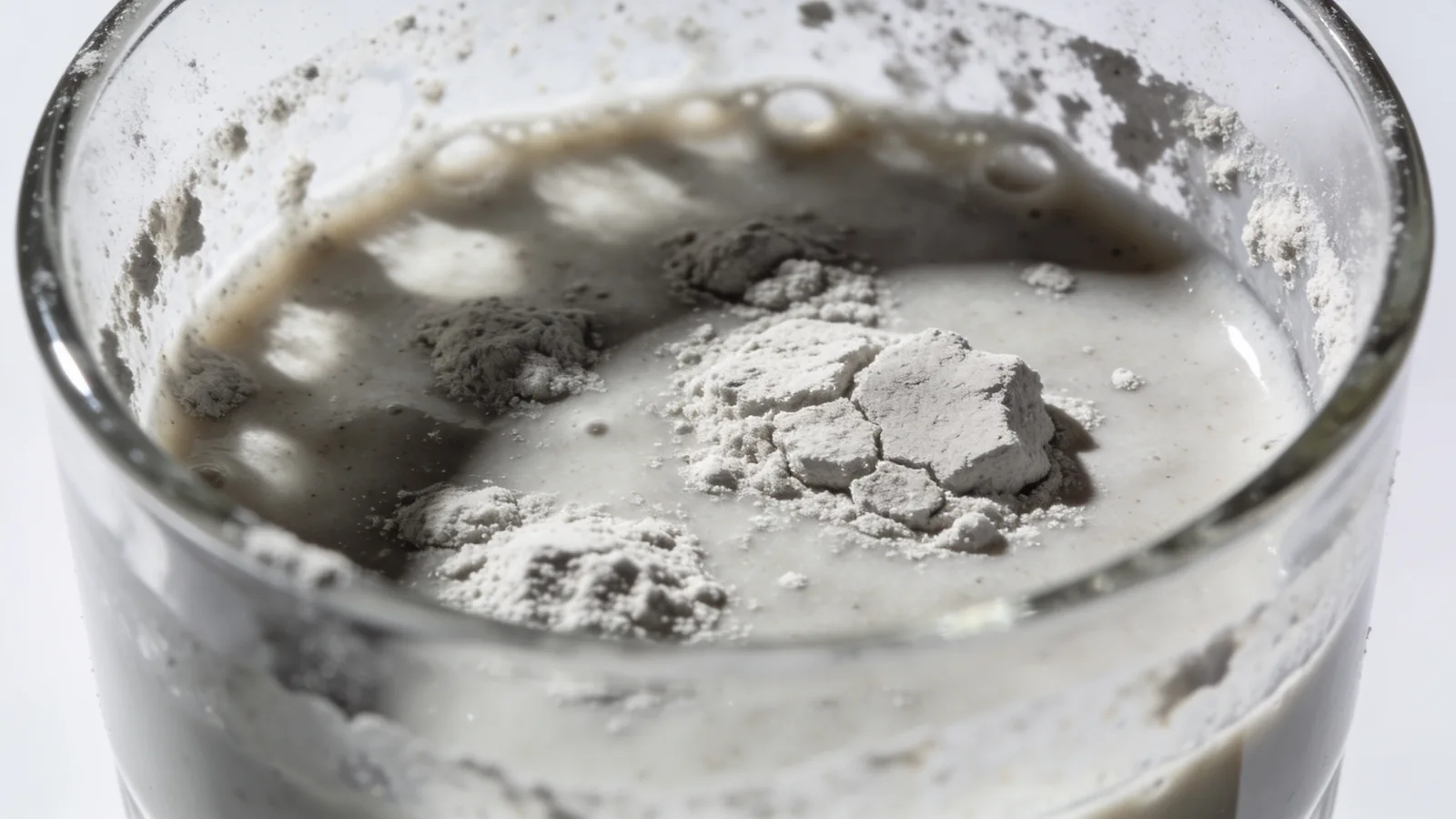
A protein powder that doesn’t taste chalky is mostly a matter of particle size, solubility, and what else is in the tub. Chalk is the sensation of undissolved solids — protein particles, fiber, gums, or fillers — that never actually dissolved into your liquid. They stay suspended as a slurry, and your tongue reads suspended solids as grit. Fix the dispersion and you fix the texture.
Protein powder tastes chalky when its particles do not fully dissolve and stay suspended as fine grit. The most reliable fixes are blending instead of shaking, hydrating the powder for a few minutes before drinking, using cold liquid, and choosing a powder with fewer added gums and fillers. A single-ingredient isolate with good solubility — whether potato, whey, or another well-processed protein — disperses more evenly than a blend padded with fiber and thickeners.
- Blend, don’t shake. A blender or frother breaks up clumps a shaker bottle leaves behind.
- Let it hydrate. Two to five minutes of rest lets particles absorb liquid and soften.
- Use cold liquid and more of it. Heat and a thin ratio both worsen grit.
- Read the label. Gums, fiber, and fillers add the chalk; fewer ingredients usually means smoother.
- Pick a soluble protein. Particle size and processing matter more than the protein source.
Below, each cause and its fix — starting with the changes that cost nothing and ending with what to look for if you decide to switch powders entirely. The first two solutions work with the tub you already own.
Blend Instead of Shaking
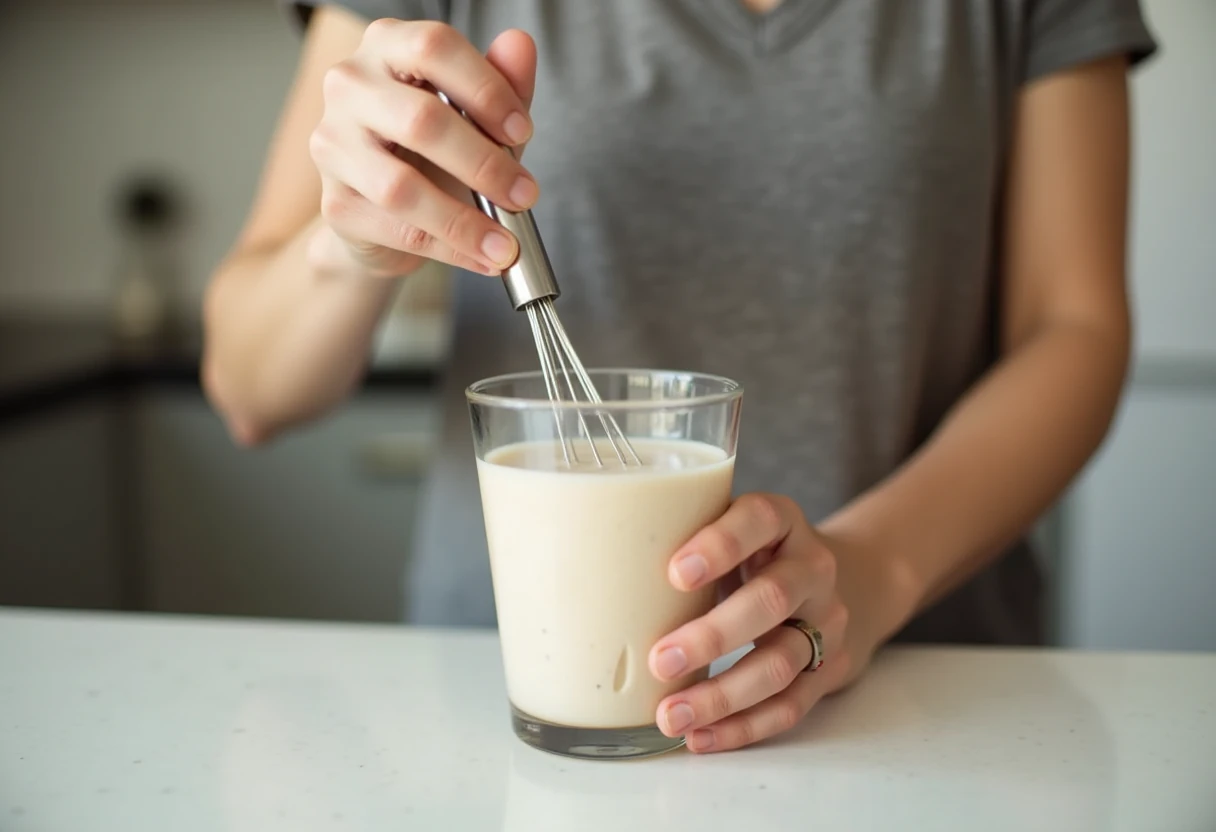
A shaker bottle relies on a wire ball and your arm to break up dry powder. It is not enough force for fine particles, which is why you get clumps with dry centers and a grainy slurry around them. A blender, immersion blender, or handheld milk frother applies far more shear and pulls the powder into the liquid evenly. This single change fixes most chalkiness without touching the powder itself.
If a full blender is too much for a morning shake, a battery frother costs little and clears the grit in about ten seconds. Add the liquid first, then the powder — pouring powder onto liquid disperses better than the reverse, which traps dry pockets against the bottom of the cup. For more on what works against you here, see our guide to what you should not mix with protein powder.
Let It Hydrate, and Keep the Liquid Cold
Dry protein particles need a moment to absorb water before they soften. Drink immediately and you are drinking partially dry powder; let the shake rest two to five minutes — or overnight in the fridge — and the same powder reads smoother because the particles have taken on liquid. This is the cheapest fix on the list and it requires only patience.
Temperature matters too, but in the opposite direction from what people assume. Hot liquid makes many proteins seize and clump rather than dissolve, which is its own texture problem covered in why protein powder clumps in hot liquids. Cold or room-temperature liquid disperses more evenly. And use enough of it — a thick, under-diluted shake concentrates the grit. If a powder tastes chalky in 8 ounces, try 10 to 12.
Read the Label: Gums, Fiber, and Fillers
Sometimes the chalk is not the protein at all. It is the additives. Many powders are padded with thickening gums, added fiber, or stevia and “natural flavors” that leave a dry, coating mouthfeel. Plant proteins in particular are difficult to formulate to be flavorless — soy isolate is generally considered the closest, and even it is far from flavorless. The more a manufacturer adds to mask or bulk the protein, the more there is to leave a residue on your palate.
Turn the tub around and count the ingredients. A long list of binders and flavor systems is a common source of the exact texture you are trying to escape. Fewer ingredients means fewer suspended solids that never dissolve. Our roundup of common protein problems walks through which additives cause which symptoms, from grit to bloating. If chalkiness is your issue, the gums and fiber lines are where to look first.
Choose a More Soluble Protein
If technique and a cleaner label still leave grit, the protein’s own solubility and particle size are the limit. This is a processing question more than a source question. Whey protein isolate, at 90 to 95% protein with under 1% lactose, is heavily processed specifically for solubility and disperses readily. Plant isolates vary widely: a coarse, lightly processed powder will always feel grittier than a finely milled one, regardless of what plant it came from.
Potato protein isolate is worth knowing about here. It runs 80 to 95% protein on a dry basis, and the functional-properties literature describes potato protein’s solubility, gelation, and foaming behavior as notable among plant proteins (Food Research International, 2021, PMID:34507729). A well-milled, single-ingredient isolate — potato, whey, or otherwise — gives you the smallest number of suspended solids to begin with. That is the principle behind a single-ingredient potato protein isolate: nothing added to thicken or mask it. It disperses into food rather than sitting on top of it.
None of this means you must switch brands. If your current powder smooths out with a frother and a few minutes of rest, keep it. Switch only if you have tried the first three fixes and the grit persists — that is the signal that the powder’s particle size, not your method, is the ceiling.
Hide the Texture in Food Instead of Fighting It
If you have a powder you otherwise like, you can sidestep the mouthfeel entirely by putting it where texture is expected. Blended into oatmeal, stirred into yogurt, baked into pancakes, or whipped into a thick smoothie with frozen fruit or a banana, a slightly gritty protein reads as part of the food rather than a flaw in a thin drink. Fat and fiber from the food carry the particles and round out the texture.
A frozen base does double duty: the cold suppresses bitterness and the ice gives the blender something to grind against, breaking powder down further. This is the most forgiving way to use any protein powder, and it works with a tub you already own. Our recipe index has builds that lean on this principle.