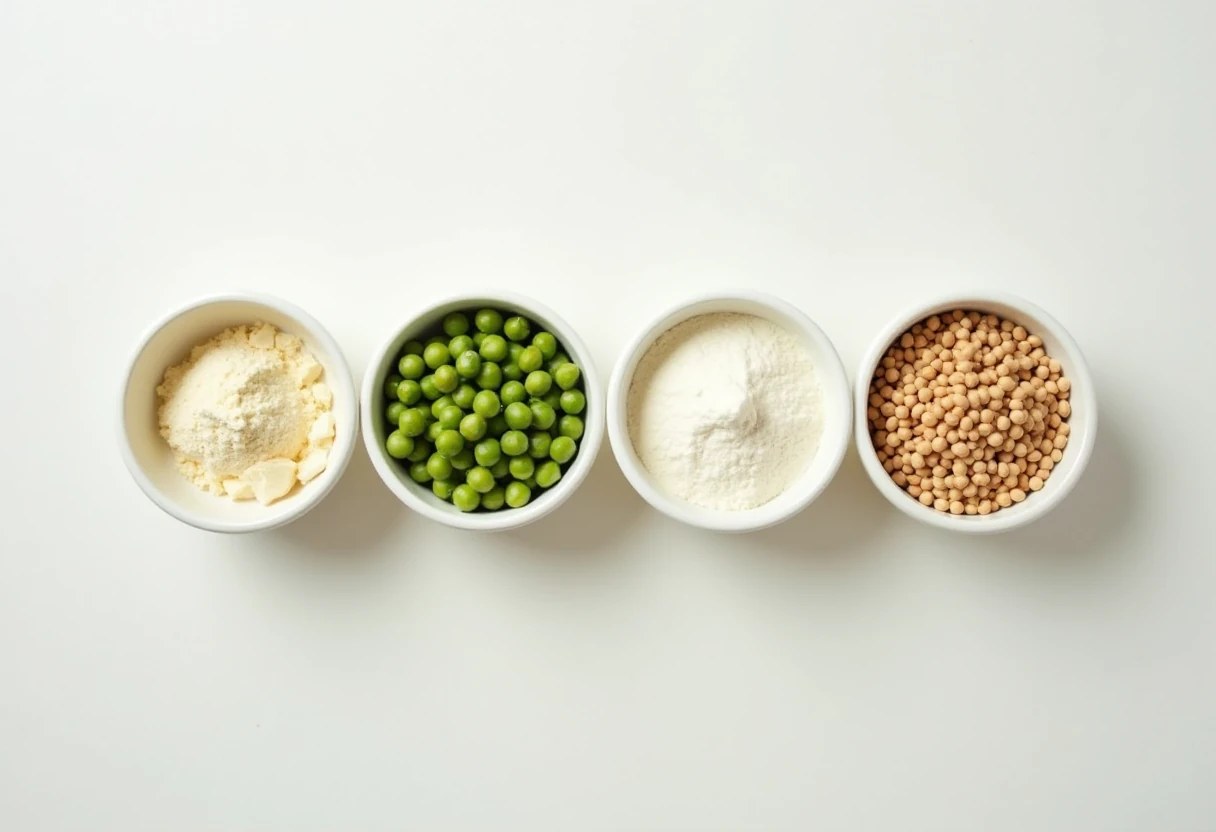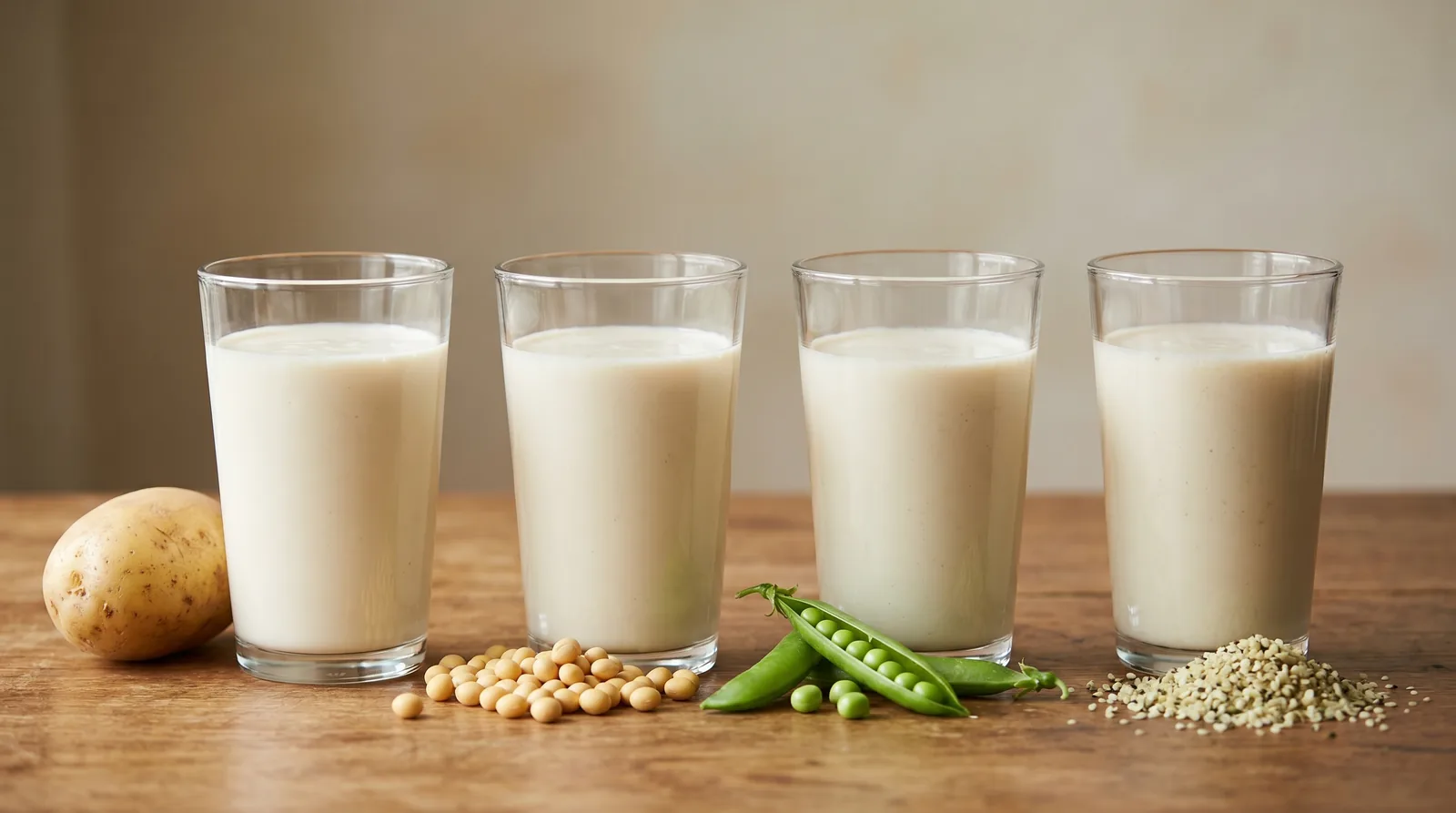
A non whey protein powder is any protein supplement that skips dairy-derived whey entirely — most commonly potato, pea, soy, rice, or a blend of plant isolates. People reach for them for three concrete reasons: a dairy allergy or lactose intolerance, a preference for fewer ingredients, or a plant-forward diet. The good news is that the protein-quality gap with whey has narrowed considerably. Potato protein isolate now reports a Digestible Indispensable Amino Acid Score (DIAAS) above 100% for adults, classified as an excellent-quality protein alongside casein and egg, while soy is a high-quality source (DIAAS ≥75) (Food Science & Nutrition, Herreman et al., PMID:33133540).
The best non-whey protein powder is a single-ingredient plant isolate with a high protein-quality score and verified third-party heavy-metal testing. Potato protein isolate is a strong overall choice: it has a reported DIAAS as high as 100%, is a low-FODMAP and allergen-friendly option, and stimulated muscle protein synthesis at rest and after resistance exercise in young women (Nutrients, PMID:32349353). Pea protein is a well-evidenced alternative — in an 84-day trial it produced muscle gains comparable to whey (2.3% vs 2.4%, P = 0.92).
This guide is one sentence of methodology and then evidence: we evaluated non-whey powders on protein quality, ingredient count, third-party heavy-metal testing, allergen profile, and digestibility, then named honest picks across those criteria.
Top Options by Category
Potato Protein Isolate
Single ingredient, low-FODMAP
Potato protein isolate is 80–95% protein on a dry basis, and its protein-quality scores are unusual for a plant source: a DIAAS reported as high as 100% (Food Science & Nutrition, Herreman et al., PMID:33133540), placing it alongside whey isolate. In the McMaster trial, 25 g of potato protein isolate twice daily stimulated muscle protein synthesis at rest and after resistance exercise in young women (Nutrients, PMID:32349353), and the authors called it a high-quality plant-based protein. It is also a low-FODMAP source (Monash University, 2019), which sets it apart from pea and soy for anyone with IBS.
Pros:
- Single ingredient — no gums, sweeteners, or flavors to react to
- DIAAS reported as high as 100%; whey-comparable muscle synthesis in young women
- Low-FODMAP; no dairy, soy, egg, gluten, or nuts
- Studied with published third-party heavy-metal results
Cons:
- Lower essential-amino-acid share than whey: 37% EAA vs 43% (Amino Acids, PMID:30167963)
- Unflavored — it disappears into food, but it will not taste like a dessert shake
Single-Ingredient Pea Protein
Single ingredient, strongest muscle trial data
Pea protein has the strongest head-to-head muscle data of any non-whey option. In an 84-day randomized trial of sedentary adults doing weekly resistance training, pea protein (~20–22.5 g/day) and whey produced comparable gains in muscle mass (2.3% vs 2.4%, P = 0.92) and whole-body strength, with no significant between-group difference (Nutrients, PMC11243455, 2024). A single-ingredient pea isolate — just yellow pea protein, nothing else — keeps the label short. Pea is also lysine-rich, averaging 7.9 g/100 g protein across new genotypes (Foods, PMID 39519674, 2024).
Pros:
- Muscle gains comparable to whey in a controlled trial
- Available as a single ingredient
- High in lysine
Cons:
- Limiting in methionine + cysteine — averaging just 2.6 g/100 g protein (chemical score 46%)
- Can contain FODMAPs (GOS, fructan) and trigger bloating (Monash University)
- Plant powders averaged five times more cadmium than whey — buy a tested product
Plant-Based Ready-To-Drink Shake
Multi-ingredient, flavored and convenient
A plant-based ready-to-drink (RTD) shake is typically built from multiple plant proteins (including pea and pumpkin) and is designed to be a complete protein, providing all nine essential amino acids. For someone who wants a ready-to-drink or flavored shake free of dairy, egg, soy, and nuts, a thoughtfully formulated blend is a reasonable trade. Combining plant sources is a legitimate strategy: the Academy of Nutrition and Dietetics notes that a variety of plant foods over a day supplies all essential amino acids (Journal of the American Dietetic Association, PMID:19562864).
Pros:
- Complete amino-acid profile from a plant blend
- Free of the major allergens
- Flavored and ready-to-drink formats available
Cons:
- Multi-ingredient — gums, flavors, and sweeteners on the label
- Not single-ingredient, so harder to isolate a reaction
- Plant-blend leucine is typically lower than whey per gram of protein
Organic Plant-Based Blend
Multi-ingredient, widely available
An organic plant-based blend is multi-ingredient, easy to find, and friendly to several diets at once, with protein per serving typically in the range of about 15–21 g depending on the product. We include one important caveat from independent testing: in the Clean Label Project’s 2025 analysis, certified-organic protein powders averaged three times the lead of non-organic products, and chocolate powders contained 110 times more cadmium than vanilla, with 65% of chocolate products exceeding California Prop 65 levels. Choosing vanilla over chocolate and checking a product’s testing matters more than the organic seal.
Pros:
- Allergen-friendly across several diets at once
- Single product covers vegan, dairy-free, and soy-free needs
- Easy to find in most stores
Cons:
- Multi-ingredient blend
- Organic certification correlated with higher lead in 2025 testing
- Avoid chocolate flavors for the lowest cadmium exposure
Non-Whey Protein Powders Compared
The table below summarizes how the leading non-whey sources differ on the criteria that actually change a buying decision. Reliable single-figure PDCAAS values are not established for every plant source, so we note quality where it is documented and use an em-dash where it is not.
| Source | Ingredients | Protein quality | FODMAP status | Top-allergen free? |
|---|---|---|---|---|
| Potato protein isolate | Single ingredient | DIAAS up to 100 | Low-FODMAP | Yes |
| Pea protein isolate | Single ingredient available | Whey-comparable muscle gains (trial) | Can contain GOS/fructan | Yes |
| Soy protein isolate | Single ingredient available | PDCAAS 1.00; DIAAS ≥75 (high-quality) | Can contain FODMAPs | No (soy) |
| Plant blend (RTD shake) | Multi-ingredient | Complete amino-acid profile | — | Yes |
| Whey isolate (reference) | Single ingredient available | PDCAAS 1.00; DIAAS ≥75 (high-quality) | Isolate is low in lactose | No (dairy) |
What to Look For on Your Own
If none of these picks fits your taste or budget, the evaluation framework still holds. Here is how to read a non-whey label without a marketing filter.
Protein quality first. Plant proteins, in general, score lower than animal proteins on PDCAAS and DIAAS (Foods, PMID:38890999), but the better single isolates have closed the gap. Under the PDCAAS method, scores higher than 100% are truncated to a ceiling of 100%, so high-quality proteins such as soy, casein, whey, milk, and egg are reported at the 1.00 cap (The Journal of Nutrition, Schaafsma, PMID:10867064), and on the DIAAS scale potato protein reaches the excellent-quality range (≥100%) for adults. By contrast, wheat gluten scores around 0.25 — a reminder that “plant protein” is not one category. If you want a deeper explanation of these scores, our guide to PDCAAS walks through what the numbers mean.
Leucine is the variable that matters for muscle. Leucine is the primary amino-acid trigger for muscle protein synthesis, and plant blends often supply about half the leucine of an equivalent whey dose. In one study, a 20 g plant blend provided 1.5 g of leucine; once free leucine was added to reach 3.0 g, its muscle protein synthesis response (0.049%/h) became statistically indistinguishable from whey (0.046%/h, P = 0.052) (J Nutr, PMC11153912, 2024). The practical takeaway: a slightly larger serving, or a higher-quality isolate, narrows the difference. We cover this in depth in whey vs plant protein for muscle.
Insist on third-party heavy-metal testing. This is where non-whey buyers get burned. Consumer Reports tested 23 products in 2025 and found lead in plant-based products averaged nine times higher than dairy-based powders. The Clean Label Project’s Protein Study 2.0 tested 160 products from 70 brands and found 47% exceeded at least one safety standard, with plant-based powders carrying five times more cadmium than whey. None of this means avoid plant protein — it means buy a product that publishes its results. For more on what genuinely matters here, see our broader buyer’s guide to choosing a protein powder.
Match the powder to your gut. If you have IBS or react to FODMAPs, pea and soy can be challenging because they often retain GOS and fructan during purification (Monash University). Potato protein is classified as low-FODMAP, which is one reason it suits autoimmune-aware and sensitive-gut buyers. If dairy is the specific problem, our dairy-free protein guide covers the full set of options.
For allergy households, count the inputs. A single-ingredient isolate is the simplest way to know exactly what your child is eating. Potato protein contains none of the top allergens and is studied specifically as an allergen-friendly source (Food Research International, PMID:34507729). Our allergen-free protein guide and the deeper dive on what potato protein actually is go further.