Protein powder for beginners comes down to four decisions: whether you actually need it, how to choose one, how to use it, and how much to take. Most people overthink all four. You can settle every one of them in an afternoon with a kitchen scale, a label, and a calculator.
To start using protein powder, first calculate your daily protein target: body weight in pounds × 0.7 for a conservative minimum, × 1.0 if you train regularly. Subtract the protein you already eat from food. If the daily gap is larger than 20–25g, one 25g scoop closes it. Choose a powder with a PDCAAS above 0.9, three or fewer ingredients, and no allergens you react to.
By the end of this guide you will know your exact protein number, whether a powder is worth buying, and how to take one scoop a day without turning it into a project. What you need: A kitchen scale or your body weight · A protein label · 8oz of liquid · Time: 20 min
How to Start Protein Powder in Four Steps
Calculate whether you need a powder at all
Start with a target, not a tub. Multiply your body weight in pounds by 0.7 for a conservative daily minimum, or by 1.0 if you train, lift, or are over 40 and trying to hold onto muscle. A 150-pound person lands somewhere between 105g and 150g of protein per day.
Now subtract what you already eat. Run a normal day in your head and add it up: one egg is about 6g, a 4oz chicken breast is roughly 30g, a cup of Greek yogurt is around 17g, and a cup of cottage cheese is close to 25g. Four egg whites from a carton give you 13g with almost no fat, according to Cleveland Clinic Health Essentials. Total your real intake against your target.
If the gap is under 15g, you can almost certainly close it with one more serving of food. If the gap is 20–25g or larger, that is exactly the hole a single scoop is built to fill — and a powder becomes the convenient answer instead of an impulse buy.
Tip: Older adults need to clear a higher bar. Aging blunts the muscle-building response to protein, a state researchers call anabolic resistance. If you are over 60, lean toward the ×1.0 figure rather than the minimum.
Choose a powder by three label checks
Ignore the front of the package. Turn it over and apply three filters in order.
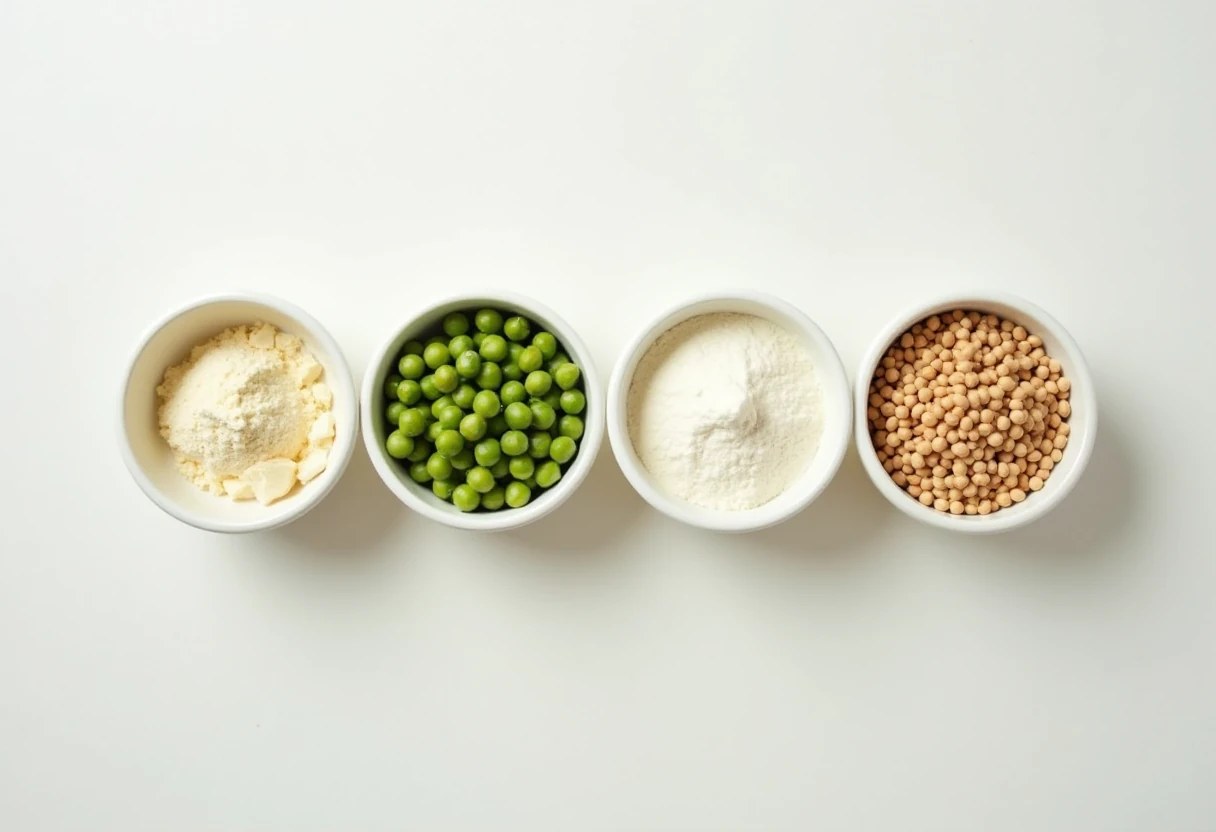
Protein quality. Look for a PDCAAS above 0.9. Egg protein scores 1.00 and wheat gluten scores around 0.25, so the spread is real. Animal proteins generally score higher than plant proteins, but several plant isolates land near the top. Potato protein isolate is one of them: a 2020 trial found that 25 g twice daily over two weeks (raising total intake to 1.6 g/kg/day) stimulated muscle protein synthesis in young women at rest and after exercise.
Ingredient count. Aim for three ingredients or fewer. A single-ingredient isolate is the cleanest version of this — one item on the label, nothing to cross-reference. If a powder lists 20-plus ingredients, most of them are flavoring, gums, and sweeteners doing nothing for your protein number.
Allergens and additives. Check for dairy, soy, and gluten, and decide your tolerance for artificial sweeteners — ideally none, or one you genuinely don’t mind. This matters more than beginners expect: a 2025 Clean Label Project report (Protein Study 2.0) tested 160 products and found 47% exceeded at least one safety standard, with chocolate powders carrying 110 times more cadmium than vanilla. Consumer Reports found plant-based products averaged nine times more lead than dairy-based ones. Third-party testing is not optional — it is the difference between two powders that look identical on paper.
Tip: If you want the long version of this comparison, the best protein powder guide breaks down every category side by side, and the single-ingredient protein powder explainer covers why fewer inputs matter for sensitive guts.
Mix and time your first scoop
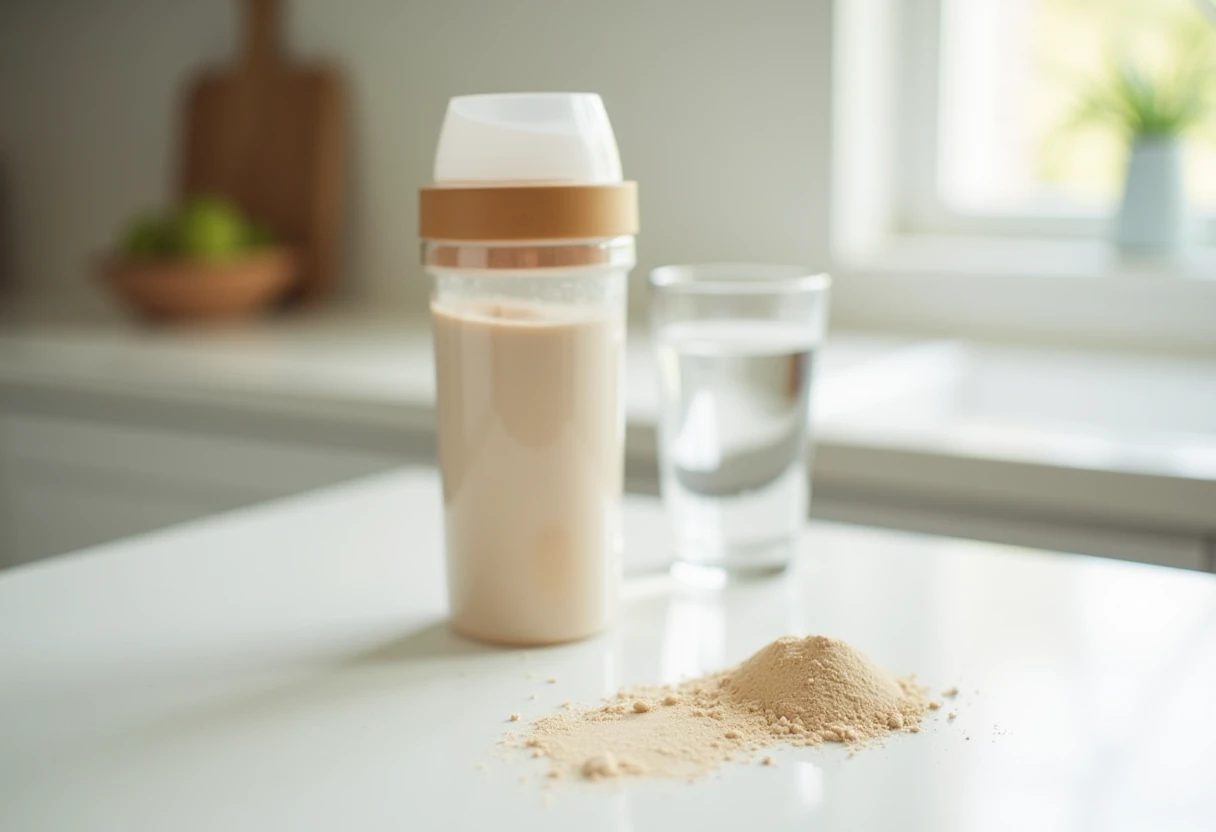
The mechanics are simple: one scoop, about 25g, into 8oz of liquid, shaken for 30 seconds. Water works. Milk, plant milk, or a smoothie base work too and add a few grams of protein on top. With an unflavored isolate, the smarter move is to skip the shaker entirely — stir it into oatmeal, yogurt, or a smoothie where it disappears into your food and adds nothing but protein.
Timing. Two windows give you the most return. The first is within roughly two hours of resistance exercise, when muscle is primed to use the amino acids. For most people, training is what makes the post-workout window matter, though total daily intake drives results more than timing. The second is breakfast, if your mornings are protein-light. Many people eat almost no protein before noon and then can’t catch up by dinner; a scoop in your oatmeal fixes that without a fourth meal.
Pitfall: Do not treat a scoop as a full meal. A powder is 25g of protein and little else — no fiber, no fat, no real volume. Use it to top up real meals, not replace them.
Dial in your dose over one week
Start with one scoop per day. That is it. Resist the urge to take two or three because the tub says you can. More protein is not better past the point where you’ve hit your target — the body uses what it needs and oxidizes the rest.
Track your total intake — food plus powder — for one full week. If you are consistently landing below your target number from Step 1, add a second scoop on training days or high-demand days. If you are already hitting it from food most days, you may only need a scoop on the days you fall short. The powder is a lever, not a habit you owe anything to.
On the safety question that worries beginners: in healthy adults, higher protein intake does not harm kidney function. A 2018 review of 28 trials and 1,358 participants found no difference in glomerular filtration rate between higher- and lower-protein diets, and a 2023 umbrella review found no evidence linking higher intake to kidney stones or disease.
Checklist
- Calculated daily target: body weight (lbs) × 0.7 to 1.0
- Subtracted protein already eaten from food — gap is over 20g
- Chose a powder with PDCAAS above 0.9
- Confirmed three or fewer ingredients and no allergens you react to
- Verified third-party heavy-metal testing
- One scoop (25g) + 8oz liquid, or stirred into food
- Tracked total intake for one week before adjusting