Protein powder for celiac disease is safe to take, as long as the product is certified gluten-free or made from a single naturally gluten-free ingredient. For someone with celiac disease, the danger is almost never the protein itself — it is cross-contamination from shared production lines and hidden gluten in flavorings, thickeners, and “natural flavors.” You already read labels for a living. This is the same habit, applied to a category that hides more than it should.
Yes, people with celiac disease can take protein powder. The protein source must be naturally gluten-free — potato, pea, rice, soy, hemp, or whey — and the finished product should carry a certified gluten-free mark or, better, contain only one ingredient. Potato protein isolate is a single-ingredient, allergy-free option with a DIAAS reported as high as 100% (Food Science & Nutrition, Herreman et al., 2020, PMID:33133540), and it contains no gluten at any point in its processing. Wheat-derived proteins and uncertified oat proteins are the ones to avoid.
- You’ve been glutened by a product that called itself “natural” and never explained the flavoring.
- You turn over every package and look for the certification mark before the price.
- You suspect you’ve been under-eating protein since your diagnosis changed what you trust.
- You don’t want a 14-ingredient blend — you want to know exactly what’s going into your body.
“I don’t need a powder that promises me anything. I need one that can’t surprise me.”
Here is the practical problem. After a celiac diagnosis, a lot of people quietly drop their protein intake. Bread, cereal, pasta, and the convenience foods that used to carry incidental protein all leave the kitchen at once, and the replacements are often starch-heavy gluten-free swaps with less protein than what they replaced. A protein powder is one of the simplest ways to close that gap — but only if you can trust the label. The trouble is that protein powders are one of the worst-offending categories for vague flavor declarations and shared-facility processing. So the question isn’t really “can I take it.” It’s “how do I find one that won’t cost me three days.”
What Makes Protein Powder Harder When You Have Celiac Disease
Most plant and dairy proteins are gluten-free at the molecular level. Gluten is a wheat, barley, and rye protein; whey, pea, rice, soy, and potato are not. The complications come from everything that happens after the protein is isolated — and from a few ingredients people don’t think of as gluten sources.
Cross-contamination on shared production lines
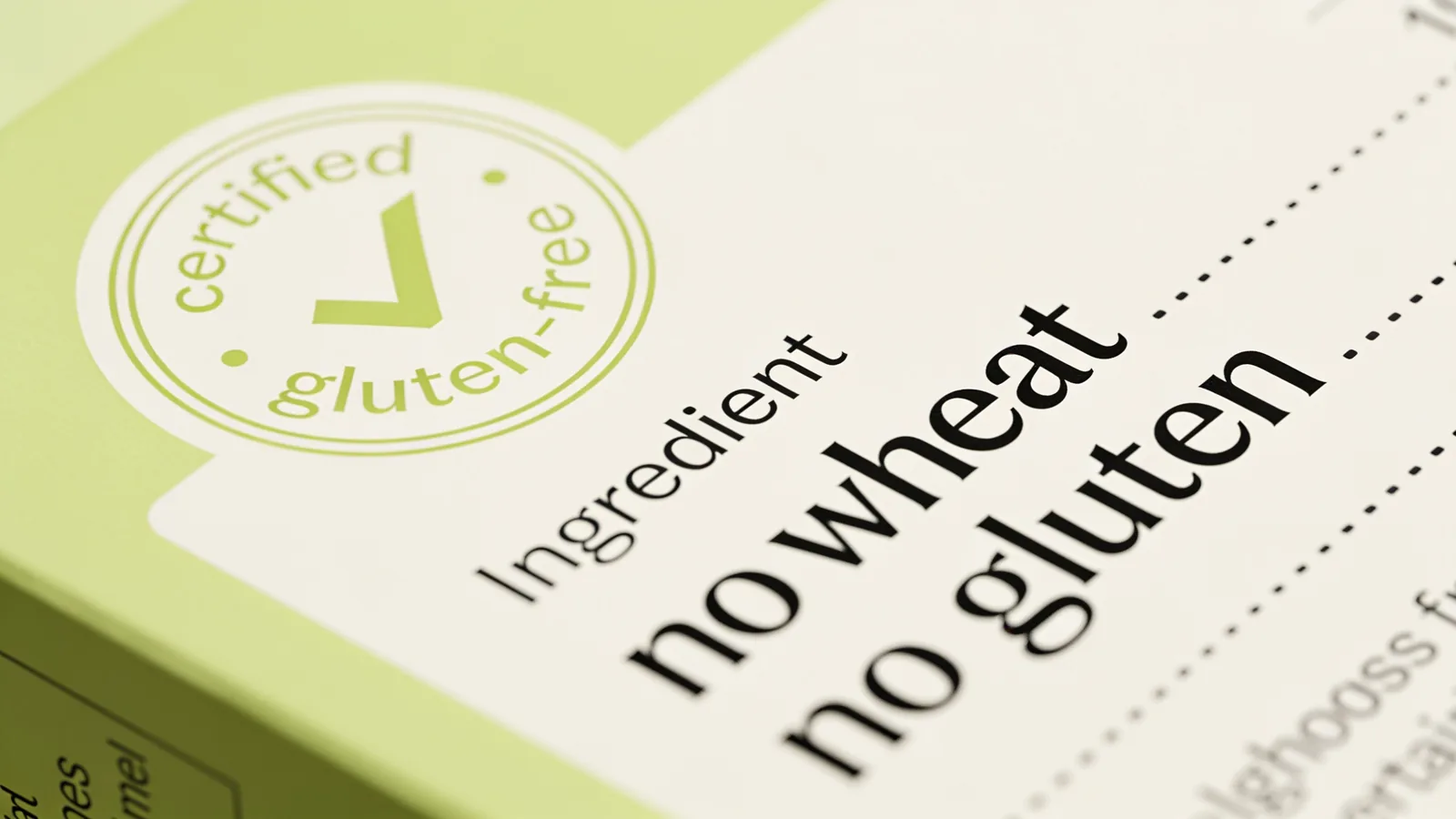
A naturally gluten-free protein can be processed on equipment that also handles wheat-based ingredients, malted flavorings, or oats. Trace gluten transfers. This is why “gluten-free” as a molecule and “certified gluten-free” as a finished product are not the same claim. For celiac disease specifically, the certification — verifying the product tests below 20 parts per million — is the part that matters, because below that threshold is the regulatory standard for a gluten-free label. A single-ingredient powder made from one crop sidesteps most of this, because there is no wheat-derived component anywhere in the formula to begin with.
Hidden gluten in flavors, thickeners, and sweeteners
Barley malt is a flavoring. Some “natural flavors” carry barley-derived components. Certain thickeners and anti-caking agents are processed alongside gluten grains. A chocolate or cookies-and-cream protein powder has many more places to hide a problem than an unflavored one. This is the single best argument for choosing minimal-additive powders: every ingredient you remove is one fewer thing to investigate. If you’ve already adopted the habit of reading every label, an unflavored single-ingredient isolate is the version of that habit that takes five seconds instead of five minutes.
Oat protein and “wheat protein” are not safe defaults
Oats are naturally gluten-free but are routinely contaminated with wheat in the field and at the mill; uncertified oat protein is a real risk. Wheat protein and “hydrolyzed wheat protein” appear in some blends outright — those are off the table entirely. When you scan an ingredient list, the protein source itself is the first thing to clear, before you ever get to the additives. Potato protein, by contrast, is consistently listed as its own distinct category alongside pea, rice, soy, and hemp (Mordor Intelligence, 2026), with no shared sourcing with gluten grains.
Heavy metals in the gluten-free plant proteins people reach for
After diagnosis, many people move toward plant proteins, which can carry a separate problem. Consumer Reports tested 23 protein products in 2025 and found plant-based powders averaged nine times more lead per serving than dairy-based ones, with more than two-thirds exceeding its safe daily limit of 0.5 micrograms. The Clean Label Project’s 2025 Protein Study 2.0 found plant-based powders contained five times more cadmium than whey-based varieties, and that chocolate powders held 110 times more cadmium than vanilla. Being gluten-free does not make a powder otherwise contaminant-free, which is why third-party testing and a published Certificate of Analysis matter on top of the gluten-free certification.
Digestion that’s still recovering
If your intestinal lining is still healing on a gluten-free diet, FODMAPs and other fermentable compounds can be more noticeable than they once were. When protein reaches the colon undigested, gut bacteria ferment it into short-chain and branched-chain fatty acids, ammonia, and other compounds (Gilbert et al., Am J Physiol Gastrointest Liver Physiol, 2018, PMID:29597354). Some plant proteins, particularly soy and pea, can carry FODMAPs that trigger symptoms (Monash University FODMAP). Potato protein is classified as a low-FODMAP protein source (Monash University, 2019), which makes it one of the gentler options while your gut settles. None of this is a treatment claim — it’s a comfort consideration for a digestive system that has reason to be cautious.
This is the broader pattern behind most powder complaints, and we cover it in depth in our guide to common protein problems: the protein is rarely the issue, the additives and the supply chain usually are.
What Actually Works for People With Celiac Disease
The most reliable approach is to reduce the number of variables. A single-ingredient, certified gluten-free isolate gives you one thing to verify instead of fourteen. Among the naturally gluten-free options, potato protein isolate is worth a close look: it is 80–95% protein on a dry basis, it is described as a high-quality, allergy-free protein source (Food Research International, 2021, PMID:34507729), and unlike pea and soy it carries no common allergen and no FODMAP load.
It also holds up on protein quality, which is the part people assume plant proteins lose on. Potato protein isolate’s DIAAS has been reported as high as 100% (Food Science & Nutrition, Herreman et al., 2020, PMID:33133540), and a 2020 trial found that 25 g of potato protein isolate taken twice daily stimulated muscle protein synthesis in young women at rest and after resistance exercise (Nutrients, 2020, PMID:32349353). That is a meaningful answer for anyone who suspects they’ve spent years under-eating protein and wants to actually rebuild, not just maintain.
If you prefer dairy, whey isolate is naturally gluten-free and is comprised of 90–95% protein with less than 1% lactose (mindbodygreen, 2023) — just verify the certification on the finished, flavored product. Whichever direction you go, the checklist is the same: a naturally gluten-free protein source, a certified gluten-free finished product, a short ingredient list, and published third-party testing. You can see how the categories stack up in our guide to which proteins are naturally gluten-free and our broader allergen-free protein guide.
Never squint to read your ingredient label.